When Monsoon, River, and Hilsa Become One Living Memory in Sundarban
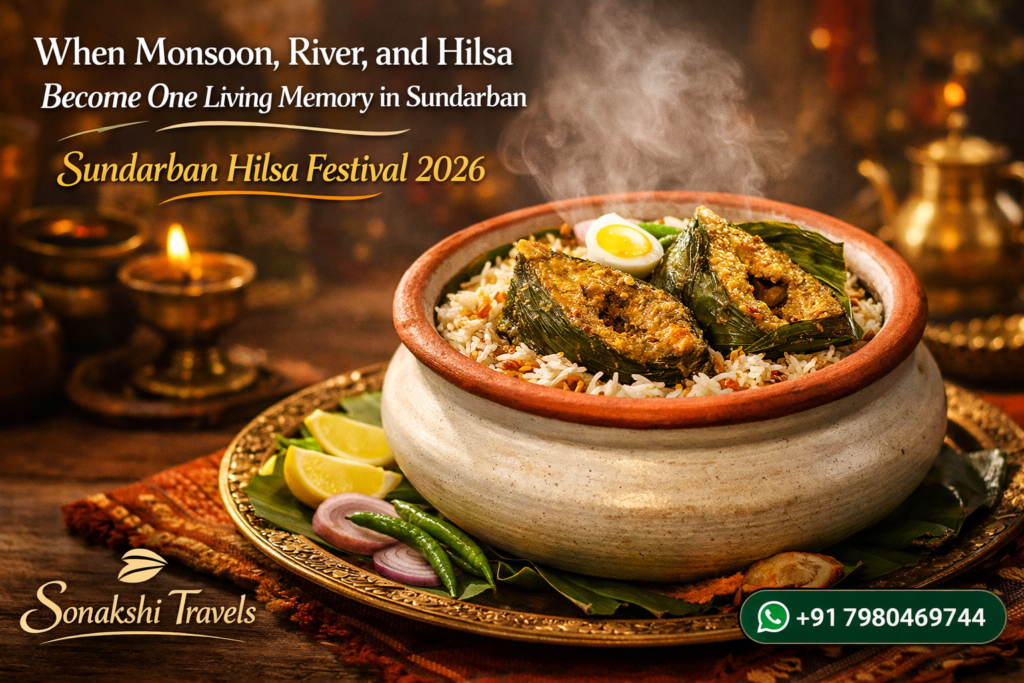
There are some journeys that are arranged by dates, tickets, rooms, and routes. Then there are other journeys that seem to grow quietly inside the heart before the body even begins to travel. A monsoon visit to the Sundarban during the season of hilsa belongs to that second kind. It is not only a trip through water channels and green forest edges. It is also a meeting with rain, smell, sound, taste, silence, and feeling. In this kind of journey, the traveler does not simply see a place. The traveler slowly enters its mood.
The Sundarban is already a landscape of movement. The tide changes shape. The sky keeps shifting. Light falls on the river and then disappears behind cloud. Boats move through narrow creeks and open waters. Villages listen to rain on tin roofs. Trees stand with patience in wet wind. When the season of hilsa joins this world, the journey becomes even deeper. Food is no longer just food. It becomes part of the weather, part of memory, and part of the emotional meaning of travel.
This is why the idea of the Sundarban Hilsa Festival carries unusual power. It speaks not only to the appetite, but also to the senses and the imagination. For some people, the memory begins with the first plate of warm ilish cooked in mustard. For others, it begins with a boat cutting through grey-green river light. For another traveler, it begins with the strange truth that some experiences cannot be fully captured in words or photographs. The feeling is larger than the frame. The moment is richer than the picture.
To understand this experience well, one must see how the magic of monsoon and the best hilsa festival India come together in one river world where taste, season, and place shape each other naturally. The power of the journey does not come from one attraction alone. It comes from the way many simple elements meet at the same time and create something complete.
The Real Theme: More Than a Food Trip, More Than a Scenic Tour
At the center of this kind of travel lies one strong idea. The Sundarban in monsoon season is not experienced through only one sense. It is a place that asks the traveler to feel many things together. The rain softens the light. The river carries a wet breeze. The smell of cooking rises from the kitchen space on a boat or from a riverside stay. The sight of silver hilsa on a plate speaks to hunger, but also to culture and memory. The sound of village life, water movement, and weather becomes part of the meal itself.
That is why this journey should not be reduced to a simple food event. It is also not only a landscape tour. It is a monsoon travel experience in which the environment and the meal complete each other. Hilsa tastes different when the sky is heavy with cloud and the river wind carries the smell of rain. A boat ride feels different when the traveler knows that the day will end with a meal that belongs to the season. Even silence feels richer when it sits beside warm rice, mustard ilish, and the distant sound of water touching wood.
The traveler does not move through this experience as an outside observer. Instead, the traveler becomes part of a living scene. Rain is not background. Food is not background. The river is not background. All three work together. This is what gives the journey its emotional strength.
Why Monsoon Changes the Meaning of Hilsa in Sundarban
Hilsa is already a fish of strong feeling in Bengali life. It carries tradition, home memory, seasonal joy, family meals, and cultural pride. But in the Sundarban during monsoon, its meaning becomes larger. The fish is no longer only a dish served on a plate. It becomes part of a full setting. The wet sky, the moving boat, the river smell, and the silence between rain showers all add something to the moment of eating.
This is why the emotional side of the experience matters so much. A plate of ilish eaten in a city restaurant may be delicious, but it does not hold the same relationship with weather and place. In the Sundarban, the fish belongs to the season around it. The taste feels connected to river life. It feels earned by the journey. It feels placed inside a world, not outside it.
That emotional pull is beautifully understood in the idea of eating ilish in the rain during the Sundarban Hilsa Festival 2026, where food becomes a way of feeling the land rather than only enjoying a menu. The rain does not disturb the meal. It gives the meal its mood. The soft wet air, the slower pace of the day, and the comfort of warm food create a kind of emotional shelter.
Monsoon also changes how travelers pay attention. In bright summer, people often look far and fast. In rain season, people notice smaller things. They watch ripples. They listen to drops on the roof. They smell smoke from the kitchen. They feel steam rising from food. This slower, more careful attention is one reason the hilsa festival experience becomes so memorable. It invites the traveler not to rush, but to absorb.
The Boat Ride as the Heart of the Experience
No serious understanding of this journey is complete without the boat. In the Sundarban, the boat is not only transport. It is a moving space of observation, rest, taste, and discovery. It carries the traveler through changing shades of water, past muddy banks, through openings of light, and into the deeper rhythm of the delta. The boat is where the traveler first begins to understand that the Sundarban is not a fixed scene. It is a living flow.
When monsoon light falls on the river, the world often looks painted rather than built. Green from the mangroves, grey from the clouds, and golden light from brief openings in the sky create a rich visual harmony. The eye does not simply record it. The eye lingers in it. That is why the first boat journey during hilsa season can feel so powerful. It combines movement with calm. It combines distance with closeness. It lets the traveler feel small in a peaceful way.
This mood is strongly reflected in the travel idea of a first boat ride during the hilsa festival that feels like stepping into a painting. The phrase matters because it tells us something important: the experience is visual, yes, but it is not only about seeing beauty. It is about being surrounded by beauty so completely that the traveler feels inside an artwork rather than looking at one.
The boat also changes the meaning of food. A hilsa meal after a river journey is different from a hilsa meal before one. Movement creates hunger. River air sharpens the senses. The slow unfolding of scenery prepares the mind for a slower meal. Even waiting becomes part of the pleasure. In this way, the boat ride and the festival table are connected, not separate.
For the reader, this creates an important understanding of Sundarban travel: the destination is not only where you arrive. The experience is already happening while you move. The festival mood begins on the water.
Why Some Moments Go Beyond the Camera
Modern travelers often try to hold every beautiful moment through pictures. That wish is natural. The Sundarban gives many scenes that seem to ask for a camera: low clouds over the river, drifting rain, steaming food, village edges, wet wooden decks, and moving light on water. Yet some experiences become important precisely because they cannot be fully captured. The picture may show the frame, but not the feeling inside it.
This is one of the deepest truths of the monsoon hilsa journey. A camera can capture the plate, but not the smell of mustard rising in damp air. It can capture the river, but not the touch of breeze on the skin. It can capture the cloud, but not the emotional quiet created by rain and distance. It can capture people smiling, but not the strange comfort of shared silence during a river meal.
This insight is beautifully held inside the thought of the Sundarban Hilsa Festival being beyond pixels, beyond the camera, and beyond simple visual record. That idea matters because it explains why the journey has lasting emotional value. What stays in the mind is not only the image. It is the full sensory memory.
For travel writing and content strategy, this is a rich theme because it moves beyond surface-level promotion. It helps readers understand that some destinations are important not because they look pretty on a screen, but because they create full human experience. This increases trust, depth, and emotional connection. It also supports stronger semantic relevance around authentic travel experience, sensory tourism, and experiential travel in Sundarban.
In simple terms, the best part of the journey may be the part that no device can save. The traveler must be present for it. That is exactly why it matters.
Feeling the Place: Festival, Village Mood, and the Living Rhythm of Rain
A real Sundarban journey during monsoon cannot be understood through food and scenery alone. It also has a rhythm. That rhythm comes from village life, wet pathways, changing sky, and the soft beating pattern of rain on roof, boat, and soil. The place seems to speak through weather. Planning matters, of course, but once the traveler enters the delta, another truth becomes clear: some journeys are not fully controlled. They are received.
This is why the emotional language around the Sundarban often feels different from standard travel language. The place is not a checklist. It is a mood-world. It asks the traveler to accept change, to watch more carefully, and to allow the day to unfold. In such a setting, the festival is not separate from the land. The meal, the river, the village sound, and the rain pattern belong to one whole environment.
This wider emotional truth is reflected in the idea that a Sundarban tour is not only planned, but deeply felt like monsoon drums on a village belt. The phrase suggests that travel here is not only about schedule. It is about rhythm, sensation, and surrender to place. That is a powerful insight because it explains why travelers often return from the Sundarban speaking less about “activities” and more about “feeling.”
The festival becomes richer when seen this way. Hilsa is not simply served. It arrives inside a complete setting of season and emotion. A traveler may remember one afternoon not because something dramatic happened, but because the rain became softer, the river looked silver-grey, and a simple meal tasted complete. This is the kind of memory that grows stronger over time rather than weaker.
For readers searching for a meaningful Sundarban monsoon tour, this matters greatly. It tells them that the value of the destination is not loud entertainment. It is depth. It is atmosphere. It is a slower and more human kind of travel.
What This Means for Travelers Seeking a True Hilsa and Monsoon Experience
Travelers today often look for experiences that feel real, local, and emotionally rich. Many destinations promise culture, but present only decoration. Many food events promise authenticity, but remain distant from the land that gave birth to the food. The Sundarban monsoon hilsa journey stands apart because its strongest elements grow naturally from place. The rain is real. The river is real. The mood is real. The cultural feeling around hilsa is real. Nothing important has to be artificially added.
This also means the traveler should arrive with the right expectation. The best reward of this journey is not speed. It is not luxury in a shallow sense. It is not endless activity. The reward is immersion. It is the chance to enter a river landscape where food, weather, and movement create one seamless travel memory. That is why the journey appeals not only to food lovers, but also to reflective travelers, writers, photographers, and people who want to feel connected to season and place.
The Journey Stays Because It Touches More Than One Sense
In the end, the lasting power of a monsoon hilsa journey in the Sundarban comes from its wholeness. The traveler does not remember only the fish, though the ilish experience may be deeply memorable. The traveler does not remember only the boat, though the river journey may feel dream-like. The traveler does not remember only the rain, though the weather shapes every moment. What stays is the union of all these things.
That is what makes this kind of travel rare. It gives the visitor not one attraction, but one atmosphere. It offers not only sights, but also texture, smell, movement, sound, and emotional depth. It teaches that some of the best journeys are not the loudest or the fastest. They are the ones in which a place slowly enters the senses and remains there.
The Sundarban during hilsa season shows how a destination can become larger than its own parts. A meal becomes memory. A river becomes mood. Rain becomes music. A boat becomes a moving room of feeling. And the traveler returns with something more than photographs or notes. The traveler returns with a living impression that continues to breathe in the mind.
That is why this journey matters. It is not only about where you go. It is about what the place does to your senses while you are there. In that deeper meaning, the Sundarban Hilsa Festival is not only a seasonal attraction. It is one of the most moving ways to understand how travel, food, and monsoon can come together and become unforgettable.