Updated: April 1, 2026
The Magic of Monsoon and the Best Hilsa Festival India
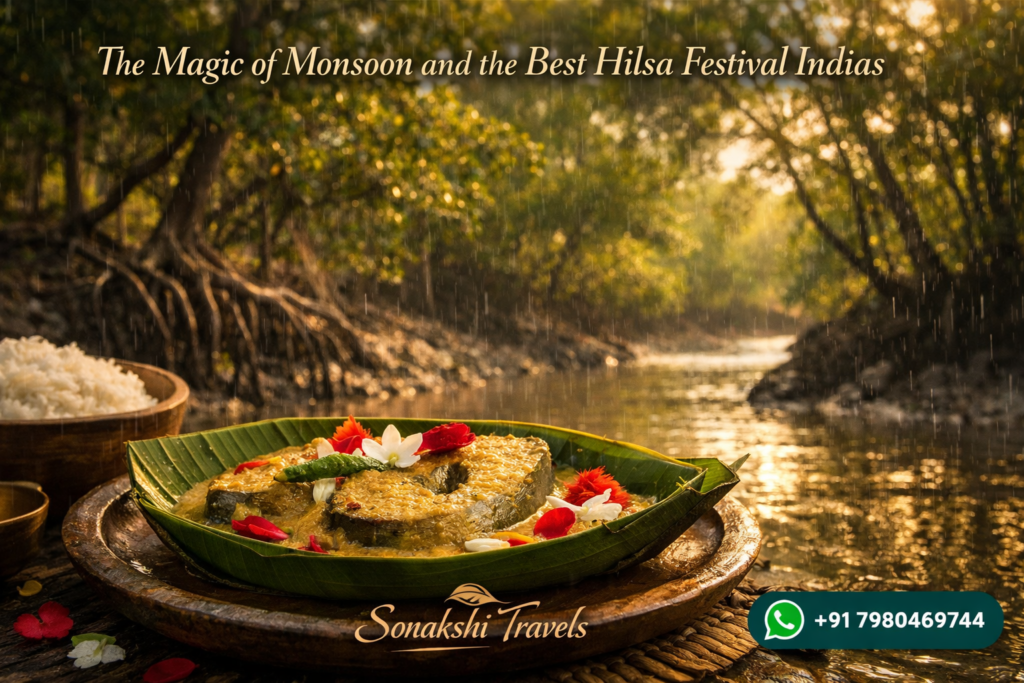
There are some food festivals that become famous because they are large, loud, and easy to sell in pictures. Then there are a few that become unforgettable because they rise from season, river, memory, and desire at the same time. The magic of monsoon and the idea of the best hilsa festival in India meet in that deeper second category. This is not only about eating fish. It is about entering a living moment when rain, tide, silt, smell, appetite, and Bengali cultural feeling begin to move together. In such a setting, the hilsa is not treated like an ordinary dish on a menu. It becomes a sign of season, a symbol of longing, and a form of regional identity.
That is why the Sundarban hilsa festival feels so special. It gathers the emotional force of the monsoon and gives it a culinary center. In the delta, rain does not act like background climate. It changes the colour of water, the softness of light, the smell of mud, the mood of villages, and the rhythm of everyday life. When hilsa enters this landscape, the festival becomes more than a celebration of taste. It becomes a seasonal expression of place. Many travelers first hear about it while searching for a Sundarban tour, but once they understand its deeper meaning, they begin to see it as a cultural experience shaped by monsoon itself.
Why Monsoon Changes the Meaning of a Food Festival
Monsoon gives the festival its true emotional power. Rain softens the horizon. Clouds lower the sky. The river seems darker, wider, and more serious. Trees hold water on their leaves. The air becomes rich with the mixed smell of wet earth, green branches, brackish current, and cooking smoke. In such an atmosphere, food tastes different because the whole body is already awake to the season. Hilsa, in this setting, does not arrive as a random seafood dish. It arrives as the fish most strongly tied to monsoon hunger in Bengali life.
Across Bengal, hilsa carries an old emotional force. People wait for it, talk about it, compare its smell, texture, oil, and taste, and remember family meals built around it. But when this fish is celebrated during rain in a river landscape, the meaning grows deeper. The festival becomes a meeting point between natural season and cultural expectation. A person does not merely attend it. A person feels drawn into it. The sound of rain on boat roofs, the soft movement of river channels, and the steam rising from freshly cooked hilsa create a setting that no dry-season event can fully copy.
This is one reason many people regard it as the best hilsa festival in India. The word “best” here does not only mean more dishes or better display. It means stronger emotional fit between food and environment. The monsoon does not decorate the event from outside. It belongs to its inner meaning. The festival feels correct in that season. It feels rooted. It feels necessary.
The River, the Rain, and the Return of Appetite
One of the most remarkable features of a hilsa festival in the delta is the way rain sharpens appetite. Monsoon often slows movement, lowers noise, and turns the mind inward. In that inward mood, flavour becomes more important. Warm rice, mustard, green chilli, soft fish oil, and the smell of banana leaf or steaming gravy begin to carry unusual force. Rain makes people crave food that feels full, fragrant, and alive. Hilsa answers that craving with rare perfection.
The fish itself has a character that suits monsoon. It is delicate but rich. It contains softness, oil, and a distinct aroma that stays in memory long after the meal is over. It can be prepared in many ways, yet it never loses its identity. Whether lightly spiced or strongly perfumed with mustard, whether steamed, curried, roasted in leaf, or served in broth, hilsa keeps its own voice. In a festival setting, this allows variety without losing coherence. Every dish speaks differently, but all of them still return to the same central truth: the season is here, and hilsa has arrived with it.
This is where the monsoon adds magic rather than difficulty. The rain-filled environment makes repetition meaningful. One plate does not cancel the next. Instead, each preparation reveals another side of the fish. A mustard version may feel sharp, warm, and bold. A leaf-wrapped preparation may feel softer, deeper, and more fragrant. A thinner broth may seem humble at first, but in wet weather it can become the most comforting dish of all. The season changes the body, and the body reads food differently.
Why the Festival Feels Different in the Sundarban Landscape
The delta gives this celebration a setting that is hard to replace anywhere else. In many places, a food event remains separate from the land around it. The visitor eats, looks around, and leaves with memories of flavour alone. In the Sundarban, landscape enters the experience directly. Water channels, tidal breathing, cloudy light, and village edges all become part of the festival’s emotional structure. The result is that the event feels less staged and more lived.
That is why the phrase Sundarban hilsa festival 2026 carries such strong appeal. It suggests not only a date-bound food event, but a monsoon atmosphere shaped by the world of rivers. Even those who come through a Sundarban tour from Kolkata quickly realize that the festival is not only about reaching a destination. It is about stepping into a mood. The sky appears closer. Time slows. Meals feel more intimate. The smell of mustard and hilsa seems to blend with wet breeze in a way that feels deeply local and emotionally complete.
Because of this, the festival often remains in memory not as a checklist of dishes but as a chain of sensations: cloud-heavy afternoon light, quiet water, the sound of distant voices, a metal plate, white rice, yellow mustard, silver fish, and the feeling that monsoon has entered both the meal and the mind. That is what makes the event editorially significant. It is not only edible culture. It is atmospheric culture.
The Many Culinary Forms of Hilsa and Why They Matter
A great hilsa festival must do more than serve one famous recipe. It must reveal the fish as a complete culinary language. That is where the best festivals distinguish themselves. They show that hilsa is not only one beloved dish but many linked expressions of taste, technique, and family memory. A serious celebration treats each preparation as a chapter in a much larger seasonal story.
Mustard hilsa remains central because it captures the sharp warmth Bengali cuisine is known for. The pungency of mustard does not cover the fish; it frames it. The oil of the hilsa meets the intensity of mustard and creates a flavour that feels both strong and balanced. Steamed hilsa, by contrast, often feels more inward and restrained. It carries aroma in a quieter way. Leaf-wrapped preparations preserve moisture and create a deeper sense of enclosure, as if the dish holds monsoon within itself. Fried hilsa may appear simpler, but its crisp edge and rich inner softness can create a direct, unforgettable pleasure, especially when eaten with plain rice.
What matters here is not only technical variety. It is the cultural message carried by that variety. Hilsa has lived in Bengali kitchens for generations because it can hold memory in many forms. One household values a thin broth. Another values heavy mustard. Another treats roe as treasure. Another measures skill by how delicately the fish is handled so that texture remains intact. A festival becomes important when it honours these layers rather than flattening them into commercial sameness.
For readers exploring the idea through a Sundarban tour package or a more immersive Sundarban luxury tour, this culinary depth is often the real surprise. They expect a meal. They discover a food tradition with emotional and regional complexity.
Monsoon as Memory, Not Merely Season
The strongest festivals are always connected to memory. Monsoon has that power in Bengali life. It is tied to old songs, family kitchens, school holidays, wet verandas, market visits, and the annual return of certain tastes that feel impossible to replace. Hilsa belongs to that memory system. People do not only enjoy it. They wait for it, discuss whether this year’s fish is good, compare oils, and revive old household preferences. The fish carries conversation as much as flavour.
When a festival gathers these emotions in one place, it becomes culturally meaningful. Older visitors may remember meals cooked by parents or grandparents. Younger visitors may discover why hilsa has such near-mythic status in Bengali food culture. Visitors from outside Bengal may understand, perhaps for the first time, that this fish is not loved only because it tastes good. It is loved because it connects appetite with season, and season with identity.
This emotional structure is what allows the festival to move beyond simple tourism language. Even when people first arrive through a Sundarban tourism search or while comparing a Sundarban travel package, the experience itself speaks a more serious language. It tells them that food can act as a cultural archive. It can carry river memory, household method, regional pride, and seasonal desire all at once.
Ecology, Fish, and the Ethics of Celebration
Any serious discussion of hilsa in monsoon must also include ecological respect. The beauty of such a festival does not come only from abundance on a plate. It also comes from awareness that river life is delicate and seasonal. Hilsa is meaningful precisely because it belongs to a living ecological cycle. Rainfall, salinity, current, breeding movement, and river behaviour all shape its story. When people celebrate the fish thoughtfully, they are also acknowledging the wider life of the waters that sustain it.
This is one more reason the delta setting matters. It reminds the visitor that food does not appear from nowhere. Behind every dish lies a chain of natural processes, human labour, local knowledge, and environmental dependence. A refined festival does not need to lecture heavily to communicate this truth. The landscape itself does the work. Wet banks, moving channels, fishing culture, and the smell of live water create a silent lesson. One begins to understand that seasonal food has moral depth. It teaches gratitude.
In that sense, the event is at its best when it balances pleasure with awareness. The joy of eating should remain central, but it should not become careless. The festival becomes richer when it encourages admiration for the river world that makes hilsa possible. That ecological humility gives the celebration seriousness and beauty.
Why Many Consider It the Best Hilsa Festival in India
To call any event the best is always a serious claim. Yet there are strong reasons why this monsoon-centred delta celebration earns that reputation in the minds of many visitors. First, the seasonal setting is not artificial. The rain, river, and mood genuinely support the fish. Second, the cultural tie between hilsa and Bengali emotion is exceptionally deep here. Third, the culinary range usually reflects true household and regional knowledge rather than only decorative food presentation. Fourth, the surrounding landscape adds a level of atmosphere that few urban food festivals can match.
Most importantly, the experience feels integrated. Food, weathered light, river silence, and cultural memory do not pull in different directions. They work together. This unity is rare. Many events offer good dishes but weak atmosphere. Others offer beautiful scenery but shallow food meaning. Here, the two join one another naturally. The monsoon gives the festival emotional depth, while hilsa gives the monsoon a memorable culinary form.
Even travelers who usually choose a Sundarban private tour package or search for a Kolkata to Sundarban tour often come away speaking less about route or arrangement and more about feeling. They remember the first smell of mustard in wet air. They remember the sight of silver hilsa against white rice. They remember how monsoon seemed to enter the meal and make it fuller, softer, and more haunting.
The Lasting Spell of Monsoon Hilsa
The true success of a festival can be measured by what remains after it ends. In this case, what remains is not only taste. It is a mood that follows the visitor home. Rain on a window may later bring back the smell of mustard. A simple meal of rice may recall a richer monsoon table. A passing mention of hilsa may reopen memory with surprising force. This is the sign of a meaningful cultural event: it continues to live in the mind after the plates are cleared.
The magic of monsoon and the best hilsa festival in India come together because both depend on transformation. Rain changes landscape into atmosphere. Hilsa changes appetite into memory. The festival joins those two forms of change and turns them into a shared experience. It reminds us that the finest food celebrations are not only about taste, quantity, or display. They are about the rare moment when season, place, and feeling become one living thing.
For that reason, the Sundarban ilish utsav stands apart. It is not merely a festival arranged during monsoon. It is a monsoon feeling given culinary form. It is not merely a gathering for fish lovers. It is a cultural expression of Bengal’s deepest seasonal appetite. And it is not merely a memorable event in the calendar. It is a reminder that when rain, river, and hilsa meet in the right landscape, food becomes something larger than food. It becomes place, memory, and emotion served together.