Sundarban Tour During the Monsoon: Understanding the Experience Before You Book
 A monsoon visit to the Sundarbans can feel very different from the dry-season trip shown in most travel photographs. Rain changes the colour of the mangroves, the level of the rivers, the feel of the air, the pace of boat travel, and the way a full day outdoors should be planned. For travellers from the USA, France, or other long-distance markets, this difference matters because a Sundarban Tour is not only a hotel booking. It is a journey through a tidal wetland where weather and river conditions directly affect the day.
The monsoon usually brings deep green vegetation, cloudy skies, fresh rain, high humidity, and a strong sense of being inside a living delta. It can be beautiful, but it also brings limits. Heavy showers can reduce visibility. Boat decks can become wet. River conditions may change quickly. Protected-area access, permits, or tourism routes may also be restricted at certain times, depending on official rules and local conditions.
This guide explains the real monsoon experience, who may enjoy it, what can become difficult, how wildlife watching changes, what to pack, and what questions to ask before paying for a package. The purpose is not to call the season good or bad. It is to help you decide whether it matches your expectations.
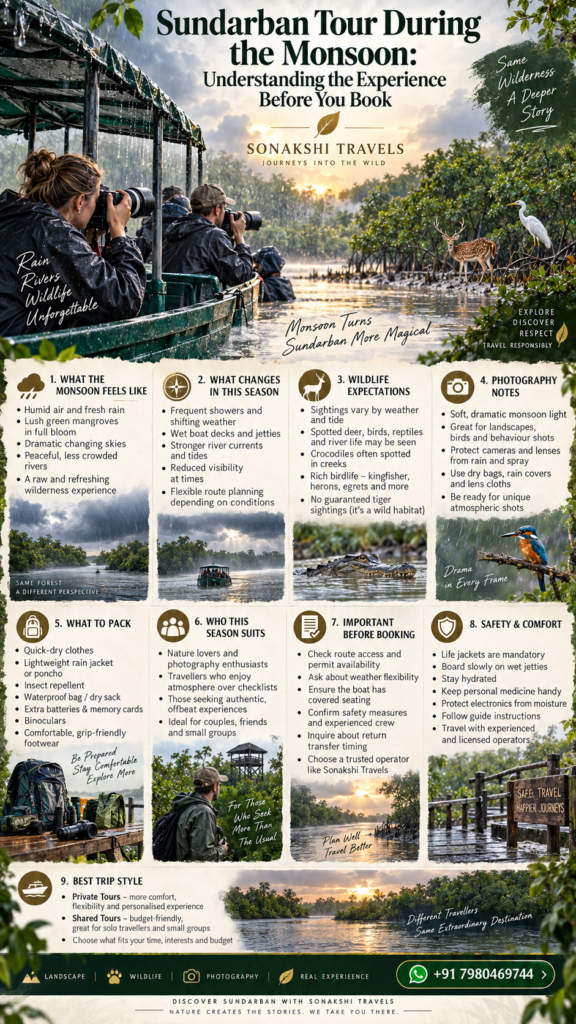
Why the Monsoon Changes the Sundarbans So Much
The Sundarbans is not a fixed landscape. It is a large mangrove delta shaped by rivers, tides, mud, salt water, fresh water, rain, and seasonal change. The UNESCO profile of Sundarbans National Park explains that monsoon flooding, tidal influence, sediment movement, and mangrove growth are part of the natural processes that shape this ecosystem. During the rainy season, these forces become easier for visitors to notice because water is present everywhere and the forest looks more active.
Rain does not simply make the area wet. Mangrove leaves may look brighter, clouds soften the light, and rivers can look dramatic under dark skies. For travellers who enjoy landscape and atmosphere, this can be one of the most interesting ways to see the delta. At the same time, a plan may need to change because of rain, wind, tide, route conditions, or local instructions. Good monsoon planning therefore needs flexibility.
Monsoon Does Not Mean Constant Rain
Many international travellers imagine the Indian monsoon as nonstop rain from morning to night. In reality, the pattern can vary. A day may include a heavy shower, a long cloudy period, light rain, and even short breaks of sunshine. Another day may be much wetter.
This matters because boat travel depends on the timing and strength of the rain. Light rain can create a calm mood. Heavy rain can reduce visibility and keep people under the covered part of the boat. Strong wind or poor river conditions may lead the crew to slow down, wait, or change the route.
For a traveller flying from the USA or France, think of the monsoon as a season of changing weather rather than a simple “rainy day” forecast. Keep some free time around important flight, train, or Kolkata plans so that a slower transfer does not create unnecessary stress.
The Most Important Question: What Areas Will Actually Be Open?
Before booking a monsoon journey, ask exactly what part of the Sundarbans will be accessible on your travel dates. This is more useful than asking only, “Is the Sundarban open?” The wider region includes inhabited islands, village areas, rivers, resorts, approach routes, and protected wildlife zones. These do not always follow the same access rules.
Protected forest entry and tourism activity can be limited or suspended during parts of the rainy season. Rules may also change by date or zone. A tour operator should clearly explain what the package includes on your exact dates, which permits are expected, which watchtowers or creeks can be visited, and what alternative programme will be used if access changes.
A package should not be judged only by words such as “jungle safari” or “full Sundarban tour.” Ask for the route in plain language. If protected areas are not available, a trip may still include river travel, village areas, mangrove scenery, local culture, and outer-zone exploration, but it should not be presented as the same experience as a full forest safari.
What a Monsoon Boat Journey Feels Like
Boat travel is central to the Sundarbans, and wet weather makes comfort and boat quality more important. A useful boat should have a covered sitting area, enough dry space, safe boarding support, life jackets, a clean toilet, drinking water, and a crew that understands the river. Travellers should also have a dry place for bags, cameras, medicine, and electronic items.
The rivers can feel wider and more powerful in rainy weather. Rain on the water, low clouds, local boats, and green islands create a strong visual experience. Some visitors love this mood. Others may find several humid hours on a boat tiring. Your own comfort with moisture and long periods of sitting should influence the decision.
If you are arranging a Sundarban Tour from Kolkata, ask how the road transfer, jetty transfer, luggage movement, and boat boarding will be handled in rain. This is especially important for older travellers, families with children, and anyone carrying large suitcases after an international flight.
Wildlife Watching Is Different in the Rainy Season
Wildlife should never be treated as guaranteed in any season. Monsoon conditions can make viewing more dependent on visibility, water level, route access, and luck. Dense green cover may hide mammals. Rain can reduce the distance you can scan, and useful mudbanks may be covered by higher water at some times.
The forest still remains full of life. Visitors may notice bird calls, macaques, deer, reptiles, crabs, river activity, and changing mangrove habitat. The right mindset is to watch the ecosystem rather than wait only for a tiger. The guide to wildlife watching through patience, probability, and habitat explains why a Sundarban trip becomes more rewarding when travellers understand that animal movement cannot be scheduled.
A responsible operator should never promise a tiger sighting. Weather, tide, route rules, vegetation, and animal behaviour all affect what can be seen. If wildlife is your main reason for visiting India, compare the monsoon experience honestly with a later-season visit before confirming your dates.
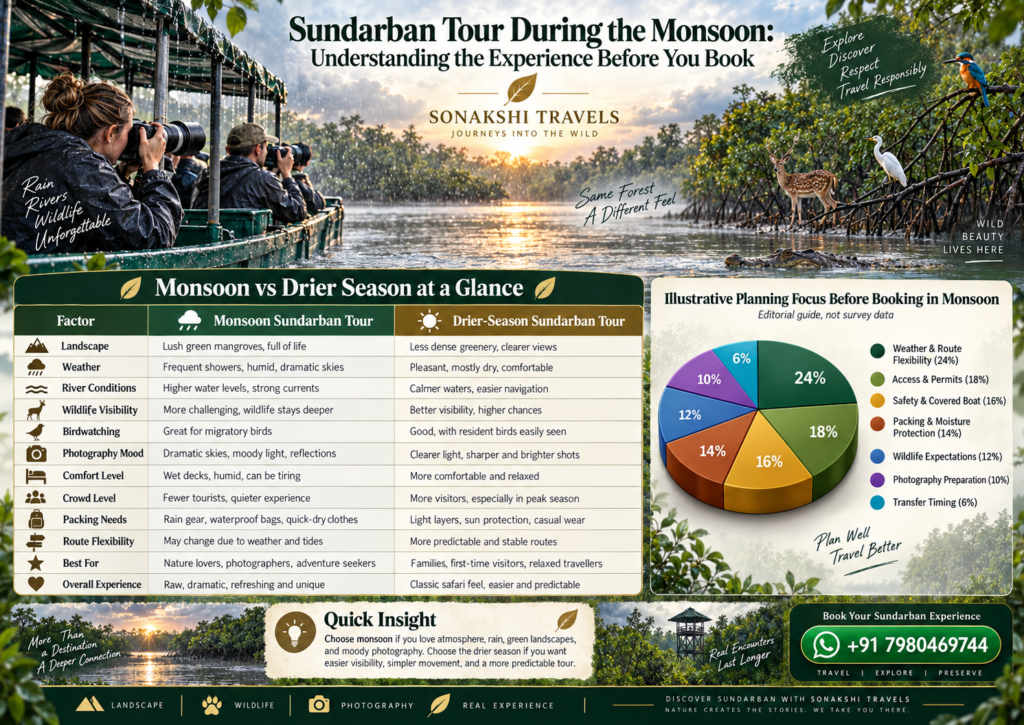
Birdwatching Can Still Be a Strong Part of the Experience
Birding changes the way travellers use quiet time on the river. Instead of searching only for large mammals, you begin to watch branches, exposed roots, creeks, open water, mud edges, and village-side wetlands. Kingfishers, herons, egrets, cormorants, raptors, and other birds can create many small moments even when larger wildlife remains hidden.
Monsoon birding is not the same as winter birding. Some seasonal migrants may not be present, and rain can make binocular use harder. However, the green habitat and softer light can still be rewarding. For a deeper view of habitat-based observation, read this Sundarban birdwatching guide for international nature travellers.
Humidity Is Often a Bigger Problem Than the Rain
Travellers often prepare for rainfall but underestimate humidity. Clothes may dry slowly, glasses can fog, and camera gear may collect moisture when moved between an air-conditioned room and the warm outdoor air. Wear light, quick-drying clothes, keep a dry shirt in your day bag, and use footwear with good grip because jetties and boat floors can become slippery.
A light rain jacket or poncho is useful, but very heavy waterproof clothing can feel uncomfortable in warm weather. Photographers should protect lenses, camera bodies, memory cards, batteries, and bags. This guide to protecting camera gear from humidity and river spray gives more practical advice for carrying equipment on a river journey.
Photography in Monsoon Light
Monsoon light can be one of the best reasons to travel in this season. Cloud cover often reduces harsh contrast, while wet leaves look rich in colour. Rain over a river, village boats, mangrove roots, and dark skies can create strong landscape photographs.
Wildlife photography may be harder because light levels can drop and rain can blur distant subjects. Use a rain cover, keep a lens cloth ready, and avoid placing a camera bag directly on a wet floor. Keep spare batteries and memory cards in sealed pouches. When moving from strong air conditioning into warm, wet air, give cold equipment time to adjust before opening the bag fully.
How Monsoon Affects Comfort for USA and France Travellers
Warm rain, high humidity, insects, wet boarding points, and long boat hours can feel tiring after an international flight. Jet lag may also make early starts harder. If your schedule allows, one comfortable night in Kolkata before the river journey can help you rest, organise luggage, and prepare a smaller bag.
Carry regular medicine in hand luggage, along with copies of prescriptions where useful. Bring insect repellent, sun protection, a reusable water bottle, hand sanitiser, and a small towel. Do not assume that cloudy or rainy weather means there is no risk of dehydration.
Private Tour or Shared Tour in the Monsoon?
A private boat can offer useful flexibility in wet weather. A small group may have more control over seating, meal timing, photography stops, and the pace of the day, as long as all movement follows local rules and safety needs. Shared tours are usually more budget-friendly but follow a more fixed timetable.
Travellers comparing options can review private Sundarban tour planning options and then check what is actually included. Ask whether the boat and Kolkata vehicle are private, how meals are served, who manages permits, and what happens if a planned route is unavailable.
How Many Days Should You Book During the Monsoon?
A one-day journey can give a first look at the rivers and mangrove setting, but it creates pressure because travel from Kolkata takes time. If rain slows the road or boat journey, a short programme has little room to adjust. For many international travellers, two nights and three days can provide a more relaxed structure, especially if the middle day is kept for the main river experience.
More days do not guarantee better weather or more wildlife. They simply provide more time for changing conditions. Before deciding, read the guide on how many days are really needed for a meaningful Sundarban tour. Judge the itinerary by useful river and forest time, not only by the number of hotel nights.
Food, Water, and Hygiene Matter in Wet Weather
Ask whether meals are freshly cooked, how drinking water is stored, and whether the boat has a clean toilet. If you have food allergies, vegetarian needs, Jain food requirements, or other dietary limits, explain them before the trip. Carry a small personal supply of safe snacks for delays, but follow local rules about where food may be eaten.
A well-managed Sundarban Travel plan should treat meals, drinking water, clean seating, and washroom access as part of the travel experience. These details matter when you spend many hours away from the hotel.
Safety: What Responsible Monsoon Planning Looks Like
Safety begins with accepting that weather has the final word. If wind, rain, visibility, tide, or official instructions create a problem, the route may need to change. This is responsible management, not poor service.
Life jackets should be available and easy to reach. Boarding should be assisted where steps or jetties are wet. Move slowly on slippery surfaces, keep your hands free while boarding, and keep children under close adult supervision near open sides.
The general background page on Sundarbans National Park can help first-time visitors understand the protected landscape. Once you arrive, current permissions, local instructions, and the boat crew’s safety decisions should take priority over assumptions based on old travel information.
Common Mistakes When Booking a Monsoon Sundarban Tour
Booking Without Asking About Seasonal Access
The biggest mistake is paying without knowing which forest zones, watchtowers, or routes are expected to be open. Ask for a written monsoon programme and the alternative plan if access changes.
Expecting Winter-Season Wildlife Conditions
Dense leaves, rain, high water, and seasonal restrictions can change what you see. If tiger-focused wildlife photography is your main aim, choose your travel period carefully.
Carrying Too Much Luggage
Large suitcases are awkward on wet jetties and smaller transfer boats. A compact bag with a waterproof cover is easier to manage.
Treating a Weather App as a Fixed Schedule
A forecast showing rain does not tell you exactly when it will rain over your route. Use forecasts as guidance, not a promise.
Ignoring the Return Journey
Do not plan a tight international flight connection immediately after leaving the Sundarbans. Road traffic, rain, boarding, and river conditions can add delay.
Who Is a Monsoon Sundarban Tour Best For?
A monsoon journey can suit travellers who enjoy landscape, weather, photography, local life, green scenery, and slow river travel. It may be less suitable for travellers who want a fixed wildlife checklist, guaranteed access to every named sightseeing point, dry conditions, or a tightly timed schedule.
Families and older travellers can still visit if the itinerary is comfortable and the operator is clear about access and safety. The key is whether the plan matches mobility, health, expectations, and tolerance for changing weather.
Questions to Ask Sonakshi Travels Before You Book
Ask which protected areas are expected to be open on your dates, whether permits are included, whether the boat is private or shared, what type of roof and seating it has, whether life jackets are carried, how luggage is protected, and what route is used if heavy rain affects the original plan.
Also ask where you will stay, how far the resort is from the jetty, how meals are managed, whether an English-speaking guide or tour manager is included, and how the return to Kolkata is planned. If you have a flight after the trip, share the exact flight time before finalising the schedule.
A clear Sundarban Tourism booking should explain both the attractive parts of the monsoon and its limits. Good planning is not about promising perfect weather. It is about giving travellers enough information to make a sensible choice.
A Practical Monsoon Packing List
- Light, quick-drying shirts and trousers.
- A thin rain jacket or poncho.
- Footwear with good grip.
- Water-resistant day bag or dry bag.
- Zip pouches for passport copies, phone, chargers, medicine, and cash.
- Insect repellent, sunscreen, hat, and sunglasses.
- Binoculars with a protective case.
- Camera rain cover, lens cloths, spare batteries, and memory cards.
- Reusable water bottle, small towel, and extra dry shirt.
- Personal medicine and basic travel health items.
Keep the list practical. A light, organised bag is easier to move between car, jetty, and boat than a large suitcase full of items you may not use.
Is the Monsoon the Right Time for Your Sundarban Tour?
The answer depends on what you want. If you want a green landscape, dramatic weather, softer photography light, and the feeling of a tidal delta under rain, the monsoon can be memorable. If your priority is wider access to protected tourism routes, easier wildlife scanning, drier conditions, and a more predictable day, another season may suit you better.
The most important point is to separate the idea of “visiting the Sundarbans” from the idea of receiving the same safari in every month. Seasonal conditions can change forest access, river movement, wildlife visibility, comfort, and daily timing. A useful booking should explain these differences before you pay.
For USA and France travellers, the journey is long enough that expectations should be clear before leaving home. Choose realistic timings, safe transfers, a suitable boat, flexible planning, and honest information about monsoon access. When these points are handled well, a Sundarban Tour during the rainy season can become less about chasing a checklist and more about understanding how water, weather, mangroves, wildlife, and human life are connected in one of the world’s great tidal landscapes.