Sundarban Wildlife Truth: Tigers, Crocodiles, Snakes, and the Real Spirit of the Mangrove Forest
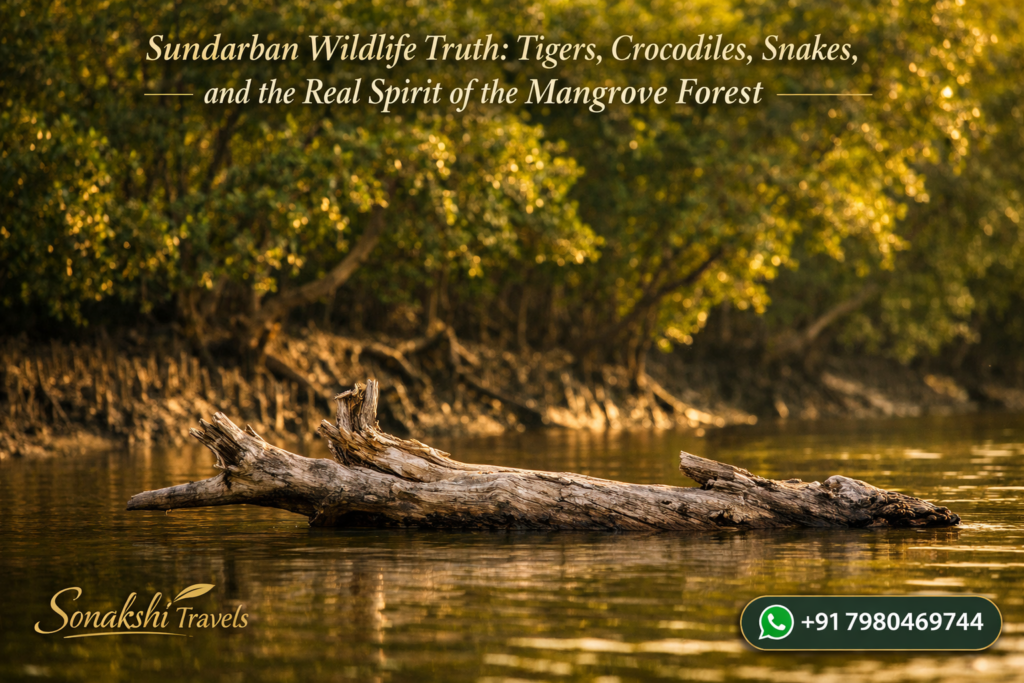
The Sundarban is one of those rare places that people do not forget easily. It is not only a forest. It is a living world of muddy riverbanks, dark creeks, tangled roots, changing tides, and deep silence. In many parts of India, forests stand on land. The Sundarban stands between land and water. That is why every question about this region feels stronger, sharper, and more full of wonder. People do not ask only where to go. They ask what lives there, what moves in the water, what hides in the grass, and what may appear at the edge of a creek when the boat slows down.
For many travellers, the first image of this region is the Royal Bengal tiger. Yet that is only one part of the story. The deeper truth is that the Sundarban is a complete wildlife landscape. It includes fear, beauty, mystery, and balance. A tiger may shape the imagination, but crocodiles, snakes, birds, deer, fish, mudskippers, crabs, and mangrove life all help define the place. To understand the Sundarban properly, a person must look beyond one animal and begin to see the entire natural system.
This is why the most meaningful way to speak about the region is not through isolated facts, but through the larger truth of its wild character. Questions such as whether there are crocodiles, whether snakes are common, how travellers may see tigers in Sunderbans, and whether the forest holds a white tiger all point toward one central idea. People want to know what kind of wild place the Sundarban really is. They want the truth behind the legend.
The Sundarban Is Not a Zoo but a Living Wild System
Many travellers make a mistake before they arrive. They imagine the forest as a place where animals are waiting to be seen clearly and quickly. The Sundarban does not work in that way. It is not built for easy display. It is a tidal forest. Water rises and falls. Mudbanks appear and disappear. Creeks become narrow and then open again. Light changes from hour to hour. The animals here survive by remaining alert, hidden, and closely linked to their environment.
This is why the Sundarban should be understood as a living ecosystem, not as a sightseeing spot. A tiger here is not separate from the creek. A crocodile is not separate from the river edge. A snake is not separate from the grass, roots, embankments, and humid ground. Every part of the landscape supports another part. Mangrove trees hold the soil. The soil supports crabs and fish. Fish feed larger creatures. The water channels create movement. The tides reshape the daily rhythm of life.
That is also why visitors often feel something unusual during a Sundarban tour. Even when an animal is not visible, the forest still feels full of life. There may be a sudden ripple in the water, a bird call from deep inside the green cover, or a broken track on wet mud that suggests recent movement. The experience is powerful because the forest is always active, even when it appears quiet.
When people ask whether there are crocodiles in Sundarban or whether there are snakes in Sundarban, they are really asking a larger question. They want to know if the region is truly wild. The answer, in a broad and honest sense, is yes. The Sundarban is a place where water, land, and wildlife still meet in a very real way.
Why the Tiger Stands at the Heart of the Sundarban Story
No animal shapes the identity of this forest more strongly than the Royal Bengal tiger. Across India and beyond, the Sundarban is linked with the image of a tiger moving through mangroves, swimming across channels, or leaving marks in the soft mud. This image has become so powerful because the tiger here feels different from the tiger of dry forest or grassland. In the Sundarban, the tiger belongs to a water-rich world. That creates a stronger sense of wonder.
People often search directly for answers to questions like is there a Royal Bengal tiger in Sundarban because they want certainty. They want to know whether the legend is real or only a travel story. The heart of the matter is simple: the tiger is central to the identity of the region. But that does not mean every visitor will see one. In fact, the rare nature of the sighting is part of what makes it meaningful.
A tiger sighting in the Sundarban is not like finding an object. It is an event shaped by patience, timing, silence, and luck. A person may spend hours on a boat, scanning creek edges, watchtower areas, and mudbanks without seeing one. Then, in a brief moment, a shape may appear at the far edge of the forest line and disappear again. That short glimpse can stay in the memory for years.
Crocodiles and Snakes Make the Forest More Real, Not Less Beautiful
Some travellers hear about crocodiles and snakes and feel fear immediately. That fear is natural, but it should be placed in the right frame. Dangerous animals do not reduce the beauty of the Sundarban. They are part of the reason the forest still feels powerful and real. A landscape without risk often becomes a landscape without depth. The Sundarban keeps its character because it remains a working natural world, not a polished tourist display.
Crocodiles belong naturally to the water-based identity of the region. In a delta of rivers, creeks, muddy banks, and tidal movement, a powerful water predator fits the larger pattern of life. Their presence reminds visitors that the waterways are not just routes for boats. They are living habitats. When a traveller watches the quiet surface of a tidal channel, that silence may hold more life than expected.
Snakes also fit the same ecological truth. A mangrove forest with thick vegetation, wet soil, roots, and riverbank edges is the kind of place where reptiles are part of the system. Yet this should not lead to panic. Responsible tourism, guided routes, marked visit areas, and basic caution all help reduce unnecessary risk. The right response is not fear-driven imagination. The right response is respect.
In fact, these animals help travellers understand something important. The Sundarban is not special only because it has one famous tiger image. It is special because it is complete. A complete forest has layers of life. Some are beautiful in a direct way, like birds, spotted deer, or sunrise over water. Others are beautiful in a harder way, because they show strength, survival, and natural balance. Crocodiles and snakes belong to that second kind of beauty.
When people ask if these animals are there, they are also asking whether the forest is still authentic. That is why such questions matter. They are not small details. They help define the difference between a symbolic forest and a real one.
Myth, Curiosity, and the White Tiger Question
Whenever a place becomes famous, stories begin to grow around it. Some of these stories come from wonder. Some come from confusion. Some come from cinema, dramatic pictures, or the human habit of making wild places even more mysterious than they already are. That is why people often ask is there any white tiger in Sundarban. The question may sound simple, but it shows a deeper pattern of thought.
Many people want the rarest version of every animal story. A normal tiger is not enough for imagination, so the mind asks for a white tiger. A river is not enough, so it asks for hidden danger at every turn. A forest is not enough, so it asks for movie-level drama. Yet the truth of the Sundarban is already strong without added fantasy. The real Sundarban tiger does not need extra colour to become meaningful. Its power comes from place, behaviour, and presence.
This is a useful point for both readers and travellers. Nature becomes easier to respect when it is seen clearly. Myths may attract attention, but truth creates lasting understanding. In the Sundarban, the most important question is not whether the forest holds an unusual colour form that people like to imagine. The more important question is whether we are ready to understand the actual forest on its own terms.
That same pattern appears in popular culture too. Many people move from screen stories to real-world curiosity. A person may first hear of the region through fiction, dramatic animal tales, or searches about where to watch Roar: The Tiger of the Sundarbans. But once interest deepens, a better question begins to form. Instead of asking only where the story can be seen, the person starts asking what the real Sundarban is actually like. That shift from drama to understanding is important. It is the difference between consuming a wild image and truly respecting a wild habitat.
How Visitors Should Think About Seeing Wildlife in the Sundarban
The best way to enter the Sundarban mentally is with the right expectation. Visitors should not travel only with the hope of collecting one dramatic sighting. They should travel with the wish to understand a rare environment. This approach changes everything. It reduces disappointment and increases awareness.
A meaningful wildlife journey in the Sundarban depends on patience. Boats move through creeks slowly. Watchtowers offer distant views, not guaranteed action. The forest often reveals itself in fragments. A paw mark on soft mud, a bird suddenly lifting from reeds, the alert stillness of deer, a half-hidden shape near a bank, or a moment of silence in which everyone on the boat looks in the same direction—these are all part of the experience.
Good visitors also learn to value indirect signs. In many wild landscapes, animals are understood not only through direct sight but through signs of presence. This is especially true in the Sundarban. A forest does not become empty just because an animal is hidden. In fact, the hidden life of the forest is often what creates its strongest feeling.
There is also an ethical side to this matter. Wildlife should never be chased, disturbed, or reduced to a photo target. A forest like this deserves quiet observation. This is why guided travel matters. Local knowledge helps visitors stay safe, follow rules, and understand what they are seeing. It also helps turn the journey from a simple outing into a learning experience.
The Real Spirit of the Sundarban Is Respect, Not Fear
It is easy to build a simple story around the Sundarban. One version makes it only frightening. Another makes it only beautiful. Neither is complete. The real spirit of the place lies in the meeting of the two. The Sundarban is beautiful because it is alive, and it is alive because it has not been fully softened for human comfort.
This is why the tiger, crocodile, and snake should not be seen as separate fear symbols. Together they represent something larger: the forest still has its own rules. Human beings enter it as visitors, not masters. That idea may feel old, but it is deeply important in the modern world. Many landscapes today are shaped fully by roads, noise, buildings, and constant human control. The Sundarban still resists that complete control. That gives it dignity.
For travellers, this brings a valuable lesson. A good journey is not always the one that gives the most direct action. Sometimes the strongest journey is the one that changes how a person sees nature. In the Sundarban, a visitor learns to slow down, observe more carefully, and accept that not everything wild will reveal itself on command. That lesson has value far beyond tourism.
The region also teaches that wildness is not chaos. It is order of another kind. Mangroves, tides, reptiles, predators, prey, birds, fish, and muddy channels all work within a system that has grown over time. To respect that system is to understand the forest more truthfully.
Conclusion: The Sundarban Is Powerful Because It Is Real
The most important truth about the Sundarban is not hidden in one dramatic answer. It lies in the full picture. Yes, the forest is linked with the Royal Bengal tiger. Yes, questions about crocodiles and snakes are natural. Yes, stories, myths, and film-based curiosity shape how many people first imagine the place. But the lasting value of the Sundarban comes from something deeper. It remains a rare landscape where wildlife is not symbolic decoration. It is part of the actual life of the land and water.
That is why the Sundarban continues to hold such strong meaning in the minds of travellers, readers, and nature lovers. It is not a forest that offers simple certainty. It offers reality. It asks people to replace fantasy with attention, fear with respect, and quick expectation with patient understanding.
In the end, that is what makes this mangrove world unforgettable. The tiger matters. The crocodile matters. The snake matters. The tides matter. The silence matters. Together they create a place that still feels wild in the fullest sense. And that is exactly why the Sundarban continues to call people toward it with such lasting force.