Updated: March 28, 2026
Eating Ilish in the Rain — My Emotional Journey through the Sundarban Hilsa Festival 2026
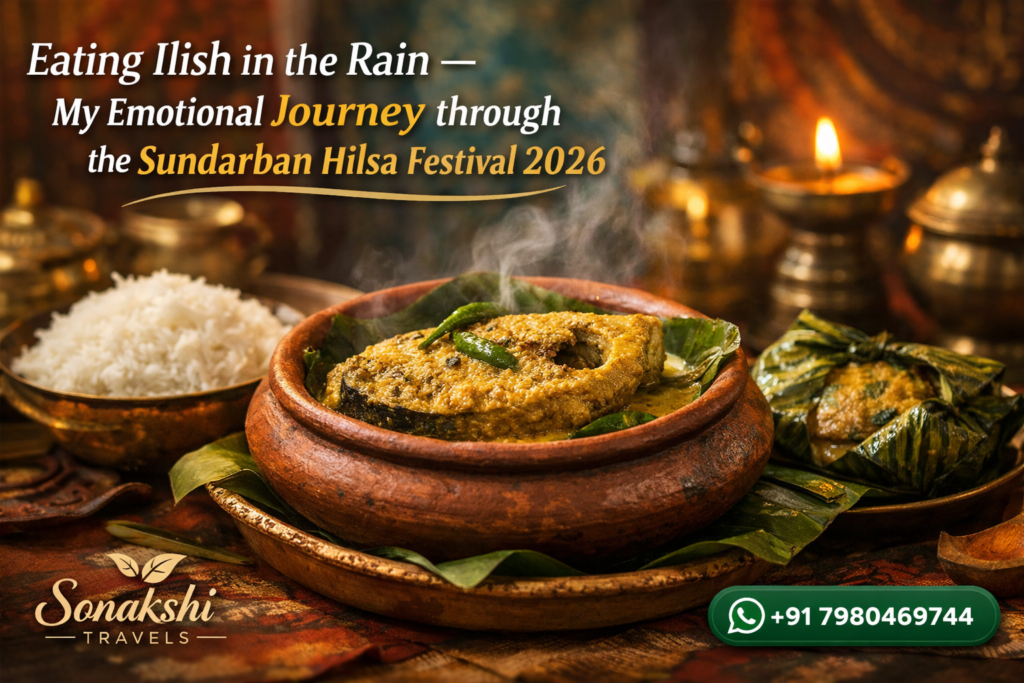
Some meals stay on the tongue for a few minutes. Some stay in the mind for years. My memory of eating ilish in the rain during the Sundarban hilsa festival 2026 belongs to the second kind. It was not only about taste. It was about air, sound, light, wet wood, slow river movement, and a feeling that the land itself had joined the meal. I had eaten ilish before in homes, restaurants, and family gatherings. I knew its smell, its soft flesh, and the careful respect people give to its bones. But that day in the Sundarban, with rain falling over water and mangrove edges turning dark with moisture, the fish felt different. It did not come to the plate as food alone. It came carrying weather, river life, memory, and emotion.
The first thing I noticed was the silence before the meal. Rain has many voices, but in the delta it does not sound like city rain. In the city, rain falls on tin, glass, engines, wires, and concrete. In the Sundarban, it falls on leaves, soft mud, river skin, bamboo, cloth roofs, and boat decks. Each surface answers in its own way. That afternoon, the rain did not create noise. It created layers. A light tapping came from somewhere near the shaded edge. A deeper sound rose from the river where drops met tidal water. There was a small smell of wet earth, but it mixed with salt, silt, fish, smoke, and mustard. Before I even saw the dish properly, I felt that I was inside an atmosphere made for it.
Ilish has a special place in Bengal because it is never just a fish. It is tied to season, emotion, family pride, and cooking skill. Yet in the Sundarban, that meaning becomes even deeper. This delta is a place shaped by river exchange. Freshwater and tidal force meet here. Silt travels, settles, and moves again. Fish life depends on that rhythm. Hilsa belongs to movement. It is a migratory fish, and much of its cultural value comes from that journey through living water. So when ilish is served in the Sundarban during rain, the meal feels connected to a larger cycle. You are not simply eating a famous dish. You are eating a moment in the history of the river.
The Rain Changed the Meaning of the Meal
I have often felt that weather can alter taste without changing the recipe. That day proved it to me with complete clarity. The ilish before me was warm, rich, fragrant, and deeply Bengali in character, but the rain gave it a strange tenderness. Steam rose from the plate and met the cool damp air. The mustard carried a sharpness, but the rain softened the mood around it. The oil shone under a grey sky. Green chilies looked brighter because the rest of the world had turned muted. Even the rice seemed calmer, as if the weather had asked every strong thing on the plate to speak in a lower voice.
There is a physical reason for some of this. Smell becomes more noticeable in humid air. Damp conditions can hold aroma close to the body instead of letting it disappear too quickly. But what science explains in one way, feeling explains in another. Rain slows attention. It asks the eater to pause. It reduces hurry. It makes a person aware of warmth, shelter, and closeness. This is why that plate of ilish felt almost intimate. I was not just consuming food. I was receiving comfort from it.
The first bite carried mustard heat, soft flesh, and the deep river sweetness that makes ilish unlike other fish. Then came the bones, which are not a problem to be removed quickly but a part of the whole experience. Eating ilish always teaches patience. You cannot rush it. You cannot treat it carelessly. The bones force a rhythm. They make the mouth work with attention. In a strange way, that matched the rain outside. Both the weather and the fish asked for slowness. Both refused speed. That harmony stayed with me long after the meal ended.
Why the Festival Felt Emotional, Not Just Enjoyable
Many food events are lively, colorful, and entertaining. This one was all of that, but my strongest response was emotional. I think that happened because the setting did not allow distance between the eater and the place. In many festivals, food can be removed from its landscape and still remain almost the same. A sweet can travel. A fried snack can travel. But ilish in the rain inside the Sundarban felt rooted to the exact place and hour in which I ate it. If someone had served the same dish in a bright city dining room, it would still have been delicious, but it would not have entered the heart in the same way.
The Sundarban ilish utsav 2026 did not move me only because it celebrated food. It moved me because it revealed how food can become a bridge between body and landscape. I was tasting something local while also feeling the humidity on my skin, watching the river darken under cloud, and hearing rain pass over the mangroves in small shifting waves. The meal did not sit apart from the environment. It belonged to it. That belonging created emotion.
There was also something deeply human in the way ilish was handled. This fish asks for knowledge. It asks for careful cutting, proper spice balance, and heat control. Too much force can break its character. Too much mustard can bury its subtle richness. Too little care can turn it oily or flat. A good ilish dish shows respect for ingredient, region, and eater. In that rain-soaked setting, I felt respect in every part of the presentation. The food did not try to impress through excess. It trusted its own history. That quiet confidence is often more moving than display.
The Landscape Entered the Plate
It may sound poetic to say that the landscape entered the plate, but that is truly how it felt. The color of the meal echoed the place around it. The silver memory of the fish belonged to river light. The yellow mustard held the warmth missing from the sky. The green chili answered the wet leaves and grass. The white rice reflected the pale openness of rain-fed light. Even the smell of the dish seemed to carry water inside it. I do not mean that the food tasted watery. I mean it tasted alive to moisture, tide, and fresh air.
The Sundarban is a place where boundaries are never fully fixed. Water and land keep negotiating with each other. Mudbanks appear and disappear. Roots rise above the ground like thought made visible. Channels widen and narrow. This movement creates a psychological effect on the visitor. One becomes more alert, but also more humble. You realize very quickly that nothing here is entirely still. Eating ilish in such a place gives the meal a special seriousness. It reminds you that food also comes from movement, ecology, labor, and change. A fish on a plate is the end of a long natural and human story.
That awareness made me eat with gratitude. I thought not only of flavor but of river systems, fishing knowledge, cooking hands, and cultural inheritance. A meal becomes emotional when it opens these layers without forcing them. The best moments do not lecture. They simply let the truth be felt. That afternoon, the rain, the river, and the ilish together made me feel the full chain between nature and nourishment.
What I Learned from the Bones, the Mustard, and the Rain
Every memorable meal teaches something. This one taught me three lessons. The bones taught patience. The mustard taught intensity with balance. The rain taught surrender.
The bones demanded care. Anyone who loves ilish knows that eating it well requires attention. You cannot break into conversation, distraction, and speed at the same time. You must stay present. That presence changed my emotional state. I became quieter. I listened more closely. I noticed the rain not as a background effect but as a living part of the meal.
The mustard taught another lesson. Strong flavors can still remain elegant. A sharp ingredient does not need to become aggressive. Good mustard with ilish should lift, not dominate. That day, the seasoning seemed to understand restraint. The dish had warmth, but not harshness. It had identity, but not heaviness. This balance felt important because the surrounding world was already full of mood. The sky was grey. The air was damp. The river was dark. The food did not fight that atmosphere. It completed it.
The rain taught surrender in the gentlest way. In ordinary life, people often resist rain. They run, cover, adjust, complain, and calculate. In the Sundarban that day, I stopped resisting. I let the rain become part of the experience. The wetness in the air, the coolness on the arm, the slow rhythm in the background, all of it entered the mind and settled there. When resistance ended, feeling deepened. That may be why the meal became so memorable. I was not trying to control the moment. I was letting it happen.
The Emotional Weight of Eating Local Food in Its Own Place
There is a difference between tasting a famous dish and encountering it where its cultural meaning is strongest. That difference is not only about freshness. It is about context. Local food in its own place carries emotional density. The eater senses that the dish is not performing for outsiders. It exists naturally. It belongs to daily life, seasonal memory, and community feeling. That was the strength of my ilish experience in the festival. It did not feel staged. It felt lived.
In that sense, the meal gave me a deeper Sundarban travel experience than many grand scenes could have done. A person can look at water, trees, and sky and still remain outside them. But when the local environment reaches the body through food, distance becomes smaller. Taste creates entry. The place moves inward. I felt that very strongly while eating. The Sundarban was no longer only around me. It was within me, carried through smell, heat, texture, and memory.
Food scholars often explain that eating is both biological and cultural. I would add that in rare moments it also becomes ecological and spiritual. Ecological, because the meal reflects a living environment. Spiritual, because it creates a quiet sense of connection larger than appetite. My experience with ilish in the rain held both. I was fed, but I was also changed. The meal gave comfort, but it also gave reflection.
The Psychology of Rain, Memory, and Taste
Why do some meals become unforgettable? One answer lies in emotional context. Human memory holds more tightly to experiences that join several senses at once. Taste alone may fade. Taste mixed with sound, moisture, temperature, smell, and feeling becomes much harder to lose. That is exactly what happened during my meal at the festival. The fish was excellent, but the memory became permanent because the rain wrapped itself around every bite.
Rain also creates inwardness. People become quieter in rain. They look longer. They think more softly. The outside world appears blurred, and the inside world grows clearer. This inward state can make a person more open to emotional impression. I think that is why the ilish seemed almost personal to me. It touched something more than hunger. It touched remembrance, longing, and a sense of being briefly held by the world.
There was no sadness in that feeling, but there was depth. Good emotional experiences are not always cheerful in a simple way. Sometimes they are full because they carry beauty and fragility together. The rain might stop. The plate would empty. The steam would disappear. The river light would change. I knew the moment was temporary even as I was inside it. That awareness gave it weight. Temporary things often move us most.
More Than a Festival, It Felt Like a Conversation
By the end of the meal, I no longer felt that I had merely attended a food event. It felt as though the day had spoken to me in a language made of rain, fish, and silence. The meal was one part of that language, but not the only part. The river contributed. The wet air contributed. The smell of mustard and cooked fish contributed. So did the slow care required to separate flesh from bone. Each element said something about value, rhythm, and attention.
That is why I would never reduce the memory to a simple statement like “the food was very tasty.” That would be true, but incomplete. The real truth is larger. Eating ilish in the rain during the Sundarban hilsa festival felt like entering a brief but meaningful conversation between human appetite and the emotional life of a landscape. The meal became a way of listening.
Even now, when I think back on it, I do not first remember the exact arrangement of the plate. I remember the air. I remember the rain touching the edges of the moment. I remember how the mustard smelled stronger in damp weather. I remember how carefully I ate because the fish required care. Most of all, I remember the feeling that the Sundarban had become very near, not through explanation, but through experience.
Why This Memory Will Stay with Me
Some journeys are remembered by distance covered. Some are remembered by sights collected. This one will stay with me because of one meal taken in one hour of rain. That may sound small, but in truth it is not small at all. Human beings often remember life through concentrated moments. A smell, a taste, a sound, a piece of weather, a silence around the table — these can hold more truth than many long descriptions.
My emotional journey through the festival was not dramatic. It was quiet, slow, and deeply felt. It began with rain, opened through aroma, deepened through taste, and ended in reflection. The ilish was delicious, yes, but more importantly it revealed something about place and feeling. It showed me that food can become a form of understanding. It showed me that a festival can become a memory of tenderness. It showed me that rain does not always interrupt a meal. Sometimes it completes it.
That is why the experience remains so alive in me. It was not only a plate of fish. It was river memory served warm. It was Bengal’s emotional food meeting one of Bengal’s most living landscapes. It was a meal that asked for patience and gave back depth. And in that soft rainy hour, the Sundarban did not stand before me as scenery. It entered my heart through ilish, and it has stayed there ever since.