Updated: March 28, 2026
Are Photography Guides Available in a Sundarban Private Tour Package?
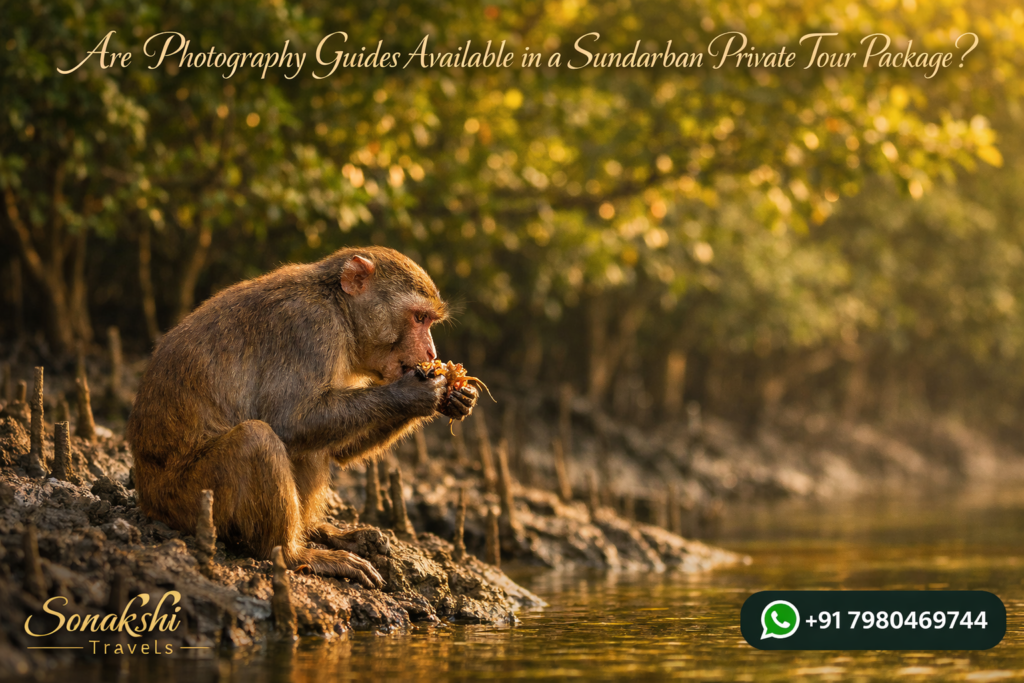
Yes, photography guidance can be available in a Sundarban private tour package, but the real answer needs more care. In a place like the Sundarban, photography is not only about carrying a camera and pressing a button when something appears. The landscape moves with tide, light changes very fast, wildlife appears without warning, and the forest often reveals itself in fragments. Because of that, a serious traveler often wants to know whether the journey includes only transport and sightseeing, or whether it also includes thoughtful help in seeing, waiting, framing, and understanding the right moments.
That question becomes even more important in a Sundarban private tour. A private journey creates better conditions for photography than a crowded shared trip. There is more silence, more control over movement, more freedom to pause, and more space to observe the changing shape of the mangrove world. When that privacy is combined with proper photography support, the experience becomes far richer. The traveler is no longer only looking at the forest. The traveler begins to read the forest through light, distance, behavior, texture, and mood.
In many cases, photography guidance in the Sundarban does not always come in the form of a person introduced only as a “photography guide.” Sometimes the help comes through a knowledgeable naturalist, an experienced boatman, a local guide who understands animal movement, or a tour team that knows how photographers need time and position. In stronger cases, a package may also arrange a person who can actively support composition, timing, subject spotting, and ethical field practice. So the more useful question is not only whether a guide is available, but what kind of guidance is actually being offered inside the private experience.
Why Photography Support Matters in the Sundarban
The Sundarban is not an easy place to photograph well. It is beautiful, but it is also visually demanding. The rivers are wide, the creeks are narrow, the light can become harsh and then soft within a short time, and the most meaningful scenes are often subtle rather than dramatic. A root system rising from wet mud, a fishing eagle watching from a branch, a crocodile almost invisible on a bank, or the reflected shadow of mangroves in calm water may all require patience and trained attention.
This is why many travelers interested in a Sundarban photography tour look for guidance rather than simple sightseeing. They want help in understanding where to look, when to remain silent, how to hold expectation without disappointment, and how to photograph a landscape that often gives only partial views. A photography-oriented guide can help the traveler notice not only subjects but patterns. These patterns may include bird movement near exposed roots, changing water texture before a turn in the creek, or the way humid air softens distance and creates depth.
In a well-planned Sundarban tour, photography support is valuable because the forest does not behave like a staged location. Nothing is fixed. A guide with field awareness can help a traveler respond to uncertainty calmly. That kind of support improves both the images and the emotional quality of the journey.
What “Photography Guide” Usually Means in a Private Package
In practical terms, photography guidance inside a private package can mean several different things. First, it may mean a local field guide who understands the forest deeply and knows how to spot birds, reptiles, deer movement, mudbank activity, and subtle changes in the waterline. Second, it may mean a naturalist who can explain the behavior of the ecosystem so that the photographer can anticipate rather than react late. Third, it may mean a photography-aware escort who understands angle, light direction, subject distance, lens limits, and safe boat positioning.
These differences matter. A person may know the Sundarban well but may not know what a photographer needs. Another person may understand cameras but may not understand the living rhythm of the delta. The best situation inside a Sundarban private wildlife safari is when field knowledge and visual awareness come together. Then the guidance becomes precise. The traveler is told not only that a bird is nearby, but also from which side the light is better, when not to move suddenly, and why a quiet wait may produce a stronger frame than quick excitement.
That is why serious travelers should understand that photography support is not only technical. It is observational, ecological, behavioral, and ethical at the same time.
How a Private Setting Improves Photography Guidance
A private setting changes everything. In a shared group, the boat often moves according to general interest. People talk, shift, stand together, and react at different speeds. This makes concentrated photography harder. In a Sundarban private boat tour, the pace becomes more focused. The traveler or family can communicate directly with the team. The boat can hold silence longer. The angle can be managed more carefully. The guide can respond to one set of visual priorities instead of many.
This private structure is especially important for photography because image-making needs time. Good pictures are not always made in the first second. Often the guide must help the traveler stay with a scene. A bird may turn its head after several moments. A deer may step out more fully from the edge of foliage. A reflection may become cleaner when the water calms. A narrow creek may produce a better composition only when the boat enters it from the correct direction.
In an exclusive Sundarban private tour, that waiting becomes possible. Privacy does not only create comfort. It creates concentration. And concentration is central to photography in a place where much of the beauty lives in restraint, distance, and quiet timing.
The Role of Ecological Knowledge in Better Photography
One of the most useful parts of photography guidance in the Sundarban is ecological interpretation. A guide who understands the mangrove system can help the traveler see why the landscape looks the way it does and why certain subjects appear where they do. This does not turn the journey into a lecture. Instead, it makes observation more intelligent.
For example, a photographer may first notice only a muddy bank. A skilled guide may explain that the exposed roots, salinity patterns, and tidal marks create feeding or resting conditions for certain species. This changes the way the traveler sees the frame. The photograph is no longer only a record of a place. It becomes a record of relationship between water, soil, plant structure, and life.
That is why photography support in a Sundarban tour package is strongest when the guide understands the environment as a living system. Good wildlife and landscape images come not only from luck, but from informed attention. A guide who knows how the delta breathes can help the photographer wait in the right way.
Bird Photography and the Value of Specialized Observation
For many travelers, one of the biggest reasons to ask about photography guides is bird photography. The Sundarban can reward patient bird watchers, but photographing birds here is not always simple. Subjects may appear briefly, perch deep inside branches, fly across reflective water, or blend into the texture of the forest edge. A traveler interested in a Sundarban bird photography tour benefits greatly from a guide who can recognize calls, movement patterns, perching behavior, and feeding zones.
This kind of support improves not only success rate but also image quality. Instead of making hurried record shots, the photographer can prepare earlier. The guide may notice repeated activity in a certain part of the creek, predict a likely landing point, or advise the traveler to stay ready at a particular side of the boat. These small details matter because wild birds often give only seconds.
Even when the subject does not appear, a good guide still adds value. The traveler learns how to read silence, absence, and habitat. That learning becomes part of the deeper Sundarban travel experience. Photography in the Sundarban is not only about collecting species. It is about growing in perception.
Photography Guidance Is Also About Ethics
A responsible photography guide does more than help with good frames. The guide also protects the dignity of the place. This is very important in a sensitive mangrove ecosystem. Wildlife photography should not disturb animals, force movement, or turn a living habitat into a performance stage. A proper guide understands that distance, silence, and patience are not only artistic virtues. They are ethical duties.
In a thoughtful Sundarban tourism setting, photography guidance should teach restraint. This includes not shouting when wildlife appears, not demanding unsafe closeness, not creating unnecessary crowding on the boat, and not treating every sighting as a trophy moment. The best images from the Sundarban often come from respect. They carry space around the subject. They allow the forest to remain the forest.
For this reason, many travelers prefer a Sundarban family private tour or a private nature-focused arrangement when photography is important. It allows the guide to maintain discipline gently and to create a calmer visual environment. Ethical field behavior becomes easier when the group is smaller and more attentive.
What Kind of Help a Photographer Can Expect
Subject Spotting
The first level of guidance is simple but very important: finding subjects. In the Sundarban, many forms are hidden by pattern and distance. A guide may help identify movement in foliage, shape on mudbanks, or bird presence at the edge of a water channel before the untrained eye notices it.
Position and Timing
Good guidance also means helping the traveler understand when to be ready and from which side to observe. In a private boat, a guide can communicate quietly with the team so that body movement, viewing direction, and pause length work better for photography.
Reading Light and Mood
The Sundarban is a place of changing surface and filtered light. A guide with visual sense may point out when haze softens contrast, when backlight creates shape, or when reflective water becomes too bright for a clear frame. This is especially useful for travelers who are not professionals but still want thoughtful images.
Helping Beginners See Better
Not every traveler needs advanced camera instruction. Many only need help in seeing more clearly. A guide may suggest waiting for cleaner backgrounds, leaving more space in the frame, or focusing on behavior instead of only closeness. That kind of support can turn an ordinary Sundarban travel package into a meaningful visual learning experience.
Are Professional-Level Photography Guides Always Included?
Not always. This is an important point. A private package may include strong local guidance without including a dedicated professional wildlife photographer. So the answer is yes, photography guidance can be available, but the level of specialization varies. Some packages are suitable for general photography lovers. Others are better for serious camera users who want detailed assistance. A few may be designed more closely to a true Sundarban private safari tour with photography in mind.
Because of this, the value of a package depends on how clearly the provider understands photographic needs. A private package that simply offers privacy is helpful, but a private package that combines privacy with subject knowledge, silent handling, field ethics, and visual awareness is much stronger. That combination is what many travelers are really seeking when they ask about photography guides.
Why the Best Guidance Feels Quiet, Not Showy
In the Sundarban, the best guide is often not the loudest or most dramatic person on the boat. Good guidance here is subtle. It may come through a soft signal, a hand gesture, a low voice asking the traveler to remain still, or a short explanation about why a certain bend in the creek deserves attention. The guide does not fight against the place. The guide works with its rhythm.
This matters because the Sundarban is shaped by silence, waiting, and partial revelation. A noisy style of guiding can break the very atmosphere that photography needs. A refined guide understands that the traveler is not only trying to capture an animal or a landscape. The traveler is also trying to capture mood. And mood depends on stillness.
That is why photography support inside a Sundarban luxury private tour can feel especially rewarding. When the journey is calm, spacious, and carefully managed, the guide has a better chance to help the traveler respond to the place with patience rather than hurry.
So, are photography guides available in a Sundarban private tour package? Yes, they can be, and in a well-designed private experience they can add real depth to the journey. But the idea should be understood correctly. Photography guidance in the Sundarban is not only about camera skill. It is about seeing the forest with intelligence, reading movement with patience, respecting wildlife, and using privacy to create better conditions for observation.
The most valuable guide is one who helps the traveler move from simple looking to meaningful seeing. That guide may be a local expert, a naturalist, a photography-aware escort, or a combination of roles. What matters most is whether the guide can help the traveler understand the visual language of the mangrove delta.
In that sense, a strong Sundarban customized private tour does more than offer exclusive travel. It gives the photographer a quieter relationship with the landscape. It allows attention to deepen. It makes room for learning. And in a place as layered and elusive as the Sundarban, that kind of guidance is not a small extra. It is often the difference between taking pictures of a place and truly photographing its living spirit.