Sundarban Tour Package for Festival Season – Combine culture with travel
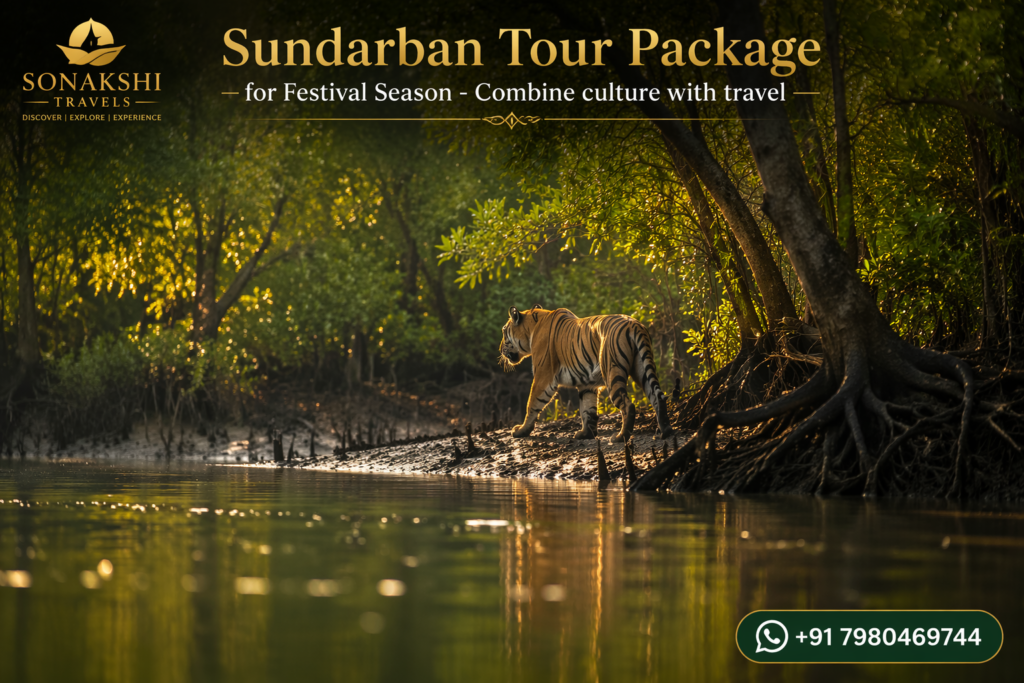
A festival-season journey in the delta is not only about movement through rivers and creeks. It is also about entering a lived cultural space where food, rhythm, local memory, ritual habits, river work, and shared celebration become part of the travel experience itself. A well-designed Sundarban tour package for festival season carries a different meaning from an ordinary leisure trip. It allows the traveler to witness how a landscape and a community move together during a special period. In the Sundarban region, celebration is rarely separate from daily life. Boats, kitchens, courtyards, folk performance spaces, prayer practices, market exchange, and seasonal hospitality all become connected in a natural sequence.
This is why festival travel in the delta feels deeper than a standard outing. The visitor does not merely look at scenery from a distance. The visitor enters a cultural atmosphere shaped by local timing and local participation. Sound matters more. Food carries more memory. Even the river journey feels different because people on board are not only moving through nature but also moving toward a shared occasion. That is where the real strength of a festival-focused Sundarban travel package appears. It creates a bridge between cultural observation and landscape immersion without forcing either one to dominate the experience.
Why festival season changes the meaning of the journey
During ordinary travel, people often divide a destination into separate parts. Nature is treated as one part, local life as another, and food as a third. In festival season, this division becomes weaker. The destination behaves as one connected field of experience. The decorated dining space, the fragrance of cooking, the exchange between hosts and guests, the energy on the jetty, and the movement of river boats begin to support one another. A traveler notices that the place is not performing for tourism alone. It is already alive with its own seasonal feeling. That is why a culturally aware Sundarban tour during a festival period often leaves a more lasting impression than a trip built only around movement and sightseeing.
Research in travel behavior often shows that memory becomes stronger when visitors can connect physical place with emotional context. Festival periods naturally create this connection. People remember not only what they saw, but how the place felt when music traveled over water, when local recipes were served with pride, when community storytelling explained the meaning of a season, and when the delta seemed to speak in more than one language at the same time. The journey becomes layered. Landscape gives visual depth, while festival culture gives emotional structure.
In this sense, a festival-oriented Sundarban travel experience should not be understood as an additional entertainment feature. It is better understood as an interpretive frame. It helps the traveler read the region with more sensitivity. Food is no longer just a meal. It becomes a sign of river ecology, local taste, household skill, and community pride. Performance is no longer only amusement. It becomes a form of memory carried from one generation to another. Hospitality is no longer a service gesture alone. It becomes part of the cultural ethics of receiving guests in a river-based society.
The cultural texture of the delta during celebration
The Sundarban region has a special cultural texture because life here has always been shaped by water, tide, work, faith, caution, adaptation, and collective dependence. Festival season does not erase this structure. Instead, it brings it closer to the surface. Decoration may appear simple, but the emotional depth behind it is strong. A meal served on a boat may seem festive, yet it is still connected to river knowledge, local supply, fishing traditions, and cooking styles refined through experience. This is why the cultural side of a festival-season Sundarban tour package with food and stay included can feel more genuine than many highly staged tourism environments elsewhere.
There is also a quiet seriousness beneath the celebration. Communities in the delta understand both abundance and fragility. Their cultural expression often carries joy, but not wastefulness. It values sharing, taste, rhythm, participation, and atmosphere more than spectacle. For the traveler, this creates a refined experience. The festival is not overwhelming. It is immersive. It does not demand attention through noise alone. It slowly enters the senses through smell, movement, conversation, and setting.
This balance is one reason why many thoughtful travelers increasingly look beyond routine leisure travel and search for a more grounded Sundarban luxury travel experience that includes cultural depth. Luxury in such a setting does not need to mean distance from local reality. At its best, it means comfort that allows clearer observation. It means time to notice small details. It means better hosting, better interpretation, and a more respectful connection between guest and place.
Food as a cultural language, not just a meal
Festival travel in the Sundarban cannot be understood properly without discussing food. In a delta culture, food carries geography. It carries livelihood patterns, household memory, river seasonality, and inherited taste. During festival periods, food becomes more visible as an expression of identity. This is especially true when the journey is shaped around the celebrated culinary heritage associated with river life. In such moments, the table becomes a cultural text. The ingredients, the style of cooking, the order of serving, and even the tone of presentation communicate something about the people who live in the region.
That is why the idea behind a festival-season Sundarban hilsa festival is so meaningful. It does not simply gather travelers around a famous fish. It creates a space where cuisine, river identity, hospitality, and celebration meet. The meal becomes part of the journey’s interpretation. Travelers begin to understand that taste here is not isolated from place. It belongs to waterways, estuarine habits, cooking memory, and the cultural prestige attached to seasonal dining.
During Sundarban ilish utsav, the experience often becomes especially rich because the culinary focus is supported by atmosphere. Meals on water, dining with a view of the riverbanks, and the slow rhythm of boat life together create a powerful sensory frame. What remains in memory is not only flavor. It is the full composition: the arrival of a dish, the conversation around it, the river breeze, the quiet between servings, and the understanding that food here is deeply tied to cultural seasonality. This makes the travel experience more complete and more intellectually satisfying.
For many travelers, such a setting also corrects a common misunderstanding. They begin the trip expecting food to be a pleasant addition. They return understanding that food was one of the main interpretive tools of the journey. In a region like this, cuisine is one of the clearest ways to encounter local culture without forcing it into explanation. Taste often communicates faster than lectures do. Festival dining, when handled with authenticity, can therefore become one of the strongest elements within a culturally meaningful Sundarban tourism package.
Landscape and celebration moving together
One of the most remarkable aspects of a festival-season journey in the delta is that celebration never feels fully separate from the landscape. The river remains present in every transition. Light changes on water. The banks appear and recede. The slow passage through channels creates pauses between cultural moments. These pauses matter. They prevent the experience from becoming crowded. They give the mind time to absorb what has just happened. A meal becomes more memorable after a silent stretch of river. A folk performance becomes more resonant when heard after watching long lines of mangrove edges and open sky.
This is where a thoughtfully curated best Sundarban tour package for festival season should show its value. It should not treat culture and nature as competing attractions. It should allow them to alternate and enrich one another. When this balance is achieved, the traveler does not feel pulled in two directions. Instead, one dimension deepens the other. The stillness of the delta sharpens the emotional effect of celebration. The cultural gathering, in return, makes the landscape feel inhabited, meaningful, and human.
Psychologically, this combination has a powerful effect. Human attention becomes more focused when contrast is gentle but clear. The quiet of the river heightens the warmth of a communal meal. The wide openness of the horizon makes intimate cultural moments feel more precious. The sensory softness of boat travel prepares the mind to receive small details with more care. This is why festival travel in the Sundarban often stays in memory not as one event, but as a sequence of connected impressions.
The role of local participation in authentic travel
No festival-season article on this subject would be complete without recognizing the central role of local participation. Cultural travel becomes meaningful only when the host community is not reduced to decoration. In the Sundarban, authenticity depends on whether local cooking, local performance traditions, local rhythms of welcome, and local forms of seasonal expression remain visible in their own right. A strong Sundarban travel agency Kolkata or a culturally sensitive host does not manufacture artificial excitement. It creates respectful conditions where the traveler can encounter what is already real.
This matters because experienced travelers can usually feel the difference between a staged display and a living seasonal mood. In the former, everything seems technically arranged but emotionally thin. In the latter, even simple details feel convincing because they belong to the place. A greeting sounds natural. A food story comes with memory behind it. A cultural performance has inherited rhythm, not just rehearsal. The traveler senses that they are not standing outside the experience. They have been invited into it carefully.
Such participation also benefits interpretation. When local voices explain why certain dishes matter, why a festival meal has symbolic value, or how river communities prepare for a seasonal cultural event, the journey becomes educational without becoming heavy. This makes the article’s central promise—combine culture with travel—more than a slogan. It becomes the practical foundation of the whole trip. A good Sundarban tour operator for festival travel should therefore be judged not only by logistical ability, but by how well it preserves this cultural integrity.
Silence, rhythm, and the emotional depth of the festival journey
The Sundarban has a rare ability to slow the mind. Festival season does not remove this quality. Instead, it adds rhythm to it. There are moments of gathering and moments of quiet. There are periods of taste, music, speech, and laughter, followed by long passages where only the river and surrounding vegetation remain. This alternation creates a deep emotional pattern. It prevents the traveler from becoming numb. Every active moment is framed by stillness, and every still moment is enriched by the memory of shared cultural warmth.
From a psychological point of view, this is one reason the festival-season Sundarban guided tour package can feel more restorative than ordinary recreational travel. Rest does not come only from comfort. It also comes from meaningful rhythm. The mind responds well when experience is neither empty nor overloaded. The delta offers this balance naturally. It teaches patience through movement and attention through silence. When culture is added carefully, the result is not distraction but depth.
Many travelers discover that the most valuable memory is not a single dramatic scene. It may be a slower combination of impressions: sitting with a plate of carefully prepared food while the river moves gently outside, hearing local conversation that carries the shape of everyday life, watching festive preparation without hurry, or noticing how celebration can remain graceful in a landscape where nature is always close. Such moments are difficult to create artificially. They emerge when travel planning respects the emotional character of place.
Festival season as an editorially rich way to understand the region
For long-form travel writing, festival-season journeys in the delta offer unusual editorial richness because they allow the region to be read through multiple connected lenses without losing topic purity. One can write about food, but the food points back to ecology and river culture. One can write about celebration, but the celebration points back to local community life. One can write about atmosphere, but the atmosphere points back to movement across water and the way silence shapes perception. This makes the festival-centered Sundarban tourism narrative stronger than generic destination writing.
It also avoids a common weakness in travel articles: the tendency to reduce a destination to a checklist. Festival travel in the Sundarban resists that reduction. Its meaning lies in connection. The traveler is not merely collecting locations or activities. The traveler is entering a pattern where culture, cuisine, hospitality, landscape, and mood support one another. This is why the subject deserves careful editorial treatment. It is not narrow in a limiting sense. It is narrow in a disciplined sense. It has one central theme, but that theme contains many textures.
A thoughtful Sundarban hilsa festival 2026 or Sundarban ilish utsav 2026 journey can therefore be interpreted as a complete cultural travel form. It is not only seasonal dining. It is not only a river journey. It is not only hospitality in a scenic location. It is a composed travel experience where the festival becomes the doorway through which the larger character of the delta can be felt with unusual clarity.
What makes this kind of package meaningful for modern travelers
Modern travelers often want more than comfort and movement. They want meaning, but not in a heavy or academic form. They want atmosphere, but not empty performance. They want local connection, but with dignity and structure. A festival-season Sundarban tour package guide built around cultural experience can answer this need well because it provides a clear thematic center. The traveler knows why the journey feels different. The season itself gives shape to the trip.
This kind of travel also appeals to people who value memory over speed. It slows down consumption and increases attention. Instead of rushing from one item to another, the traveler experiences the region through continuity: river movement, food tradition, local hosting, and shared celebration. The result is often more emotionally satisfying than a trip that tries to include too many disconnected elements. Simplicity, when properly designed, can create greater depth than abundance.
That is why a culturally focused Sundarban tour package planning tips discussion should always begin with theme before logistics. When the theme is clear, every part of the journey can support it. For festival travel in the Sundarban, the theme is the union of culture and place. Everything else should remain secondary to that core. The traveler is not there merely to pass through a destination. The traveler is there to inhabit a seasonal mood shaped by river life and community expression.
Conclusion
A festival-season journey in the delta shows that travel becomes richer when it listens carefully to local time. The Sundarban in such a period is not simply a beautiful setting with an added event. It becomes a complete experiential field where culture is carried through food, hospitality, seasonal expression, and the slow intelligence of river movement. A refined Sundarban tour package built around this idea does more than organize a trip. It helps the traveler understand why the region should be felt, not just viewed.
To combine culture with travel here is to accept that the landscape and the community cannot be separated without losing something important. The river gives space to reflection. The festival gives shape to feeling. The meal gives access to memory. The shared atmosphere turns movement into meaning. When all these elements are held together with care, the journey becomes balanced, elegant, and memorable in a way that ordinary travel rarely achieves. That is the true strength of a festival-season Sundarban tour package in the Sundarban.