Which Is the Best Route from Kolkata to Sundarban?
— A Complete, Insightful Guide for the Modern Traveller
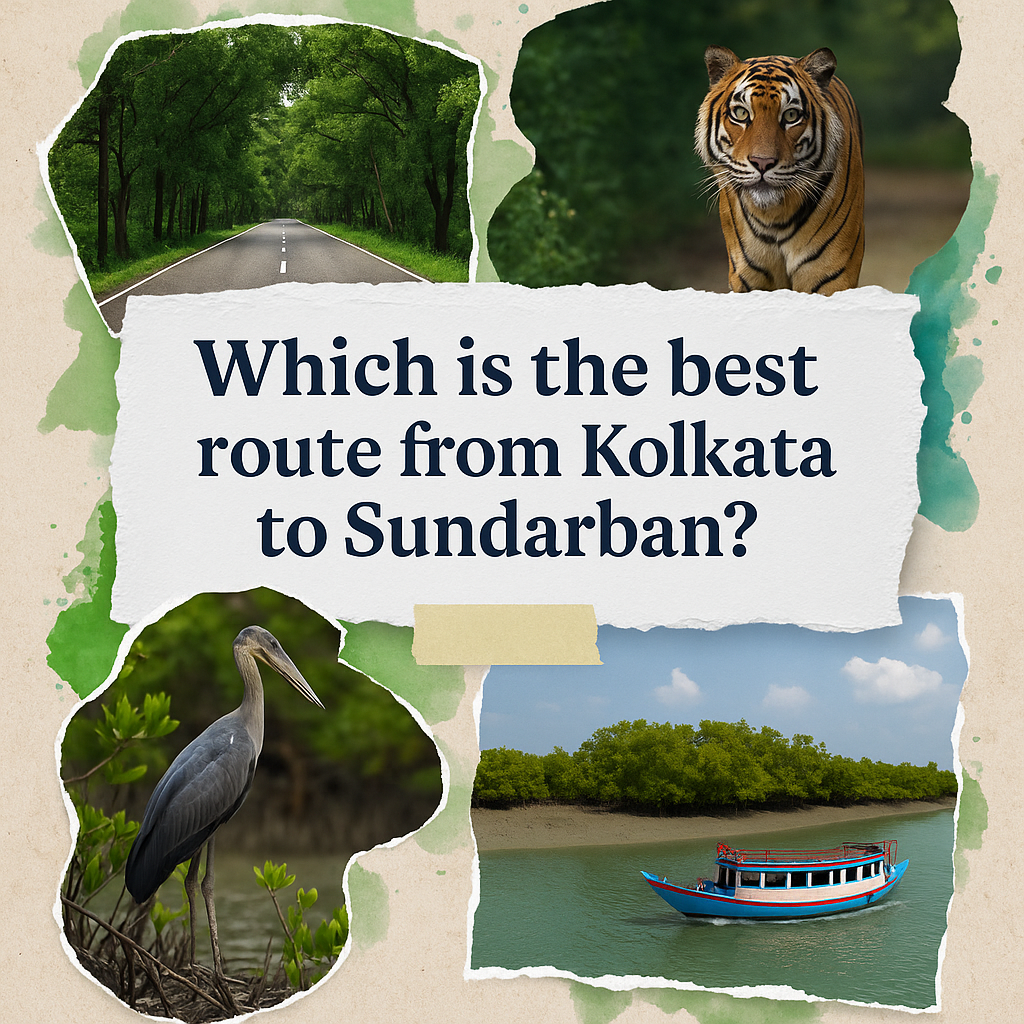
The journey from Kolkata to the Sundarban is not merely a matter of covering distance; it is an invitation to glide through Bengal’s shifting geographies, where the urban hum slowly dissolves into rural rhythms and the vast mangrove kingdom begins its quiet reign. When travellers ask, “Which is the best route from Kolkata to Sundarban?”, they often expect a simple map reference. Yet the Sundarban is not approached through convenience alone—it is approached through strategy, geography, tidal understanding, and the purpose behind one’s travel. Selecting the right route can significantly shape the quality of your Sundarban Tour, influencing travel time, comfort, cultural engagement, and the seamlessness of your transition from land to river.
Understanding the Journey Before Choosing a Route
The Sundarban is the world’s largest mangrove forest, a tidal labyrinth of creeks and rivers formed by the Ganges–Brahmaputra–Meghna delta system. Reaching this region is fundamentally a two-phase process: a surface journey from Kolkata to a designated jetty, followed by a boat journey into the forest core. Therefore, “best route” must consider road condition, connectivity, accessibility during seasons, available facilities, surrounding villages, and the nature of the tour—whether it is a shared package or a customised Sundarban Private Tour.
Among the various approaches, three primary routes stand out: **Kolkata to Canning**, **Kolkata to Godkhali**, and **Kolkata to Jharkhali**. Each offers unique advantages, and each demands a different combination of time, convenience, and experience.
Route 1: Kolkata → Canning → Godkhali — The Most Balanced & Widely Preferred Route
For decades, the most popular and widely recommended route has been the Kolkata–Canning–Godkhali corridor. This path is cherished for its balanced travel time, predictable road condition, and deep linkage with traditional Sundarban access points. The journey begins by travelling from Kolkata to Canning, a bustling semi-urban town considered the “Gateway of Sundarban.” From Canning, travellers continue to Godkhali, the busiest jetty for forest-bound boats.
Distance & Time Breakdown
• **Kolkata to Canning**: approx. 48–55 km; travel time 1.5 to 2 hours by road.
• **Canning to Godkhali**: approx. 29–32 km; travel time 1 to 1.2 hours.
• **Total expected journey**: 2.5 to 3 hours, depending on traffic and stopping points.
Why This Route Is Considered the Best
• **Stable Road Connectivity:** NH-12 and regional roads are comparatively smoother than other corridors.
• **Year-Round Accessibility:** Even during monsoon, this route remains functional due to improved embankments.
• **Availability of Boats:** Godkhali offers the largest fleet of forest-bound vessels, giving flexibility for choosing a Sundarban Tour Package.
• **Facilities & Rest Points:** Fuel stations, ATMs, eateries, and medical stores along the way.
• **Cultural Touchpoints:** Mangrove-fringe villages, fishermen settlements, and riverine bazaars enrich the travel narrative.
This route is ideal for travellers seeking punctuality, comfort, and easy coordination. Most professional operators, including those specialising in structured forest itineraries and luxury excursions, prefer this pathway for its reliability and operational support.
Route 2: Kolkata → Godkhali (Direct via Basanti Highway) — Fastest, Most Efficient Route
For those seeking the quickest land journey, the direct Kolkata–Basanti Highway–Godkhali route stands out as the most efficient. This direct corridor bypasses Canning and heads straight to Basanti Road, eventually merging into the Godkhali jetty zone. It is particularly preferred by travellers beginning early morning tours or selecting customised Sundarban Travel plans.
Key Advantages of the Direct Basanti Highway Route
• **Shortest Travel Time:** Approximately 2.5 hours from Kolkata under normal conditions.
• **Smooth Carriageway:** The Basanti Highway has undergone significant improvement in recent years.
• **Less Congestion:** Avoids major market traffic that is common around Canning.
• **Ideal for Private Transport:** Best suited for travellers using private vehicles rather than public transport.
However, this route offers fewer cultural stopovers compared to the Canning corridor. Yet, for those prioritising speed and operational efficiency—especially wildlife researchers and early-day exploration programmes—this route becomes the leading choice.
Route 3: Kolkata → Jharkhali — A Scenic Route for Nature-Focused Journeys
Jharkhali is steadily emerging as an alternative entry point to the Sundarban, particularly for travellers seeking a more serene, visually rich path. Located deeper towards the eastern extremity of the delta, the Kolkata–Jharkhali route is ideal for photographers, birdwatchers, and travellers who value landscape over pace.
Distance & Travel Time
• Distance: approx. 110–120 km from Kolkata.
• Travel Time: around 3.5 to 4 hours by road.
While the road is slightly longer and less commercialised, the journey introduces travellers to quieter mangrove stretches, backwater canals, and villages deeply integrated with forest life. The Jharkhali route is also popular with eco-resorts and newer nature-based tourism models, offering a less crowded boating zone compared to Godkhali.
Why Choose the Jharkhali Route
• **Peaceful Ambience:** Less tourist footfall, ideal for slow travellers.
• **Scenic Richness:** Waterbodies, paddy fields, and mangrove edges accompany most of the journey.
• **Ideal for Niche Tourism:** Birdwatchers, nature writers, and documentary photographers often favour this approach.
• **Developing Infrastructure:** Roads and hospitality options are growing steadily.
For a traveller seeking immersion rather than speed, this route becomes a poetic journey—mirroring the gentle unfolding of the forest itself.
Rail Route: Kolkata → Canning → Godkhali (For Budget and Flexible Travellers)
Rail travel provides an economical yet effective approach toward the Sundarban. The **Sealdah–Canning railway line** is one of Bengal’s busiest commuter routes. Once reaching Canning railway station, travellers can hire cars or autos to reach Godkhali. This approach is commonly used by budget travellers, solo explorers, and local tourists planning a quick Sundarban Travel experience.
Rail Route Advantages
• **Cost-Effective & Frequent Trains:** Trains run approximately every hour.
• **Reliable Schedule:** Sealdah suburban network is densely connected.
• **Smooth Transfer to Jetty:** Easy availability of local transport toward Godkhali.
While this route offers affordability, it may feel crowded during peak commuter hours. For tourists carrying luggage or travelling with families, road journeys are generally more comfortable.
Which Route Is Truly the Best? A Comparative Insight
Every route has a distinct character, making the definition of “best” dependent entirely on traveller priorities. For most structured and professional tours, the Kolkata–Canning–Godkhali route remains the benchmark. For speed and early departure advantages, the Basanti Highway direct route excels. For scenic immersion, Jharkhali stands unparalleled. For budget-friendly planning, the rail route to Canning remains dependable.
To compare them meaningfully:
Best for Comfort & Reliability
Kolkata → Canning → Godkhali
Best for Fast Travel
Kolkata → Basanti Highway → Godkhali
Best for Photographers & Nature Lovers
Kolkata → Jharkhali
Best for Budget Travellers
Sealdah → Canning (Rail) → Godkhali
This nuanced evaluation ensures that travellers can select the path that aligns with their expectations—be it convenience, aesthetic pleasure, or strategic planning for a customised Sundarban Tour Package.
Geographical Understanding: Why Routes Differ in Experience
The Sundarban lies across a fragile coastal delta shaped by sediment accumulation, tidal shifts, cyclone patterns, and historical river course changes. Therefore, road networks to its entrance points grew organically based on embankments, habitation clusters, and accessibility. Understanding this helps travellers appreciate why some routes are smoother, some are scenic, and some are more commercially active.
To learn more about the Sundarban’s ecological and geographical significance, travellers may refer to Wikipedia, which provides an extensive scientific overview.
Travel Flow from Land to Water
The Sundarban is accessible only by boat after Godkhali, Jharkhali, Dhamakhali, or Sonakhali. Therefore, every route must secure a seamless land-to-water transition. This is particularly crucial for travellers selecting a Sundarban Private Tour, where timing, tide alignment, and creek-entry permits must synchronise flawlessly.
Practical Tips for Choosing the Best Route
• **Check Tide Timings:** Tides influence boat departure schedules.
• **Start Early:** Starting from Kolkata between 6 AM and 8 AM ensures smoother traffic.
• **Assess Group Needs:** Senior citizens may prefer shorter, smoother routes.
• **Consider Season:** Monsoon affects road quality—Basanti Highway and Canning routes perform best during rains.
• **Book Boats in Advance:** Especially during winter and holidays.
• **Verify Road Updates:** Local advisories may affect certain stretches temporarily.
The Best Route Is the One That Complements Your Purpose
Sundarban is a journey where the path itself becomes a part of the story—where rice fields, narrow bridges, silent canals, and riverbanks whisper their own fragments of deltaic life. The best route from Kolkata to Sundarban is not merely a directional guideline; it is a thoughtful alignment of your travel intention with the essence of the terrain. Whether you choose the trusted Canning route, the swift Basanti Highway, or the poetic Jharkhali corridor, what matters most is the experience that awaits at the mangrove threshold.
And as you glide through the riverine arms of the forest, the journey you began on land merges into the mystical silence of the Sundarban—where the tides tell time, where the horizon softens, and where every route ultimately leads to wonder.