How Far Is Howrah from Sundarban?
— A Detailed, Exploration of Distance, Routes, and Travel Realities
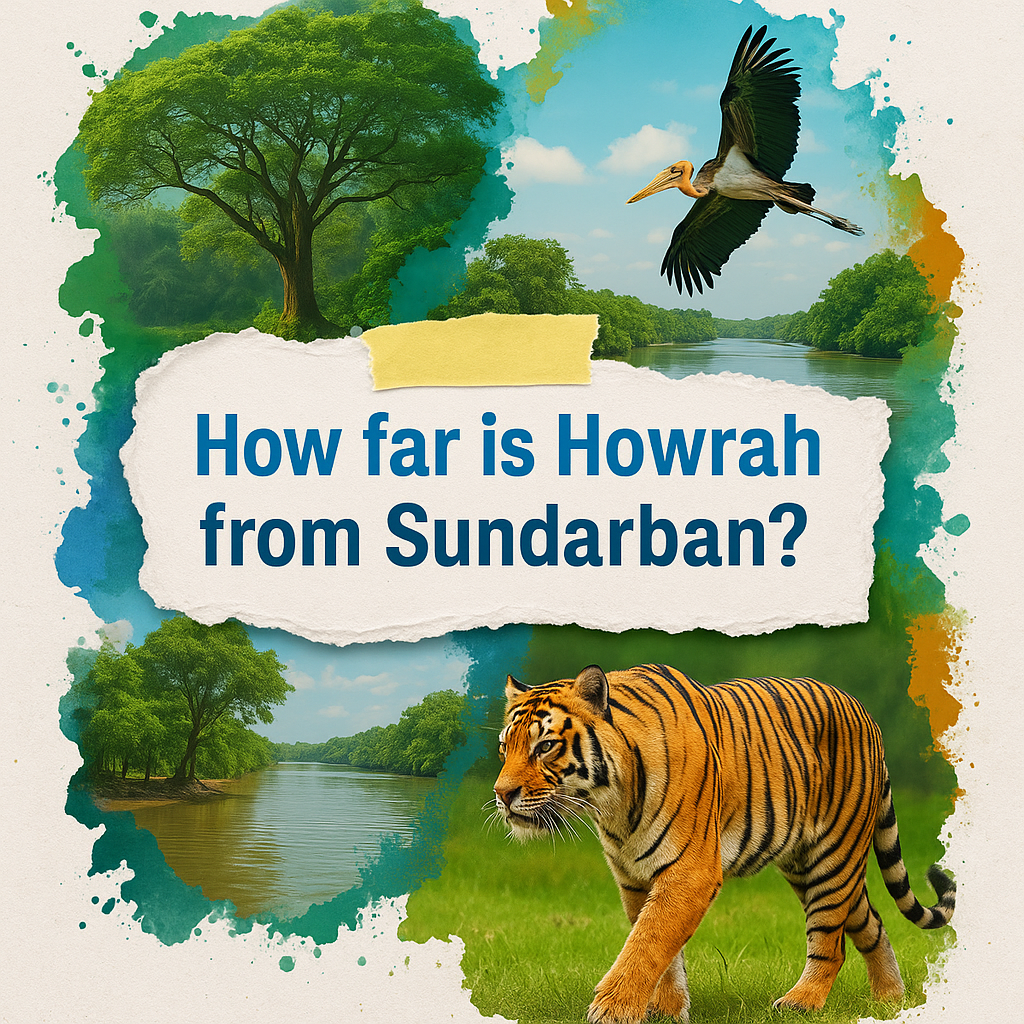
The journey from the historic cityscape of Howrah to the emerald labyrinth of the Sundarbans begins with a simple yet essential question: How far is Howrah from Sundarban? Understanding this distance is not merely a geographical calculation—it is the foundation of planning a smooth, timely, and meaningful travel experience into the world’s largest mangrove forest. Every traveller who dreams of entering this mystic delta must first understand the routes, landscapes, and transitions that shape the voyage from urban Bengal to its wild, aquatic frontier.
As one prepares for a Sundarban Tour, the distance between Howrah and this ecological wonder becomes a crucial point of enquiry. It defines not only travel time but also the mode of departure, comfort, planning precision, and the type of overall experience a visitor may expect.
Understanding the Journey: Why Measuring Distance Matters
“How far is Howrah from Sundarban?” seems simple, yet the Sundarbans are not a single destination but a collection of islands, creeks, forest blocks, and riverine zones. Thus, distance is measured not to a single point but toward the nearest gateway for boats entering the forest. Most travellers head to Godkhali, Canning, Jharkhali, or Durgapur Jetty, depending on the type of itinerary they choose.
These entry points serve as thresholds where land travel ends and the riverine journey begins. Hence, measuring distance from Howrah means identifying how long it takes to reach the most common jetty points from where boats depart into the forest territory.
Exact Distance Between Howrah and Sundarban Gateways
The Sundarban forest itself begins approximately 110–120 km away from Howrah when measured in terms of the first accessible eco-tourism zone. However, the typical travel distance depends on the jetty selected for your trip.
1. Howrah to Godkhali — The Primary Tourist Gateway
Distance: Approximately 98–105 km by road
Travel Time: 3 to 3.5 hours (depending on traffic and road conditions)
Godkhali is the most popular departure point for forest-bound boats and forms the backbone of structured tourist operations. Many travellers booking a planned Sundarban Travel arrangement begin their river journey here.
2. Howrah to Canning — The Railway Gateway
Distance: Approximately 45–50 km by rail
Travel Time: 1.15 to 1.5 hours depending on train schedule
Canning is the most convenient access point for visitors arriving via train. From Canning, a 28–30 km road journey leads to Godkhali. This route is ideal for budget travellers and photography groups beginning early-morning expeditions.
3. Howrah to Jharkhali — The Emerging Eco-Tourism Hub
Distance: Approximately 115–125 km by road
Travel Time: 3.5 to 4 hours
Jharkhali has evolved into a modern gateway with upgraded resorts, improved boating facilities, and nature interpretation centres. Several travellers selecting a detailed Sundarban Tour Package begin their journey here due to the quieter surroundings and scenic water channels.
4. Howrah to Durgapur Jetty (Basanti Range)
Distance: 120–130 km by road
Travel Time: 4 to 4.5 hours
This jetty is often chosen by travellers heading towards lesser-explored forest zones, including wildlife researchers and private groups booking curated itineraries.
Why Distances Vary: The Geography Behind the Numbers
The Sundarbans are a dynamic delta shaped by the confluence of the Ganga, Brahmaputra, and Meghna rivers. As the landmass is constantly shifting due to tidal activity, access routes also evolve over time. Highways are periodically upgraded, alternative roads are opened, and local ferry routes sometimes influence the practical travel distance.
Additionally, travellers on a Sundarban Private Tour may take slightly detoured routes depending on resort location, boat anchoring points, or special photography routes arranged by tour operators.
Understanding Travel Time: How Road, Rail, and River Interconnect
Travel time from Howrah to the Sundarbans must be viewed as a combination of two segments:
- Land journey (Howrah to Jetty)
- River journey (Jetty to Forest Entry Zone)
This dual nature makes the Sundarbans unique among tourist locations in India. The river segment itself may take 1.5 to 3 hours, depending on tide and route selection.
Road Conditions and Travel Windows
Roads passing through Sonarpur, Canning, Basanti, and Jharkhali are generally smooth but crowded during early mornings. Tour operators often schedule departures between 7 a.m. and 8 a.m. to align with river tides and boat permits.
Rail Connectivity from Howrah
Though Howrah is not directly connected by rail to Sundarbans entry points, travellers can reach Canning via Sealdah. From Canning, shared cars or private vehicles connect to Godkhali or Jharkhali. This route is popular among solo travellers and backpackers.
River Timing and Tidal Influence
No Sundarban journey is independent of tide timings. High tide allows boats to cover creeks quickly, whereas low tide opens mudflats but slows navigation. Experienced forest guides manage route plans accordingly.
How Distance Influences the Cost of a Sundarban Trip
The length of the land journey plays a key role in overall travel expenses. Higher distances incur extra fuel costs, longer car rentals, and sometimes modified boat schedules. Many travellers booking a curated Sundarban Tour find that shorter distances such as the Howrah–Canning route help optimise expenses.
Car Rental Variations
Private AC vehicles charge based on kilometre usage; hence, choosing the nearest jetty directly reduces costs. Shared vehicles offer budget alternatives but may add minor delays.
Boat Timing and Extended Routes
If travellers arrive late due to road traffic, boats may need to take different channels or delay forest visits, which can affect the day’s itinerary. Thus, understanding distance and planning accordingly ensures a seamless experience.
Historical and Cultural Relevance of the Route
Howrah, one of the oldest urban settlements in Bengal, has always served as a gateway between the metropolis and the riverine landscapes of South Bengal. Its connection to the Sundarbans dates back centuries when traders, honey collectors, woodcutters, and fishermen travelled across wetlands.
The modern tourist routes echo these historical water paths, connecting the heritage-rich precincts of Howrah to the world of mangroves, tidal rivers, and Bengal’s legendary wildlife sanctuary. Visitors reading about the Sundarbans on Wikipedia often discover that historic trade routes shaped much of today’s travel corridors.
What Travellers Can Expect After Reaching the Jetty
Once the land journey from Howrah concludes, the ambience changes dramatically. At the jetty, travellers encounter the scent of saline breeze, wooden boats anchored along estuaries, and the sight of forest-ready cruise vessels.
Those following an organised itinerary offered through a customised Sundarban Tour Package will typically embark on boats equipped with decks, resting spaces, kitchens, guides, and necessary permissions.
Food, Rest Stops, and Entry Permits
Breakfast is often served at the jetty or onboard, depending on the time of arrival. Boat crews handle all formalities related to forest entry passes and guide assignments. This is why many travellers prefer pre-booked arrangements instead of ad-hoc travel.
How Geography Shapes the Perception of Distance
In conventional travel, distance is measured in kilometres. But in the Sundarbans, distance is felt more as a transition—from urban noise to mangrove silence, from fast-moving highways to slow-moving river currents, from structured city rhythms to nature’s unpredictable choreography.
Thus, the Howrah-to-Sundarban journey is experienced more as a shift in worlds rather than a numeric distance. This unique transformation explains why the Sundarbans captivate both casual visitors and seasoned travellers alike.
The Distance from Howrah to Sundarban Is the Gateway to a Transformative Experience
To summarise, How far is Howrah from Sundarban? The practical travel distance ranges between 98 and 130 km depending on the chosen jetty, while the forest entry zones lie deeper within the delta. Yet beyond these numbers lies an immersive journey that shifts from city landscapes to tidal wilderness—a transition that defines the essence of Sundarban Travel.
Whether you travel via Godkhali, Canning, Jharkhali, or Basanti, every route leads to the same extraordinary destination: a biosphere rich with mangroves, wildlife, heritage, and serenity. Carefully planned itineraries through expert-managed platforms such as Sundarban Private Tour services ensure that this distance becomes not a hurdle but the beginning of a memorable exploration.