Updated: March 29, 2026
Feel the Spirit of the Delta Rising — The Magical Sundarban Tour
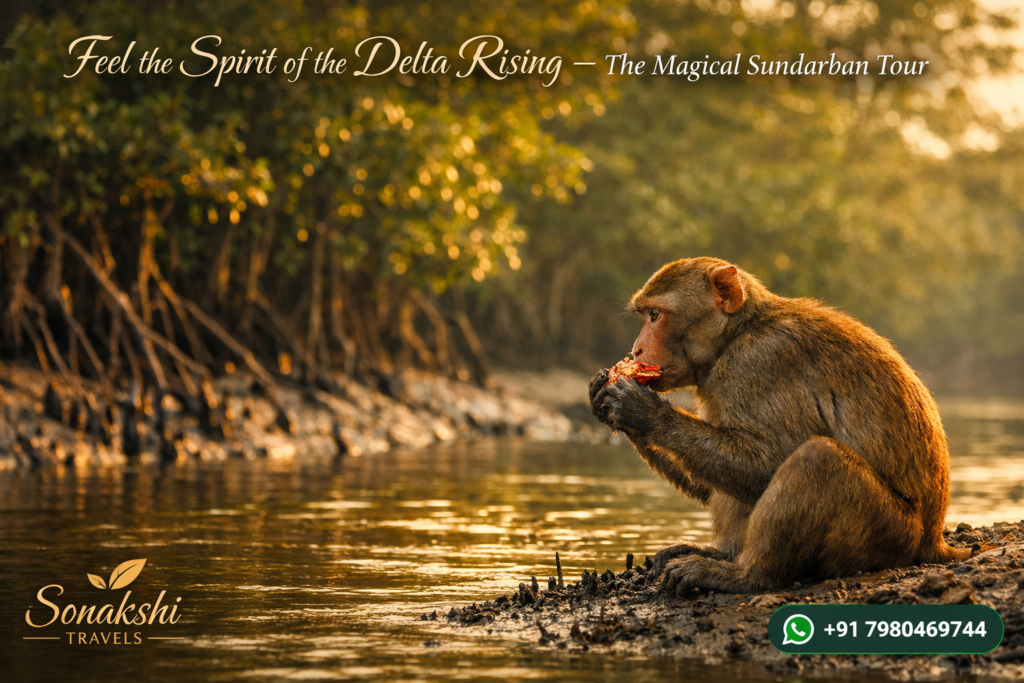
There are some places that do not enter the mind through noise. They rise slowly, like a tide that first touches the edge of the shore and then quietly fills the whole landscape. The Sundarban is one of those places. A Sundarban tour does not feel magical because it is loud, dramatic, or crowded with visible action. Its magic comes from a deeper movement. It comes from the way the rivers breathe, the way the mangroves hold silence, and the way the human mind begins to change when it stays inside that rhythm for some time.
To feel the spirit of the delta rising is to feel something more than scenery. It is to notice that the land here is never fully still and never fully fixed. Water moves around roots, channels open and narrow with the tide, light breaks on wide river surfaces, and the forest stands like an ancient mind that has learned patience. This is why the beauty of the place cannot be measured only by what a visitor sees. The real beauty lies in what the place awakens. That awakening is what gives a true Sundarban tourism experience its rare and lasting power.
The Magic Begins in Slow Silence
Many destinations try to impress the visitor at once. They offer quick views, strong color, fast movement, and an easy sense of excitement. The Sundarban works in the opposite way. It does not rush toward the visitor. It waits. At first, a person may only notice open water, distant green lines, muddy banks, and scattered bird calls. But after some time, the eye becomes more careful. The ear becomes more alert. The mind begins to settle. Then the real experience begins.
This is one reason why the place feels magical. It teaches attention. It asks the visitor to see slowly. A branch hanging low over the creek is no longer only a branch. It becomes part of a pattern of movement and shade. A silent stretch of river is no longer empty. It begins to feel full of hidden life. In such moments, the place moves beyond ordinary sightseeing and becomes a living presence. That is why many people remember a Sundarban travel experience not as a list of attractions, but as a change in feeling.
Silence in the delta is not the absence of sound. It is a careful weaving of small sounds. Water touches the wooden side of a boat. Wind passes through leaves with a dry whisper. A distant bird breaks the stillness for a moment and then disappears again. Somewhere far away, mud releases a soft sucking sound as the tide shifts. These details are small, but together they create an atmosphere that feels almost sacred. The magic is not made by one grand event. It rises from many subtle impressions that gather in the mind.
A Landscape That Feels Alive
The Sundarban is magical because it is never passive. It does not sit in front of the visitor like a painted background. It behaves like a living body. Water enters and leaves. Soil is shaped and reshaped. Roots stand above the mud like careful fingers. The forest appears firm, yet it is part of a world that changes every hour. This dynamic quality gives the delta its special force. The visitor does not feel that they are looking at a fixed place. They feel that they are inside a breathing system.
This living quality has strong ecological meaning. Mangrove forests survive in a meeting ground between land and water, fresh flow and salt flow, growth and erosion. Such environments are rich, adaptive, and deeply responsive. The Sundarban shows this truth in visible form. Trees here do not grow like ordinary inland trees. They grow in answer to pressure, salt, tide, and unstable ground. That struggle gives the forest an unusual appearance and a strong emotional effect. A Sundarban nature tour becomes memorable because the landscape itself seems to carry wisdom about endurance.
Even the lines of the forest are different from the lines of many other wild places. In mountain country, the eye moves upward. In desert land, it moves across open distance. In the Sundarban, the eye moves through layers: water in front, mud at the edge, roots below, leaves above, sky beyond. This layered form creates depth without sharp drama. It also creates mystery. One never feels that the whole place has been revealed. Something remains hidden. That hidden quality gives the delta its magical power.
The Emotional Pull of Water and Light
Water has a special role in the spirit of the delta. It is not only a route or a surface. It is the main mirror through which the place expresses itself. Sometimes the river holds a pale silver light. Sometimes it carries a deeper green or brown tone, shaped by mud, sky, and tide. Sometimes it appears flat and quiet, and at other moments it shows restless ripples that catch the changing day. These changes may look simple, but they affect the mind strongly. They create a feeling that the place is always speaking in a soft voice.
Light in the Sundarban also behaves in a special way. It does not fall only from above. It bounces from the river, slips through gaps in branches, touches muddy banks, and makes the forest appear to open and close from one moment to the next. A visitor may see the same creek twice and yet feel that it has become another place. This changeability is part of the magic. The delta never seems fully settled into one image. Instead, it keeps renewing itself.
Because of this, the emotional force of a Sundarban exploration tour often comes from reflection rather than spectacle. The place invites inward thought. A person may begin the journey expecting to observe nature from outside, but slowly the opposite happens. The place begins to observe the person. It reveals how hurried the mind has become, how quickly modern life consumes attention, and how rare it is to sit with changing light and moving water without trying to control them.
The Forest as Mystery, Not Display
One reason the Sundarban feels magical is that it refuses easy display. Many landscapes reveal themselves clearly. The Sundarban does not. Its creeks bend, its banks conceal, and its shadows keep their own distance. This is not a weakness. It is part of the place’s dignity. The forest does not perform for the visitor. It remains itself. That independence creates respect. It reminds the human mind that nature is not a stage built for human expectation.
This is especially true when one thinks of the animal world of the delta. A Sundarban wildlife safari carries power not only because wildlife may be present, but because presence is felt even when direct visibility is limited. Tracks, movement in grass, a sudden silence among birds, or a brief call across the water can create more tension and wonder than a constant display ever could. The unseen becomes part of the experience. The imagination works with the senses, and that combination deepens the feeling of magic.
The animal life of the Sundarban belongs to a difficult ecosystem. Survival here demands alertness, adaptation, and careful timing. That truth can be sensed even by a visitor who knows very little science. The place feels disciplined. Every channel, root, and muddy edge seems to belong to a larger order. In such a setting, awe grows naturally. The visitor understands that beauty here is not soft or decorative. It is bound to struggle, instinct, and intelligence.
Why the Mind Changes in the Delta
The magical effect of the Sundarban is not only external. It also changes the inner life of the visitor. The mind that enters the delta often comes with noise from daily life. It carries deadlines, traffic memory, digital distraction, unfinished thoughts, and the habit of constant reaction. But the rhythm of the delta is different. It is slower, wider, and less obedient to human urgency. When a person stays within that rhythm, the mind starts to loosen.
This change is one of the most important parts of the experience. A Sundarban travel guide can explain facts, routes, and names, but the deeper truth is emotional. The place teaches the visitor to wait without impatience. It teaches them to look without demanding immediate reward. It teaches them that wonder can rise from stillness. These lessons are simple, but in modern life they have become rare.
Psychologically, such environments help restore attention. Research in environmental psychology often shows that natural settings with soft fascination can reduce mental fatigue. The Sundarban fits that pattern in a very special way. It does not overload the senses, but it does not leave them empty either. It offers enough movement to hold attention, yet enough quiet to calm it. The result is not boredom, but restoration. This is one reason why the memory of the place remains strong long after the journey ends.
The Human Presence Feels Smaller Here
In many travel settings, human structures dominate the experience. The visitor moves from one controlled space to another. In the Sundarban, even when human movement is present, it feels smaller than the surrounding world. The rivers are wider than the human voice. The forest edge carries more authority than any plan. The tide does not change for convenience. This smaller human position can feel humbling, and that humility is part of the magic.
To feel the spirit of the delta rising is to feel that the land is older than personal concerns. It has its own history of water, growth, danger, and renewal. Human life enters that system for a brief time and then leaves again. This awareness can be deeply moving. It helps the visitor step out of self-importance and enter a wider frame of life. In that wider frame, even a quiet moment on the river can feel profound.
For this reason, a thoughtful Sundarban tour from Kolkata often feels like more than a change of place. It feels like a change of scale. The city mind learns one kind of speed and one kind of control. The delta mind learns another. It learns that not everything meaningful arrives quickly. It learns that power can be quiet. It learns that mystery can be more satisfying than total explanation.
The Meaning of the Word “Magical”
When people call the Sundarban magical, they do not usually mean fantasy. They mean that the place creates an effect that is difficult to reduce to plain description. The rivers, light, mud, roots, birds, silence, and hidden life together produce more than the sum of their parts. The mind feels something larger than observation. That “something” is often described as spirit, mood, presence, or enchantment.
Such language appears because ordinary travel vocabulary is too weak for the experience. The delta does not simply look beautiful. It feels charged. Its atmosphere carries weight. Its stillness feels active. Its open spaces feel full rather than empty. This is why the title “Feel the Spirit of the Delta Rising” holds real meaning. The spirit is not a decorative idea. It is the name we give to the emotional force that rises when landscape, silence, motion, and attention come into harmony.
Even a carefully planned Sundarban tour package cannot manufacture that magic. It can only create the conditions in which the visitor becomes available to it. The true experience happens when the person stops trying to consume the place and begins to receive it. Then the rivers seem deeper, the shadows seem wiser, and the entire delta feels like a living poem written in water and root.
The Delta as Memory
After the journey ends, what remains in memory is often not one single image. It is a collection of sensations: the slow passing of mangrove walls, the shifting shine on the river, the feeling of being surrounded by life that does not hurry, and the strange peace that grows in silence. The Sundarban stays in the mind because it enters through many doors at once. It reaches the senses, the emotions, and the imagination together.
This is also why the place has such lasting literary and emotional value. The delta is not merely observed; it is remembered as an atmosphere. A visitor may forget the exact line of one creek, but not the feeling of moving through it. They may forget a sequence of moments, but not the inner stillness that the place created. That is the sign of a truly magical landscape. It does not only offer scenes. It leaves an imprint.
In that sense, the deepest Sundarban travel memory is not about movement from one point to another. It is about entering a different order of experience. The delta teaches that beauty can be quiet, mystery can be gentle, and nature can shape the mind without speaking a word. Such lessons do not fade quickly. They return later, often in city silence, like the memory of a far river under soft light.
Conclusion: When the Spirit of the Delta Rises
The Sundarban becomes magical when a person stops looking for quick excitement and begins to feel the deeper rhythm of the place. Then the rivers are no longer only rivers, the forest is no longer only forest, and silence is no longer emptiness. Everything begins to carry meaning. The tide feels like breath. The roots feel like memory. The moving light feels like a language that cannot be translated but can still be understood.
A true Sundarban tour is magical because it brings the human mind into contact with a landscape that remains mysterious, alive, and emotionally powerful. It does not entertain in a shallow way. It transforms through patience, atmosphere, and presence. That is why the delta rises slowly inside the visitor. Long after the journey is over, its spirit continues to move like tidewater through memory, carrying with it the quiet wonder of one of the most haunting landscapes in the world.