Updated: March 26, 2026
Discover the Divine Taste of “Ilish Vapa” at Sundarban Hilsa Festival 2026
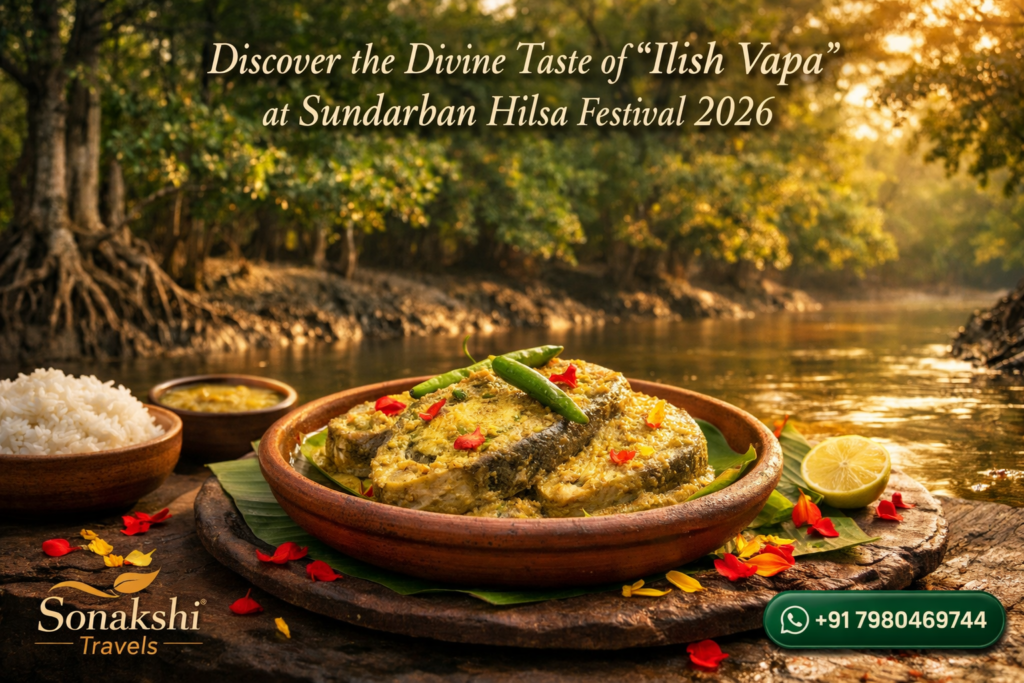
There are some foods that do more than please the tongue. They open memory, place, emotion, and culture at the same time. Ilish Vapa belongs to that rare class of food. It is soft, fragrant, deep in taste, and full of quiet strength. At the Sundarban hilsa festival 2026, this dish becomes more than a meal. It becomes a complete experience of Bengal’s river heritage, cooking wisdom, and love for fish. The festival gives travelers a chance to taste hilsa in many forms, but Ilish Vapa often leaves the strongest impression because of its balance. It is rich without being heavy, simple without being plain, and refined without losing its home-style soul.
In the world of Bengali fish dishes, fried items can attract quickly, and spicy curries can create immediate excitement. Yet steamed hilsa speaks in a different voice. Its effect is slower and deeper. It does not depend on noise. It depends on purity of ingredients, skill of preparation, and respect for the fish itself. This is why many food lovers consider it one of the finest expressions of hilsa. At the Sundarban ilish utsav 2026, that quiet greatness can be felt fully, especially when the dish is served fresh, warm, and close to the watery landscape that has shaped the food culture of Bengal for generations.
For many visitors, the culinary side of a delta journey becomes as memorable as the scenery. A well-planned Sundarban tour often stays in the mind not only because of rivers and silence, but also because of the meal that seems to hold the spirit of the place. Ilish Vapa is one such meal. It carries the softness of river life, the intelligence of traditional Bengali cooking, and the emotional warmth of family food. During the festival, the dish becomes a central symbol of taste, identity, and celebration.
Why Ilish Vapa Feels So Special
The greatness of Ilish Vapa begins with restraint. This dish is not built to hide the fish. It is built to reveal it. Fresh hilsa pieces are usually coated with a paste of mustard, green chili, salt, and mustard oil, sometimes with a little curd or coconut depending on local style. Then the fish is steamed carefully. The method looks simple, but that simplicity is exacting. If the mustard is too harsh, the dish becomes bitter. If the steaming is too long, the fish loses tenderness. If the oil is too little, the aroma becomes weak. If the fish is not fresh, the whole dish fails.
That is why good Ilish Vapa is not only a recipe. It is judgment. It requires understanding of texture, timing, and balance. The result, when done well, is extraordinary. The flesh becomes tender enough to part under the slightest touch, while the mustard carries a sharp but elegant heat. The oil binds everything into one smooth and fragrant whole. The steam preserves moisture and allows the natural fat of hilsa to shine. This makes every bite feel layered. First comes warmth, then mustard, then the deep oily sweetness of the fish, and finally the green lift of chili.
At the Sundarban hilsa festival, this dish stands out because it reflects a wider Bengali truth. Great food does not always come from complication. Often it comes from care. Ilish Vapa shows how a few ingredients, treated with respect, can create something profound. That is why the dish feels divine to many people. It seems at once delicate and powerful.
The Deep Bengali Identity Inside the Dish
Ilish is not only a fish in Bengal. It is part of language, memory, ritual, emotion, and family culture. Many Bengali homes carry strong feelings about hilsa. There are memories of special lunches, monsoon meals, festive gatherings, and careful cleaning of the fish before cooking. There are discussions about which cut is best, how much mustard should be used, and whether steaming should happen in a steel container, banana leaf, or covered pot. In that sense, Ilish Vapa is not merely consumed. It is inherited.
When served at the festival, the dish carries this long cultural thread into a public celebration. It allows visitors to taste something that is deeply local yet widely loved. The pleasure is not only sensory. It is also cultural. A person eating this dish is not simply eating fish with mustard. They are tasting a history of river-based food knowledge, domestic cooking skill, and regional pride. This makes the experience especially meaningful within a Sundarban tour package that seeks to present not only place, but also living food culture.
Because of that, Ilish Vapa at the festival should be understood as an edible form of heritage. It shows how Bengal has learned to cook with moisture, fragrance, oil, seed, and heat in a way that is both economical and luxurious. The dish feels homely, yet it can also feel royal. That double quality is part of its charm.
How the Taste Opens Slowly on the Tongue
One of the most remarkable things about Ilish Vapa is the way it unfolds. It does not strike only at one level. It builds in stages. The first impression is usually the aroma. Before the first bite, the nose receives the warm smell of mustard oil and steamed fish. Then comes the paste, sharp and inviting, touched by the fresh green edge of chili. After that, the fish itself begins to speak. Hilsa has a distinct oil-rich character. It is softer, sweeter, and more complex than many other fish used in Bengali cooking.
This is why the dish feels full even in a small portion. It has density of flavor. Yet it does not become tiring when paired with plain rice. In fact, that pairing is central to the experience. Soft rice gives the fish room to speak. The rice absorbs the mustard sauce, while the fish flakes gently into it. Every mouthful becomes warm, rich, and fragrant. At the Sundarban ilish utsav, this simple pairing often produces the most lasting memory because it feels complete without excess.
Experts in regional food often note that steaming is one of the best methods for hilsa because it protects the fish’s natural oils and structure. That is one reason the dish has such a smooth mouthfeel. It feels less aggressive than frying and less diluted than a thin curry. The result is intimate. The eater feels close to the ingredient itself.
Why the Festival Setting Makes the Dish More Meaningful
A dish does not exist in isolation. Place changes taste. Mood changes taste. Surrounding sound, light, air, and expectation all affect the meal. In the case of Ilish Vapa, the setting of the Sundarban hilsa festival 2026 adds unusual depth. The delta is a world of water, mud, reflection, rhythm, and silence. Food served in such a landscape often feels closer to its source. A steamed hilsa dish eaten in this atmosphere can feel more truthful than the same dish eaten in a crowded city dining room.
That effect is partly psychological. When people come to the delta, they often slow down. Their attention becomes sharper. They notice texture, smell, and mood more clearly. Under such conditions, food is not consumed mechanically. It is received. Ilish Vapa benefits from this kind of attention because it is a dish of fine balance. It rewards patience. It invites the eater to pause, separate the bones carefully, mix the sauce with rice, and move slowly through the plate.
For this reason, the dish sits beautifully within a thoughtful Sundarban tourism experience that values local taste and cultural depth. It is not fast food, and it should not be treated as such. It asks for calmness. The festival gives it exactly that space.
The Intelligence of Steaming and Mustard
From a culinary point of view, Ilish Vapa is a lesson in how Bengali cooking works with nature rather than against it. Mustard is not used only for heat. It brings character, structure, and identity. Its sharpness cuts through the richness of hilsa, while mustard oil expands the aroma and binds the flavors. Steaming, meanwhile, prevents unnecessary dryness. It locks in the fish’s natural fat and allows gentle cooking from all sides.
This combination is brilliant because hilsa is itself a fish of high character. It does not need heavy tomato gravy, thick cream, or too many spices. In fact, too many additions can weaken it. The classic steamed preparation shows a mature food culture that knows when to stop. That maturity is one reason the dish continues to be admired. It respects ingredient, method, and eater at the same time.
During the festival, visitors who care about regional cooking can observe how one dish can carry so much technique within apparent simplicity. This is especially important in an age when many foods are made louder for quick effect. Ilish Vapa remains confident enough to stay subtle. That subtlety is part of its nobility.
A Dish That Creates Emotional Warmth
Food memory is often stronger than visual memory. A person may forget the details of a room but remember exactly how a certain meal felt. Ilish Vapa has this power because it combines comfort with distinction. It feels special, yet familiar. It feels festive, yet intimate. It can remind one person of a grandmother’s kitchen, another of a family lunch, and another of a long-desired taste finally found in the right place.
At the festival, that emotional power becomes collective. Different people come with different backgrounds, but many respond to the dish with the same quiet satisfaction. There is often a moment after the first few bites when conversation slows. The focus shifts to the plate. That is usually a sign of real culinary success. The food has taken full command of attention.
Within a meaningful Sundarban travel package, such a meal can become the emotional center of the journey. Not because it is extravagant, but because it is complete. It satisfies taste, memory, curiosity, and cultural connection in one act.
Why Ilish Vapa Often Becomes the Most Remembered Hilsa Dish
The festival may present hilsa in many beloved forms. Some are fried and crisp. Some are cooked in rich gravies. Some are wrapped, roasted, or prepared with vegetables. Each has its own beauty. Yet Ilish Vapa often stays longest in memory because it feels closest to the essential character of hilsa. It allows the fish to remain the center. The seasoning supports, but does not dominate. The texture remains soft. The smell remains pure. The finish remains elegant.
This is why even people who enjoy many other hilsa dishes often return to steamed hilsa as the deepest expression of the fish. It feels complete but not excessive. It can be festive enough for celebration and honest enough for everyday longing. In literary terms, one may say it speaks in a low voice, but says the most.
For travelers seeking a richer food-centered Sundarban trip package, this matters greatly. A destination is remembered not only through what is seen, but also through what is tasted in its truest form. Ilish Vapa offers precisely that kind of truth.
The Harmony of Landscape, Culture, and Plate
One reason the dish feels so right at this festival is that it stands at the meeting point of river culture and Bengali sensibility. Hilsa is connected in public imagination with river life, changing water, and seasonal abundance. The delta setting strengthens that emotional link. Even when the meal is served in a managed hospitality environment, the wider landscape remains close enough to shape the mind. That nearness matters. It deepens the sense that food here belongs to place.
Such alignment between landscape and cuisine is rare and valuable. It gives the meal narrative force. The eater feels that the dish is not random. It belongs. This is why food experiences at festivals can matter so deeply when they are done with integrity. At the Sundarban travel guide level, many people look for authenticity, but authenticity becomes real only when taste, place, and culture support one another. Ilish Vapa at this festival does exactly that.
A Refined Culinary Highlight Within a Wider Festival Memory
The great strength of the festival lies in its ability to make one ingredient speak through many forms. Within that larger celebration, Ilish Vapa serves as a standard of refinement. It proves that taste does not need confusion. It shows that Bengali cooking can be both intellectual and comforting. It reminds the eater that the finest dishes are often those that understand balance best.
That is why this preparation deserves special attention from anyone exploring the food side of the delta through a serious best Sundarban tour packages search or a culture-focused travel plan. It is not a side attraction. It is one of the central culinary experiences of the event. To miss it would be to miss one of the clearest edible expressions of what the festival stands for.
For some, the memory will remain the mustard aroma rising from the plate. For others, it will be the softness of the fish over rice. For others still, it will be the emotional comfort of tasting a dish that feels at once festive and deeply personal. But almost everyone who encounters a well-made serving of Ilish Vapa at the festival will understand why the dish is spoken of with affection, respect, and longing.
Conclusion
To discover the divine taste of Ilish Vapa at the Sundarban hilsa festival is to discover much more than a single recipe. It is to encounter a tradition of balance, a culture of careful cooking, and a form of pleasure that stays gentle yet deep. The dish captures the genius of Bengali food in one plate: few ingredients, exact handling, strong identity, and emotional warmth. It is rich, fragrant, soft, and unforgettable.
In a festival built around hilsa, this preparation shines because it trusts the fish, trusts the method, and trusts the eater’s ability to appreciate subtle greatness. That trust is rewarded with every bite. For anyone who wishes to understand why hilsa holds such a high place in Bengali life, Ilish Vapa is not only a good beginning. It may be the most meaningful answer of all.