Updated: March 26, 2026
Are There Eco-Friendly Luxury Tours in Sundarban?
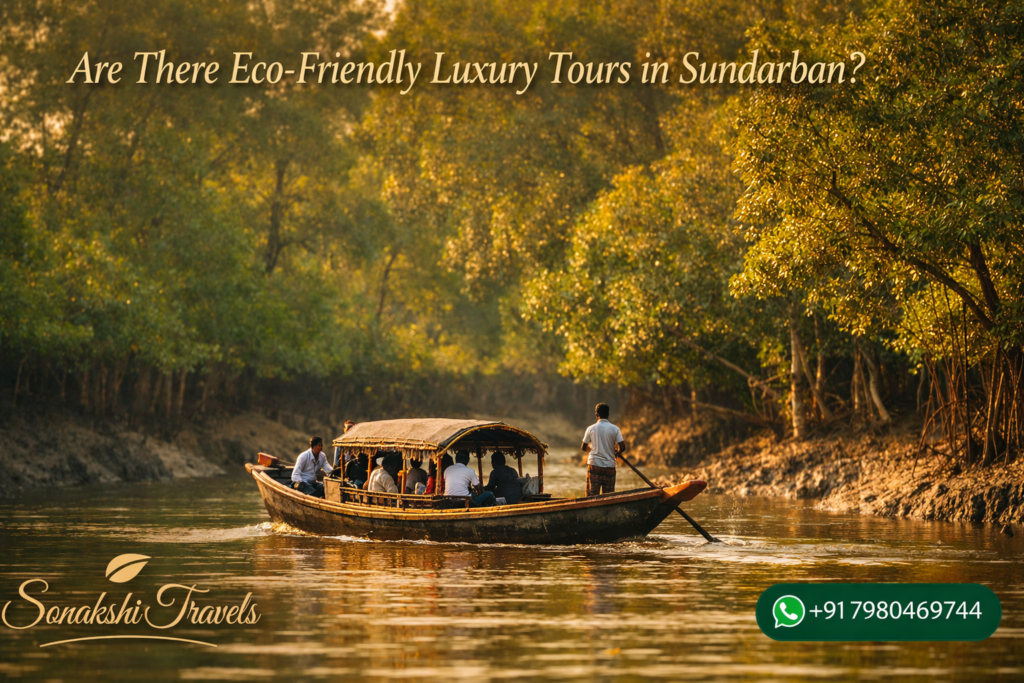
Yes, there are eco-friendly luxury tours in the delta, but the answer needs care. Not every tour that looks comfortable is truly responsible, and not every trip that uses the word eco actually protects the place. In the Sundarban, this question matters more than it does in many other destinations because the landscape is unusually delicate. The forest, the mudbanks, the tidal channels, the birdlife, and the human settlements all exist in a tense balance. A luxury journey in such a place should not mean excess. It should mean better design, lower pressure, quieter movement, cleaner systems, and more thoughtful contact with the environment.
A real eco-friendly luxury journey is possible when comfort is used to reduce harm rather than increase display. In that form, luxury is not noise, waste, or overbuilding. It is space, calm service, good planning, cleaner boats, careful waste handling, skilled guiding, and respect for the rhythm of the mangrove world. A well-made Sundarban luxury tour can therefore move close to the values of conservation if the operator understands that the forest is not a stage set for entertainment. It is a living ecosystem that must be approached with restraint.
What Eco-Friendly Luxury Really Means in the Sundarban
In many places, luxury is measured by size, speed, and visible richness. In the Sundarban, that idea fails very quickly. The landscape does not reward aggressive travel. It rewards patience. Channels narrow. Water levels change with the tide. Sounds travel far. Birds react to engine noise. Mudbanks shift. Light changes every hour. A responsible luxury journey accepts these realities instead of forcing the place into a rigid tourist format.
That is why eco-friendly luxury in the delta should be understood as a style of low-impact comfort. It includes better sanitation, safer drinking water systems, cleaner kitchens, controlled group size, reduced plastic use, trained staff, and boat operation that does not disturb the environment more than necessary. It also means guiding guests toward attention rather than constant activity. The forest becomes more meaningful when a tour allows people to watch, listen, and understand instead of merely consume views.
This is where the ideals of Sundarban eco tourism become important. The phrase should not remain a slogan. In practice, it means the tour is arranged in a way that protects ecological balance while still giving guests a refined and deeply satisfying experience. When comfort and responsibility work together, the journey becomes more intelligent, not less luxurious.
Why the Landscape Demands a Different Form of Luxury
The Sundarban is not a landscape of fixed edges. It is made of water movement, exposed roots, soft banks, tidal pull, suspended silt, filtered sunlight, and hidden life. Such an environment does not welcome the heavy footprint often associated with premium travel. It asks for humility. Even the beauty here feels restrained. It does not appear all at once. It builds slowly through still water, distant bird calls, changing current lines, and the sight of mangrove shadows lengthening over the river.
Because of this, eco-friendly luxury has to be built around sensitivity. A good operator understands that the guest should feel protected and comfortable, but the ecosystem should not be burdened by that comfort. This changes the meaning of service. Air-conditioned rooms, private space, clean rest areas, thoughtful meals, and smooth coordination can exist, but they should sit inside a tour design that avoids environmental carelessness. In the Sundarban, true refinement is often quiet.
A careful Sundarban tour teaches this lesson naturally. Once a traveler begins to notice how the forest responds to sound, wake, smell, and movement, the idea of responsible luxury no longer feels abstract. It becomes practical. Silence matters. Clean water use matters. Waste matters. Group behavior matters. Every small decision changes the moral quality of the journey.
The Role of Smaller Scale and Private Space
One of the strongest ways a tour can become both luxurious and eco-friendly is by reducing crowd pressure. Large, noisy movement often damages the atmosphere of the place and weakens the depth of observation. Smaller groups create less disturbance and allow more controlled behavior. This is why a well-designed Sundarban private tour can sometimes be more responsible than a crowded group arrangement, provided the private format is run with discipline.
Privacy, in this context, is not only about exclusivity. It can also mean lower ecological pressure. Fewer people on a boat usually produce less noise, less waste, and a calmer rhythm of movement. Staff can supervise service more carefully. Food can be planned better. Plastic use can be monitored. The guest experience also improves because attention becomes more personal and the landscape becomes easier to hear, see, and feel.
That is why some operators combine low-volume travel with premium hospitality. A thoughtful Sundarban luxury tour package does not need theatrical excess. It needs intelligent scale. When there is enough space to breathe, enough order to avoid waste, and enough privacy to protect quiet observation, luxury begins to support ecological value rather than oppose it.
Boat Ethics Matter More Than Decoration
In the Sundarban, the boat is not a side element. It is the moving center of the experience. For that reason, the ecological character of a luxury tour depends heavily on how the boat is maintained and used. A polished deck and attractive seating do not make a tour eco-friendly. What matters more is waste control, fuel handling, engine behavior, noise level, kitchen discipline, water storage, and whether the crew treats the river as a living space rather than a disposable surface.
A responsible luxury boat should keep disposable use low, manage food waste carefully, avoid careless discharge, and maintain clean service systems. It should also move with restraint. Fast, noisy, restless movement weakens the entire experience. The river in the mangrove belt carries sound across distance. Birds, reptiles, and mammals react to disturbance. Even travelers lose something when the boat turns the journey into a rushed passage instead of a measured encounter.
This is why some guests now look for a premium but quieter river experience, sometimes described in the market as a luxury Sundarban cruise or a refined private Sundarban eco tour. Those phrases matter only when the service design supports them. If the boat runs carelessly, the label is empty. If it runs with discipline, cleanliness, and respect, then the river journey itself becomes part of ecological responsibility.
Luxury Should Reduce Waste, Not Multiply It
Many travel products fail the eco test because comfort is delivered through waste. Single-use plastic, excessive packaging, poor disposal habits, and careless food service are common signs of weak environmental planning. In the Sundarban, such habits are especially damaging because the ecosystem is water-bound and highly sensitive. Once waste enters the river system, the moral failure of the tour becomes impossible to ignore.
An eco-friendly luxury operator should therefore treat cleanliness as a system, not as decoration. Water should be managed in bulk and served sensibly. Refillable containers are better than endless disposable bottles. Food portions should be planned well. Kitchen waste should be controlled. Guest areas should remain clean without turning the trip into a plastic-heavy environment. Even simple choices like cloth napkins, refill stations, and planned meal service can reduce unnecessary pressure on the landscape.
When these systems are visible, the guest begins to understand that responsibility can itself feel premium. Order, cleanliness, and thoughtfulness create their own form of comfort. In that sense, a strong Sundarban luxury eco tour is not defined by abundance alone. It is defined by the intelligence of what is avoided.
Food Can Also Reflect Ecological Intelligence
Food service is another area where the quality of a tour becomes clear. In a fragile destination, a luxury meal should not feel disconnected from place. It should be clean, balanced, and well-managed. The point is not to create unnecessary display. The point is to offer freshness, local character, and responsible preparation. When ingredients are used carefully and service is planned without excess, the dining experience becomes part of the ethical shape of the journey.
This also affects waste, storage, hygiene, and supply pressure. A more responsible operator thinks about sourcing, portioning, and kitchen behavior. That thoughtfulness helps the guest feel that the journey is being conducted with awareness. Good food in the Sundarban should deepen place connection, not turn the trip into an exercise in overconsumption.
In the best cases, the meal becomes part of the wider Sundarban travel experience. The guest sees that refinement can be local, calm, and well-prepared without becoming wasteful. That insight matters because eco-friendly luxury must be felt in ordinary details, not only in broad claims.
Interpretation Is a Form of Conservation
One of the least discussed but most important parts of an eco-friendly luxury journey is interpretation. A guest who understands the place behaves differently from a guest who merely passes through it. Good guides do more than point out wildlife. They explain the rhythm of the tide, the meaning of silence, the behavior of birds, the structure of mangrove roots, and the fragile relation between human life and forest life. This changes the quality of travel.
When knowledge is shared clearly, people become less impatient and more observant. They begin to understand why speed is not always good, why noise matters, why distance must sometimes be respected, and why the forest cannot be treated like a zoo. This produces a quieter and more serious form of tourism.
That is one reason a meaningful Sundarban travel guide is not just an information resource in written form. On the ground, the guide becomes part of the ecological ethics of the tour. In a well-run premium journey, interpretation is itself a luxury because it gives the traveler access to depth, not only surface comfort.
Silence Is Not an Empty Space Here
Luxury in cities often comes through richness of object. In the Sundarban, luxury often comes through richness of silence. This silence is not the absence of life. It is a field of subtle sound: water touching the hull, distant wing movement, shifting current, leaves reacting to wind, and the low tension of an unseen animal world. A tour that protects this atmosphere is already behaving in a more ecological way.
Noise changes the experience of the mangrove landscape very quickly. It also changes human perception. When a group becomes loud, the forest feels flatter. The deeper emotional value of the place disappears. But when movement is restrained and sound is controlled, the environment begins to speak in smaller signals. Guests become more alert. Observation becomes more serious. The journey feels slower, but also fuller.
This is where eco values and luxury values meet beautifully. A refined Sundarban private wildlife safari should not chase sensation at every moment. It should protect the rare condition in which people can sit in comfort and still feel close to the living mystery of the delta. That kind of stillness is not basic. It is one of the highest forms of travel design.
Community Respect Is Part of Ecological Responsibility
The Sundarban is not only a forested zone. It is also a lived region shaped by labour, vulnerability, adaptation, and local knowledge. Any claim of eco-friendly luxury becomes weak if the human side of the landscape is ignored. A responsible operator should work in ways that respect local staff, local knowledge, and the dignity of communities connected to the tourism economy.
This does not mean turning village life into display. It means operating with fairness, cultural respect, and economic ethics. When local workers are trained well, paid fairly, and treated as skilled participants in the guest experience, the quality of the journey improves. Service becomes more grounded. Knowledge becomes more authentic. The tour stops being a sealed luxury bubble and becomes a more honest exchange between visitor and place.
For this reason, the strongest form of Sundarban tourism is not the one that extracts beauty while giving little back. It is the one that builds value through care, discipline, and local participation. Eco-friendly luxury should leave dignity behind, not pressure.
How to Recognize Whether the Claim Is Genuine
Since many travel products use green language loosely, it is important to read the quality of the offer carefully. A real eco-friendly luxury tour usually shows its values in systems rather than slogans. The operator can explain how waste is handled, how boat service is managed, how group size is controlled, how noise is reduced, and how staff are trained to protect the atmosphere of the forest. The language used is usually calm and specific, not loud and vague.
The experience also feels coherent. Comfort, food, hygiene, guiding, and movement all reflect the same logic of restraint and care. Nothing feels random. Nothing feels excessive for display alone. The journey gives the guest ease, but it also gives the place respect.
That is the standard by which a serious Sundarban travel package or premium forest journey should be judged. If comfort comes with disorder, noise, plastic excess, or careless handling of the river environment, the eco claim has failed. If comfort comes with discipline, intelligence, and low-impact design, the claim begins to carry truth.
So, Are Eco-Friendly Luxury Tours in Sundarban Real?
Yes, they are real, but only when luxury is redefined in a way that suits the nature of the place. In the Sundarban, responsible luxury is not about pushing more into the landscape. It is about removing what should not be there: noise, waste, crowd pressure, careless handling, and shallow design. What remains is something finer—clean service, quiet observation, protected privacy, informed guiding, and a respectful relation with the mangrove ecosystem.
A meaningful eco-friendly luxury journey therefore stands on a simple principle. The guest should feel more cared for, while the forest should feel less burdened. When that balance is achieved, the result is not only a premium holiday. It is a better form of travel ethics. It allows the traveler to enjoy comfort without breaking the inner logic of the place.
That is why the best versions of a Sundarban luxury private tour or a carefully designed low-impact river stay can feel so powerful. They do not merely show the Sundarban. They help preserve the conditions through which the Sundarban can still be experienced with dignity, depth, and wonder.
In the end, eco-friendly luxury in the delta is not a contradiction. It is a discipline. When done honestly, it creates a form of travel that is calmer, cleaner, wiser, and more beautiful than ordinary tourism. That is not only good for the guest. It is also good for the future of the place itself.