Updated: March 26, 2026
A Royal Treat Awaits: Relish Authentic Ilish Polao at Sundarban Hilsa Festival 2026 by Sonakshi Travels
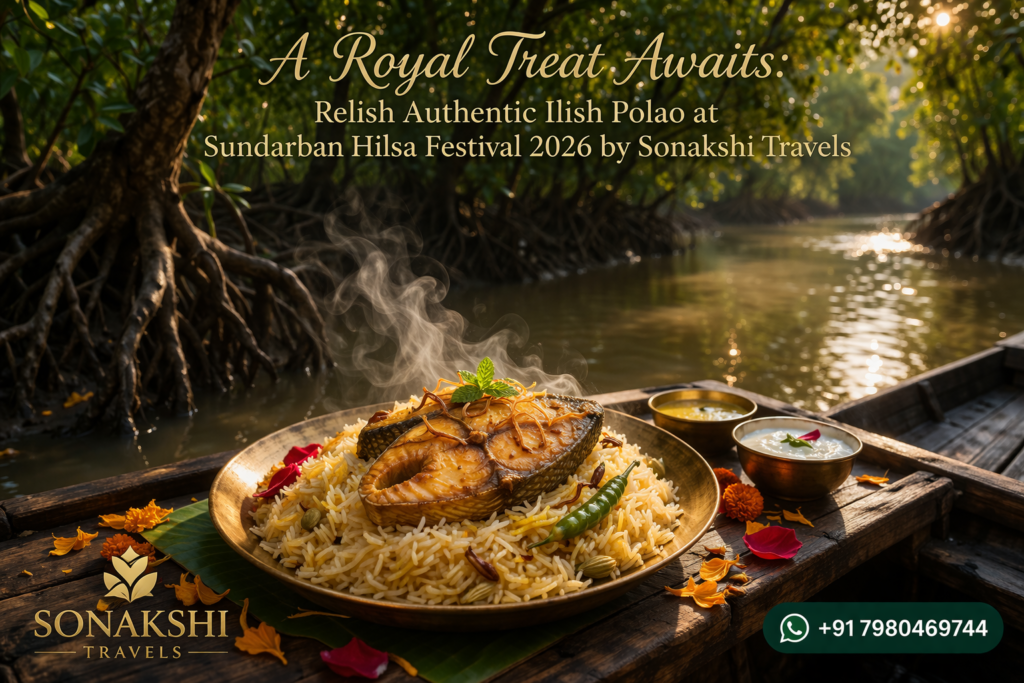
There are some dishes that satisfy hunger, and there are some dishes that create a full cultural moment. Authentic Ilish Polao belongs to the second kind. At the Sundarban hilsa festival 2026, this dish is not served as a routine lunch item. It is presented as a refined Bengali food experience shaped by memory, river culture, and careful cooking. The title promises a royal treat, and that promise feels true from the first aroma rising from the plate. The fragrance of fine rice, the rich oil of hilsa, the soft warmth of ghee, and the deep comfort of traditional seasoning together create a meal that feels noble without becoming heavy.
What makes this moment special is not only the popularity of hilsa. Hilsa is already one of the most respected fish in Bengali food culture. But when it is prepared as polao, its identity changes slightly. It becomes softer in expression, more layered, and more ceremonial. The fish still remains the heart of the dish, yet the rice becomes an equal companion. Each grain receives flavor. Each bite carries both richness and balance. In the festival setting arranged by Sonakshi Travels, the dish gains another dimension. It is no longer only about taste. It becomes an experience of place, silence, water, hospitality, and tradition.
For many guests, the meal becomes one of the most meaningful parts of the entire Sundarban ilish utsav 2026. That happens because food in the delta is never completely separate from the landscape around it. The river, the mudbanks, the quiet movement of boats, and the life built around water all shape the emotional power of the meal. Ilish Polao in this setting feels rooted, not staged. It feels connected to a living culture rather than copied from a cookbook alone.
The Royal Character of Ilish Polao
The word royal can sometimes sound exaggerated, but in this case it has real meaning. Ilish Polao feels royal because of its balance, restraint, and depth. It does not depend on loud spice, bright color, or unnecessary decoration. It depends on harmony. The rice must remain fragrant but not sweet. The hilsa must remain rich but not aggressive. The oil of the fish must enter the rice gently, so that the plate carries one connected taste rather than separate parts. That kind of balance requires skill. It cannot be achieved by hurry.
In Bengali culinary memory, hilsa has long been linked with dignity, celebration, and affection. It appears in homes during special meals and in gatherings where the host wants to show care and respect. Polao also carries a festive quality. It is gentler and more graceful than plain rice. When these two are combined, the dish naturally enters a higher emotional space. It feels worthy of occasion. It feels worthy of guests. That is why people often describe it with words like grand, classic, and royal.
At the festival, that feeling grows stronger because the meal is served in a setting that allows people to notice detail. The dish is not hidden in noise. Guests can observe the aroma before the first bite, the texture of the rice, the shine of hilsa oil, and the softness of the fish. This calm attention helps the food reveal its full value.
What Makes the Preparation Authentic
Authenticity in Ilish Polao is not a matter of fancy language. It is a matter of method, proportion, and respect for the ingredient. Hilsa is delicate. Its taste can disappear if the cook uses too many spices. It can also become unpleasant if handled carelessly. Authentic preparation understands the nature of the fish and protects it. The seasoning stays measured. The rice is cooked so that it remains light and separate. The oil from the hilsa is treated as a treasure, not as excess. Nothing should bury the central taste.
True Ilish Polao also depends on timing. Hilsa must be cooked enough to release flavor, but not so much that its flesh loses tenderness. The rice must be firm enough to hold shape and soft enough to absorb aroma. The joining of fish and rice must happen with patience. If the dish is assembled carelessly, the result may be edible, but it will not feel graceful. The authentic version feels composed. Each layer supports the next one.
At the Sundarban hilsa festival, the value of authenticity becomes especially important because guests arrive with expectation. They are not only looking for fish. They are looking for the true Bengali expression of hilsa in a celebratory form. Sonakshi Travels strengthens that expectation by giving the dish proper respect in presentation and service. The result is a meal that feels honest, not commercial.
The Sensory Experience of the Dish
Ilish Polao is a dish that should be understood through the senses one by one. The first sense is smell. Before the plate is touched, the aroma begins its work. There is the warm fragrance of rice, the gentle richness of clarified butter, and the unmistakable deep scent of hilsa oil. This first moment already tells the guest that the meal is serious and refined.
The second sense is sight. A well-made plate of Ilish Polao does not need dramatic color to look beautiful. Its beauty is softer. The rice appears light, rich, and inviting. The fish carries a natural shine. The overall appearance feels calm and complete. It is not chaotic. It does not look crowded. It looks composed, like a dish that understands its own dignity.
The third sense is touch, which in food becomes texture. Hilsa must feel soft and yielding without becoming broken. The rice must remain distinct grain by grain. When the two meet in the mouth, the texture becomes one of the great pleasures of the meal. The fish gives richness. The rice gives softness and shape. Together they create a slow, full satisfaction.
Then comes taste, where everything joins. The flavor is rich, but not blunt. It is aromatic, but not sharp. It carries fat, but not heaviness. A proper plate leaves a long aftertaste that feels warm and noble. This is why many guests remember the dish not as a simple fish meal, but as one of the emotional centers of the Sundarban ilish utsav.
Why the Festival Setting Deepens the Meal
Food always changes according to place. The same recipe can feel ordinary in one setting and unforgettable in another. At the festival, Ilish Polao receives the advantage of a meaningful environment. The quiet water world of the delta creates a slower rhythm of attention. People eat differently in such a place. They do not rush in the same way. They listen more. They observe more. Their senses become less crowded.
That slower state matters because Ilish Polao is a dish that rewards patience. It is not meant for hurried eating. It asks the guest to notice aroma, oil, softness, and sequence. In the riverine atmosphere of the festival, that awareness becomes easier. The surrounding stillness gives the food more space inside the mind. The meal feels larger, not in quantity, but in significance.
This is also where the emotional strength of the event appears. The dish reflects the aquatic identity of the region. Hilsa is not an abstract luxury ingredient. It belongs to the river culture that shapes Bengali food memory. When people eat it in a festival centered on hilsa, the dish carries symbolic meaning. It feels like a tribute to river life, seasonal taste, and culinary inheritance.
Ilish, Rice, and the Culture of Grace
The pairing of hilsa and rice has a special place in Bengali imagination. Fish and rice are everyday partners in one sense, but with hilsa the relationship becomes more ceremonial. Hilsa carries prestige because of its flavor, its delicacy, and its emotional place in family memory. Polao carries grace because it is associated with care, celebration, and a slightly elevated form of hospitality. Together they create a plate that feels both intimate and grand.
This is one reason the dish fits so naturally within the refined mood associated with Sonakshi Travels. Some guests may come through a Sundarban luxury tour or a food-centered journey, but the meal itself becomes the point where comfort meets culture. It is not luxury for display. It is luxury through care, proportion, and authenticity. The richness is in the cooking, not in excess.
For guests who value culinary memory, the dish often becomes the strongest expression of grace in the entire festival experience. The meal does not shout. It persuades softly. That softness is part of its power.
The Psychology of Eating a Dish Like This
A truly memorable meal changes the inner rhythm of the person eating it. Ilish Polao has that ability. It slows the guest down. It draws attention inward. It creates a sense of reward that is both physical and emotional. This happens because the dish is rich in a thoughtful way. It does not hit the tongue and vanish. It unfolds in stages. The first taste is fragrant. The second is oily and deep. The third brings the sweetness of rice and the softness of fish together. This sequence creates involvement.
There is also an element of memory in the experience. For Bengali guests, the dish may call back family meals, festive gatherings, and inherited food stories. For other guests, it may create a first contact with a very specific culinary language. In both cases, the effect is meaningful. The meal feels connected to something larger than itself.
That emotional dimension explains why food festivals remain powerful. They do not only present dishes. They organize memory, place, and identity into one shared act. At the Sundarban hilsa festival 2026, Ilish Polao becomes one of the clearest examples of that truth.
Research-Based Value of Traditional Food Presentation
Food researchers often note that traditional dishes gain more meaning when served in a setting that reflects their cultural and ecological roots. This is not a romantic idea only. Taste is influenced by expectation, environment, and emotional context. A dish tied to river heritage feels stronger when served in a river-centered landscape. A seasonal fish feels more meaningful when presented as part of a festival that honors it. A heritage recipe feels more authentic when cooked with visible respect rather than adapted for speed.
Ilish Polao benefits from all these factors. It is already a dish of strong culinary identity. When placed inside a well-shaped festival atmosphere, its impact becomes deeper. The guest does not experience it as random cuisine. The guest experiences it as a living part of Bengali food culture. This is why the dish leaves a longer impression than many other rich meals.
In this way, the event also speaks quietly to those interested in Sundarban tour and meaningful regional food culture. The meal is not disconnected from place. It reflects a food tradition shaped by water, local memory, and seasonal identity. That connection gives the plate intellectual value as well as sensory pleasure.
How Sonakshi Travels Gives the Dish a Proper Stage
A great dish can lose its power if it is served without care. Sonakshi Travels gives Ilish Polao a proper stage by treating it as a central cultural feature rather than an extra attraction. This matters. Presentation, timing, and atmosphere all change how guests receive the meal. When the service respects the dish, the guest also respects the dish more deeply.
The brand’s role is not only logistical. It is interpretive. It shapes the way guests understand the meal. The dish is framed as part of a festival identity, part of a Bengali food story, and part of a thoughtful river experience. That framing turns eating into appreciation. Guests begin to notice not just flavor but craft.
For some travelers, this food-centered experience may naturally complement a broader Sundarban tour package or a culture-driven stay, but within this article the important point is simple: the meal stands at the center. Everything around it exists to help guests feel its full importance.
The Quiet Majesty of River Food Culture
There is a kind of majesty that does not depend on spectacle. It comes from depth, continuity, and truth. Ilish Polao expresses that kind of majesty. It is rich, but disciplined. It is festive, but calm. It is luxurious, but rooted in tradition. In the setting of the festival, these qualities become visible in a very clear way.
The dish also reminds guests that river culture produces its own form of refinement. Refinement does not always come from distance, rarity, or fashionable reinvention. Sometimes it comes from generations of careful cooking shaped by local ingredients and patient taste. Hilsa, prepared with respect and joined with fragrant rice, proves that point beautifully.
This is why the meal feels like more than a famous fish recipe. It feels like an edible form of cultural grace. Every careful bite confirms that the royal quality of the dish is real.
A Festival Memory That Stays
After many journeys, people often forget exact conversations, small details, or the order of events. But they remember one plate, one aroma, one meal that seemed to hold the spirit of a place. Authentic Ilish Polao at the festival has that staying power. It leaves a memory made of fragrance, softness, richness, and quiet pleasure. It lingers because it feels complete.
In the world of curated travel experiences, this matters greatly. A meaningful Sundarban luxury tour package or a culturally sensitive food event becomes valuable when one moment rises above the rest and remains alive in memory. For many guests, the plate of Ilish Polao becomes that moment. It captures Bengal’s affection for hilsa, the dignity of festive rice, and the calm richness of a river-linked culinary setting.
A royal treat, then, is not only about richness. It is about being served something worthy of attention, worthy of silence, and worthy of remembrance. That is exactly what authentic Ilish Polao offers at the festival by Sonakshi Travels. It is elegant without being distant, rich without being excessive, traditional without feeling old, and deeply satisfying without losing refinement. In every sense that matters, it is a royal Bengali experience placed gently before the guest.
Those who enter the spirit of the Sundarban hilsa festival with an open mind often discover that this single dish says more than many long descriptions. It speaks of river life, culinary memory, cultural pride, and the quiet art of serving food with respect. That is why the meal remains unforgettable. It does not only fill the plate. It fills the occasion.