Updated: April 1, 2026
Family-Friendly Activities at the Sundarban Ilish Thali
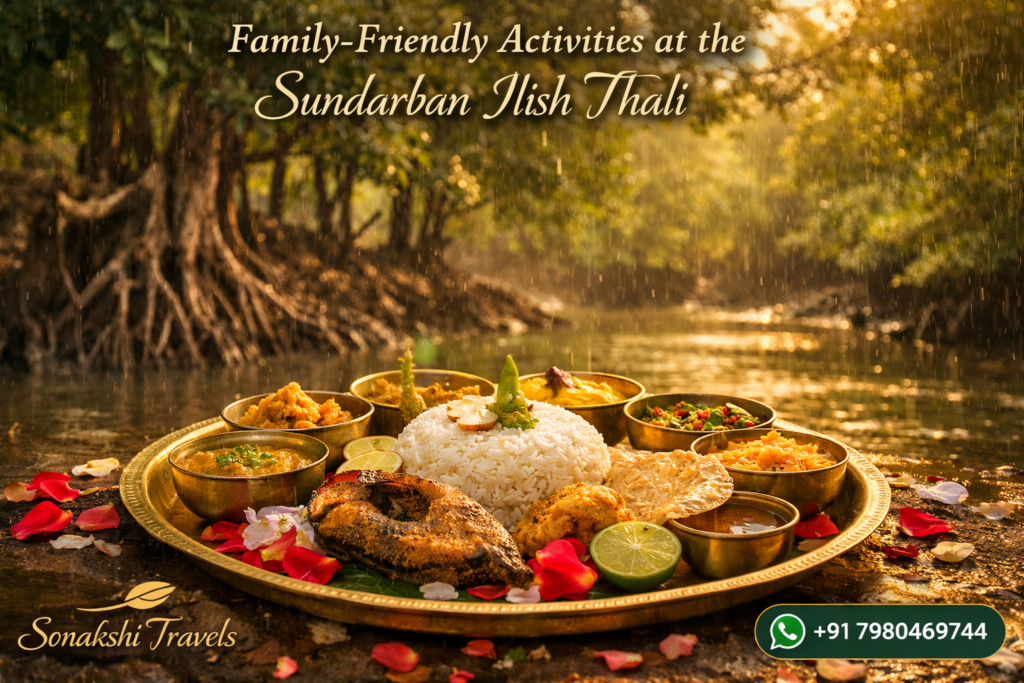
The idea of a family meal is simple, but its meaning can be very deep. When that meal is built around hilsa, served with care, and placed inside the river world of the delta, it becomes more than food. It becomes a shared activity. The Sundarban Ilish Thali is not only about taste. It gives families a slow, gentle, and meaningful way to spend time together. Children can see colour, shape, steam, and arrangement. Parents can enjoy memory, flavour, and conversation. Grandparents can find old cultural links in each dish. That is why the thali stands out inside the larger spirit of the Sundarban ilish utsav.
A family-friendly activity does not need noise, speed, or artificial entertainment. In many places, people think children need constant action and adults need separate comfort. The Ilish Thali quietly proves the opposite. A well-served meal, when shaped with local identity and seasonal rhythm, can hold all generations in one space. The act of sitting, watching, smelling, tasting, and talking together becomes a complete experience in itself. At the centre of that experience is the thali, but around it grow many gentle family moments that feel natural, safe, and rich.
What makes this experience especially suitable for families is its balance. It is lively, but not chaotic. It is cultural, but not heavy. It is sensory, but not overwhelming. The child sees a meal as discovery. The parent sees it as a rare pause. The older member sees it as continuity. In this way, the Ilish Thali becomes one of the most human parts of the Sundarban hilsa festival. It brings the family into one rhythm and lets the day unfold through food, observation, and shared feeling.
The Thali as a Shared Family Experience
The first family-friendly activity begins with looking. Before anyone starts eating, the thali itself invites attention. A child notices how many small portions are placed around the plate. One bowl may hold dal, another may carry a mild vegetable preparation, another may bring a hilsa dish with mustard, steam, or greens. Rice sits at the centre like an anchor. Fried items may offer shape and crispness. Chutney or a light finishing taste gives the meal a soft conclusion. This visual order creates curiosity in a very calm way.
Families often enjoy talking through the plate before eating it. Which dish should be tasted first? Which item looks mild? Which one smells stronger? Which one belongs to an old family memory? This simple conversation turns the meal into an activity of learning and exchange. It is especially good for children because it helps them engage with food through observation rather than pressure. They do not need to be told to enjoy it. The plate itself opens the door.
The shared thali table also teaches patience. Not every family moment must be rushed. When a meal is served in several parts, people slow down. They take small bites, compare impressions, and ask questions. A child may ask why mustard is used with hilsa so often. An elder may explain that this pairing belongs to Bengal’s food history and river culture. That small exchange is not a lesson in the formal sense, yet it teaches taste, memory, and place all at once.
For families who usually eat in a hurried urban pattern, this slower meal feels special. It restores attention. It brings back the old idea that food is not only fuel. It is also relationship. In that sense, the Ilish Thali can become one of the warmest moments within a wider Sundarban tour, especially for families who want meaningful togetherness instead of empty distraction.
Taste Discovery for Children in a Gentle Way
One of the most valuable family-friendly activities around the Ilish Thali is guided taste discovery. Children are often more open than adults when they are invited gently. The thali format helps because it offers variety in small amounts. A child does not face one large, unfamiliar dish. Instead, the child meets several small portions, each with its own colour, texture, and smell. This reduces fear and increases interest.
Parents can turn tasting into a soft game. Which dish is smooth? Which one is sharp? Which one smells earthy? Which one feels light with rice? A child may not know culinary language, but the child knows feeling. Words such as soft, warm, sour, gentle, or strong are enough. In this way, the thali becomes a language-building exercise as well as a meal.
The hilsa itself also invites conversation because it is a fish with character. Its flavour is delicate but distinct. Its texture is soft, yet it carries structure. Families can talk about why it is valued, why it appears in seasonal celebration, and why careful cooking matters. This conversation gives children a first cultural map of the food. They begin to understand that dishes are not random. They belong to river life, local history, and seasonal emotion.
Such moments fit well inside the spirit of a thoughtful Sundarban tour package, but here the focus remains on the table itself. The real activity is not travel planning. It is the child’s growing attention. When children begin to observe food closely, they also begin to respect effort, tradition, and the people who cook. That respect is one of the quiet successes of a family meal.
Storytelling Around Food and Memory
Another strong family-friendly activity at the Sundarban Ilish Thali is storytelling. Food opens memory very quickly. One smell can take a grandparent back to a village kitchen. One mustard note can remind a parent of monsoon lunches at home. One fried piece of fish can bring back a childhood visit to a relative’s house. When families sit around a thali, such memories rise naturally. No programme is needed. The plate itself is enough.
Children usually listen closely when adults speak through memory rather than instruction. A grandmother describing how hilsa was once cleaned, cooked, and served in her youth can hold more power than any formal explanation. A father recalling how he first learned to eat fish carefully can make children feel included in a longer family line. These conversations give the meal emotional weight.
In the setting of the Sundarban hilsa festival 2026, such storytelling feels even more complete because the meal is not isolated from place. The delta landscape, the river culture, and the seasonal identity of hilsa all support the story. Food becomes a bridge between family memory and local tradition. The result is not only entertainment. It is continuity.
Families often search for activities that keep all age groups engaged without causing strain. Storytelling at the thali table does exactly that. The child listens and asks simple questions. The adult explains and reflects. The older member remembers and feels valued. Everyone participates at a level that suits them. This is why the Ilish Thali works so well as a family-centred experience.
Learning Table Manners, Care, and Attention
The Ilish Thali also supports quiet learning. Hilsa is not a careless food. It asks for attention. Because the fish is delicate, families naturally slow down and teach children how to eat with care. This is not a harsh lesson. It is a soft practice in patience, hand control, and observation. Children learn to separate, inspect, and taste carefully. They also learn that some foods deserve respect and calm handling.
This small discipline can be turned into a positive family activity. Parents can demonstrate how to mix rice with curry in small portions, how to check each bite, and how to move through a meal without hurry. Such learning builds confidence. The child feels trusted. The parent feels involved. The atmosphere stays warm rather than strict.
Even the order of the meal teaches something. Many Bengali meals move in a thoughtful sequence, from lighter beginnings to deeper flavours and then a softer finish. When families talk through this order, children learn that meals can have rhythm. A plate is not only a collection of things. It has structure. This simple idea sharpens attention and deepens enjoyment.
At a time when many eating experiences are built around screens, speed, and distraction, the Ilish Thali brings focus back to the table. That alone makes it family-friendly. It invites eye contact, listening, and physical presence. In a wider sense, this is one of the most valuable cultural gifts that a meal can offer.
Mini Food Conversations That Keep Everyone Involved
Some family activities fail because they only suit one age group. The Ilish Thali is different because it creates many small entry points. One person may be interested in flavour. Another may be interested in plating. Someone else may notice smell, texture, or cooking method. Because the meal has many elements, every family member can find a point of connection.
Parents can ask simple questions that keep the table alive. Which preparation feels the mildest? Which side dish balances the fish best? Which bite feels most comforting? Which item has the strongest mustard note? These are easy questions, but they lead to real attention. They make the act of eating more thoughtful and more shared.
Children also enjoy comparison. They may compare a fried preparation with a softer one, or rice with gravy against rice with a dry side dish. These comparisons help build taste memory. Over time, the child learns not only what they like, but why they like it. That is a deeper form of enjoyment. It turns the meal into an active family exchange.
This kind of gentle engagement suits families who choose a quiet, meaningful setting, including those who come through a Sundarban family private tour. Even then, the real value of the thali does not depend on travel style. It depends on how the family uses the table: as a place of curiosity, patience, and conversation.
Observing Culture Through the Meal
A family-friendly activity becomes stronger when it helps children understand culture without making the experience heavy. The Ilish Thali does this naturally. Each item on the plate reflects choice, tradition, and local understanding. The fish is not treated in an accidental way. It is prepared with balance. Side dishes are not random decoration. They support the main taste, soften it, deepen it, or prepare the palate for the next flavour.
When families speak about these relationships, children begin to see food as culture in action. They understand that a meal can express a region’s values: restraint, balance, respect for ingredients, and attention to sequence. They also learn that festival food is not only about richness. It is about significance. The Ilish Thali belongs to celebration, but it is a celebration with meaning.
Parents can also explain why the word “thali” matters. It suggests completeness. It gathers several ideas into one plate. That idea of completeness is important for family life too. Different people, different preferences, different generations, yet one shared table. The thali quietly mirrors the family itself.
Within the cultural setting of the Sundarban ilish utsav 2026, this meaning becomes even clearer. The event does not only display a famous fish. It frames a way of eating, sharing, and remembering. Families who take time to notice these details come away with more than satisfaction. They come away with understanding.
Creative Activities Around the Plate
Not all family-friendly activities need to happen during the act of eating. The Ilish Thali can inspire simple creative moments before and after the meal as well. Children may enjoy naming colours on the plate, counting the number of separate items, or describing the steam, aroma, and shape of each serving. Older children may try to write one sentence about their favourite taste. Adults may ask which item felt most surprising and why.
Families can also build a memory ritual around the meal. One person may describe the best bite of the day. Another may describe the most beautiful part of the plate. Someone else may share which dish reminded them of home. These tiny rituals are easy, but they help the experience stay in memory. They turn a meal into a family record.
Some families like to discuss how the thali creates balance. There is softness, sharpness, richness, and relief. There is texture and contrast. There is warmth and finish. Even children can understand this when it is described in simple terms. Such conversation gives the meal intellectual depth without making it formal. It remains light, human, and enjoyable.
Because the Ilish Thali is visually organised and emotionally layered, it supports reflection very well. Families leave the table feeling that they did not merely eat. They took part in something shaped, thoughtful, and shared. That feeling is the mark of a successful family activity.
Why the Ilish Thali Works So Well for Families
The deepest reason is simple. It allows togetherness without force. Many family activities rely on performance, movement, or external excitement. The Ilish Thali works through attention. It slows the family down just enough for real exchange to happen. It gives children discovery, adults meaning, and elders dignity. It opens taste, memory, and culture in one soft movement.
It is also inclusive in a very practical sense. The family does not need special skill to enjoy it. No one needs to compete, perform, or rush. Each person can take part in a natural way. A child can ask. A parent can guide. An elder can remember. The table holds them all. This is rare. It is one reason the Ilish Thali remains so powerful in a family setting.
The experience also stays close to human scale. The sounds are the sounds of plates, serving spoons, low voices, and shared reaction. The activity is not built around spectacle. It is built around presence. That is why it often leaves a deeper mark than louder forms of entertainment. People remember how they felt at the table, how a certain dish tasted, how a story was told, and how everyone listened.
In the end, family-friendly activities at the Sundarban Ilish Thali are not separate from the meal. They grow from it. Observation, tasting, storytelling, careful eating, cultural learning, and memory sharing all emerge from the same centre. The thali becomes a circle of connection. Inside the broader cultural space of the festival, that circle feels complete. For families seeking a meaningful shared experience, the Ilish Thali offers something rare: a gentle activity that is full of flavour, full of memory, and full of life.