Updated: March 26, 2026
Is a Sundarban Tour Safe for Tourists?
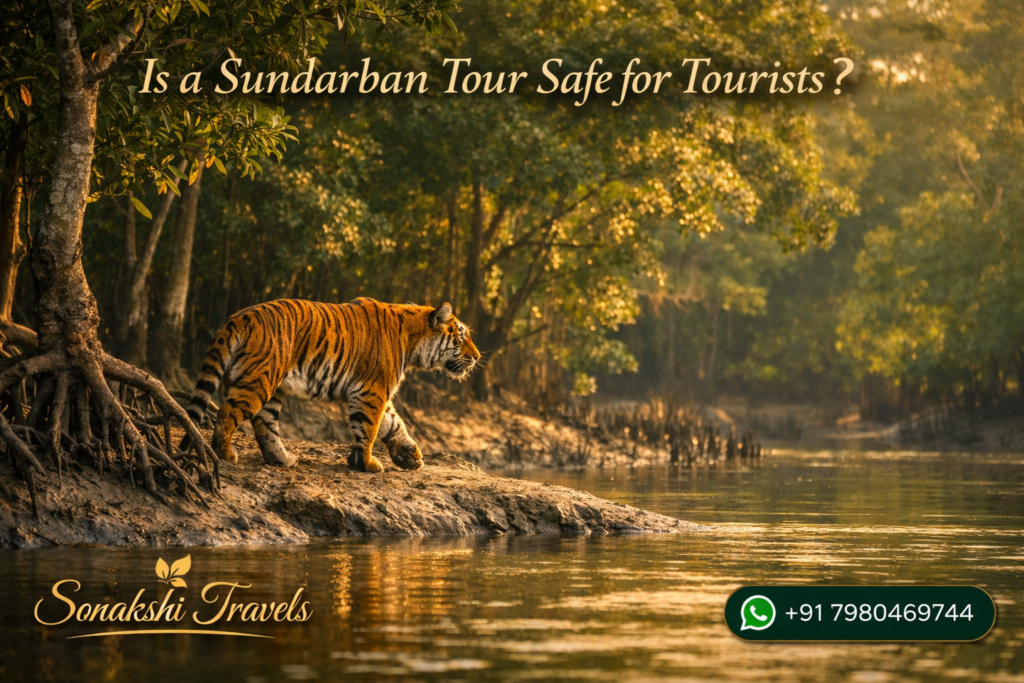
The question is serious, and it deserves a careful answer. A journey into the mangrove delta is not unsafe by default, but it is also not a place that should be treated carelessly. The Sundarban is a living tidal forest. It changes with water, mud, silence, animal movement, and human judgment. Because of that, safety in this landscape does not depend on one single thing. It depends on planning, behavior, boat management, guide discipline, food hygiene, river knowledge, weather reading by local staff, and the ability of the operator to respect the forest instead of trying to dominate it.
So, is a Sundarban tour safe for tourists? Yes, in most cases it is safe when the journey is arranged through a responsible operator, when forest rules are followed strictly, and when visitors behave with patience and common sense. The deeper truth is that safety in the delta is not created by loud promises. It is created by systems. A calm boat crew, licensed guides, clean food handling, proper life jackets, regulated entry, and disciplined movement all matter more than advertising language.
Many first-time visitors imagine danger only in dramatic form. They think of wild animals, deep forest, or remote river channels. Those things are real parts of the landscape, but actual tourist safety is often shaped more by practical details. A badly maintained boat can create more risk than the forest itself. A careless crew can create more trouble than the silence of the mangroves. Poor drinking water management, weak supervision, overcrowding, or reckless movement on wet surfaces can cause more immediate problems than the imagined fear that people carry before arrival. This is why a well-managed Sundarban tour package matters. Safety begins long before the traveler sees the first stretch of river.
Safety in the Sundarban Means Controlled Exposure, Not Total Freedom
One of the most important things to understand is that tourists do not move through the Sundarban in an unregulated way. They do not simply walk alone into the forest. They enter through controlled systems. There are rules, guide structures, river routes, and protected visitor movement patterns. This is one reason why the tourism experience is usually safer than outsiders imagine. The tourist sees the forest, but within a managed frame. The journey is built around controlled exposure to a wild place, not free and careless access to it.
This matters psychologically as well. Fear often grows in the mind when a destination is described only through its wild reputation. But the actual visitor experience is different. A tourist usually remains on a licensed boat, within supervised zones, with trained local staff who understand tide behavior, river channels, and the practical rhythms of the area. A good operator never treats the forest as a playground. That attitude itself becomes a safety system.
In this sense, proper Sundarban tourism works because it respects limits. Tourists are safer when the experience is not designed around thrill, noise, or showmanship. The delta rewards discipline. It does not reward ego.
The Real Safety Base Is the Quality of the Operator
The strongest answer to the question of tourist safety is this: safety depends greatly on who is conducting the journey. The same landscape can feel secure under one team and poorly managed under another. That is why the role of the operator is central. A professional team brings structure to the trip. They manage boarding and landing carefully. They store food properly. They keep emergency basics ready. They monitor guest movement. They avoid unnecessary risk. They know when not to push forward.
A weak operator often reveals itself in small ways. The boat may feel overcrowded. Instructions may be vague. Timings may feel rushed. Cleanliness may be uncertain. Staff may appear casual about river edges, slippery decks, or guest supervision. These are warning signs. Tourist safety is not only about visible equipment. It is also about seriousness of conduct. Good operators have a culture of care. Their staff do not panic, do not boast, and do not encourage foolish behavior for excitement.
That is why many travelers feel more secure when they choose a structured Sundarban travel package rather than trying to assemble a loose arrangement with unclear responsibility. In a professional setup, the chain of accountability is clearer. The guest knows who is managing transport, who is supervising food, who is responsible for the boat, and who is guiding movement.
Water Safety Is More Important Than Most People First Assume
When people think about safety in the Sundarban, they often think first about wildlife. But for actual visitors, river safety is often the more practical concern. The region is shaped by water. The river is not just scenery. It is the road, the corridor, and the moving base of the journey. For that reason, boat condition, boarding stability, railing strength, deck cleanliness, and crew skill all matter deeply.
A safe boat journey is usually calm and orderly. Guests are guided while stepping on and off. Life jackets are available and usable, not merely decorative. The boat is not overloaded beyond comfort. Wet areas are watched. Children are not left without attention near open edges. Movement on the deck is not chaotic. These details may sound simple, but they define the real texture of safety.
In a quality Sundarban travel guide approach, the river is treated with respect. The staff understand that still-looking water can hide strong movement, muddy edges, or unstable footing. They also understand that tourists may not read these signs correctly. So the crew becomes a form of local intelligence. Safety grows when local knowledge is active, not when it is assumed.
Wildlife Fear Is Real, But Tourist Exposure Is Usually Managed
The Sundarban is known for powerful wildlife, and that reputation is not imaginary. But tourist fear often becomes larger than tourist exposure. Visitors are not normally placed in direct, uncontrolled contact with dangerous animals. Most of the journey happens through observation from regulated positions. The forest remains wild, but the tourism structure is designed to reduce careless closeness.
This does not mean tourists should become casual. It means they should understand the real nature of safety. The danger increases when visitors forget where they are. Leaning too far, shouting, moving without permission, or trying to act brave for photographs is not intelligent behavior. The safest tourist is not the boldest tourist. The safest tourist is the one who accepts the place on its own terms.
For this reason, a disciplined Sundarban eco tourism model is often safer than an aggressive tourism style. Eco-conscious travel is not only good for the landscape. It is also good for human safety because it reduces disturbance, reduces crowd pressure, and keeps the visitor inside a calmer behavioral frame.
Food, Water, and Cleanliness Are Part of Safety Too
Many people overlook a simple truth: tourist safety is not only about the forest. It is also about the body. Clean drinking water, fresh cooking practices, hygienic serving conditions, and basic sanitation are essential parts of a safe journey. A forest can be managed well, but if food handling is careless, the visitor experience can still become unsafe or unpleasant.
Responsible operators usually plan this area with care. Drinking water should be clear in origin and storage. Meals should be prepared in a clean way. Cooked food should not be left exposed for too long. Serving spaces should feel orderly. Staff should understand basic guest hygiene expectations. These may sound like ordinary travel standards, but in a river-based landscape they become even more important because comfort and safety are closely linked.
A well-designed Sundarban trip package is safer not only because it organizes movement, but because it also manages these quiet practical needs. Travelers often remember scenery first, but the success of the journey is often protected by invisible habits behind the scenes.
Mental Safety Comes from Good Communication
A place can feel unsafe even when it is physically well managed if communication is poor. The Sundarban is not an urban environment where signs, roads, and buildings constantly explain what is happening. It is a place of water, distance, and changing edges. When tourists do not understand the rhythm of the journey, uncertainty can grow into fear. Clear briefing matters.
Good teams explain things simply. They tell guests where to step, where not to lean, when to remain seated, and why silence matters. They answer questions without irritation. They do not create panic, but they also do not hide seriousness. This balance is important. Tourists feel safer when they sense that the people managing the journey understand both the environment and the guests.
That is one reason many families prefer a professionally managed Sundarban private tour. In a private arrangement, communication is often clearer, supervision is more personal, and crowd confusion is reduced. Safety is not only about lower risk. It is also about greater clarity.
Why Crowd Pressure Can Reduce Safety
Overcrowding changes the character of a river journey. It affects movement, attention, noise, and response time. When too many people share a boat or a tightly managed space, small safety instructions become harder to follow. People block each other’s view. Children become harder to monitor. Wet decks become more chaotic. Boarding becomes less stable. Even simple communication becomes weaker in a crowded group.
This is why smaller and more orderly formats often feel safer. In a carefully managed Sundarban private tour package, the guest is not competing for space, staff attention, or movement access. The atmosphere is calmer. Calmness itself is a safety asset. It slows down careless reactions and makes supervision easier.
Even where guests choose a shared arrangement, safety improves when the group remains disciplined and not excessively large for the boat or service setup. The delta asks for measured behavior. Too much crowd energy works against the place.
The Landscape Rewards Quiet, Patient Behavior
There is also a behavioral side to this question that is often not discussed enough. The Sundarban is safer for tourists when tourists behave in a way that fits the landscape. The forest is not built for hurried movement. The rivers are not built for loud excitement. Mud, tide, and distance create a different rhythm. Visitors who accept this rhythm usually feel safer and move more safely.
Patience is not only a moral virtue here. It is practical intelligence. A quiet traveler notices instructions better. A patient traveler steps more carefully. A respectful traveler is less likely to take foolish risks for entertainment. In that sense, safety is partly relational. The visitor enters a place and either resists its logic or adapts to it. Adaptation almost always creates the safer experience.
This is where the idea of a meaningful Sundarban travel experience connects with safety. A serious visitor does not come only to consume scenery. A serious visitor learns how to be present in the landscape without disturbing it or misreading it. That attitude protects both the guest and the place.
Private and Premium Formats Often Improve Safety Standards
Not every traveler needs a luxury arrangement, but it is true that better-managed private and premium tours often bring stronger safety conditions. This is not because comfort alone creates safety. It is because better setups often include stronger supervision, better maintained boats, cleaner service systems, and more personalized staff attention. When responsibility is clear and guest numbers are controlled, risks are easier to manage.
For some travelers, especially older visitors, couples seeking a quieter setting, or families with children, a structured Sundarban luxury tour may feel safer because the experience is usually less rushed and more attentive. Likewise, a carefully arranged Sundarban luxury tour package may reduce practical strain by keeping food service, guest care, and boat standards more organized.
Still, luxury should not be confused with automatic safety. A premium label means little if management is weak. The real test is always operational discipline.
Children, Elderly Guests, and First-Time Visitors
Another part of the safety question concerns who is traveling. The Sundarban can be safe for children, elderly guests, and first-time visitors when the trip is designed with care and when the supervising adults remain attentive. These travelers do not necessarily face danger because of who they are, but they may require more support in movement, food timing, rest, boarding, and communication.
Children need watching near railings and wet steps. Elderly travelers may need slower transitions and more stable assistance while moving between land and boat. First-time visitors often need clear explanation so that unfamiliar sounds, distances, or silences do not create unnecessary fear. A thoughtful operator understands these differences and adjusts the pace.
This is one reason some travelers choose a Sundarban family private tour format in spirit, even if they do not use that exact language. The goal is not only comfort. The goal is controlled attention. Safety improves when care becomes specific rather than general.
Respect for Rules Is the Hidden Core of Safety
At the center of everything is one clear principle: the Sundarban is safest for tourists when rules are respected. Rules may feel small in the moment, but together they create the frame that protects the journey. Stay where guidance allows. Do not create noise without reason. Do not lean carelessly. Do not treat the river edge casually. Do not assume that a calm-looking moment means total freedom. The forest is peaceful, but it is not casual space.
Responsible Sundarban exploration tour culture is built on humility. It accepts that the landscape is older, stronger, and more changeable than the visitor. Once a tourist understands that, the question of safety becomes clearer. The place is not asking for fear. It is asking for respect.
Final Answer: Yes, It Is Safe When Managed Properly
So the final answer is balanced but firm. Yes, a Sundarban journey can be safe for tourists. In fact, for most visitors it is safe when the trip is managed by a responsible operator, when boats and service systems are maintained properly, when food and water are handled hygienically, and when guests follow instructions without carelessness. The delta is a sensitive place, but sensitivity is not the same as danger. It simply means that the environment must be approached with seriousness.
The best way to think about safety here is not to ask whether the forest is dangerous in the abstract. The better question is whether the journey is being conducted intelligently. A properly managed Sundarban tour is built around supervision, local knowledge, restraint, and respect. When those things are present, the visitor can experience the rivers, silence, and beauty of the mangrove world with confidence.
In the end, tourist safety in the Sundarban is not created by removing all wildness. It is created by meeting wildness in the right way. That is the difference between fear and understanding, and it is also the difference between a careless trip and a safe one.