Sundarban Private Tour from Kolkata: A Complete Door-to-Door Planning Guide
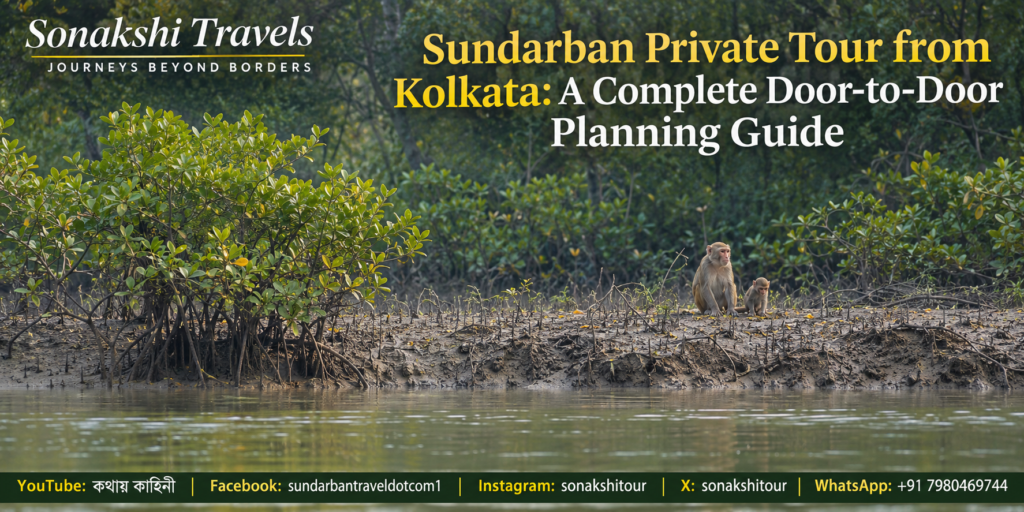
Planning a Sundarban private tour from Kolkata involves more than choosing a boat safari or booking a hotel. A comfortable journey requires proper coordination between your Kolkata pickup, road transfer, river jetty, private boat, forest permits, accommodation and return transport. If even one connection is poorly organised, valuable sightseeing time can be lost. For families, couples, senior travellers and small private groups, understanding the complete journey before booking is particularly important.
The Indian Sundarbans offer a distinctive wildlife experience shaped by tidal rivers, mangrove forests, remote islands and protected habitats. Unlike destinations where visitors travel directly into a national park by road, reaching the principal Sundarban safari areas usually requires a combination of land and water transport.
This practical guide explains the journey from your Kolkata doorstep to the Sundarban waterways and back. It covers pickup arrangements, travel routes, boat facilities, realistic safari schedules, accommodation choices, package costs, forest regulations and important questions to ask before confirming a booking.
1. Understanding a Door-to-Door Sundarban Private Tour
A door-to-door private tour is designed to connect the main stages of your journey through a coordinated travel arrangement. Instead of independently booking a taxi, finding a boat operator, arranging accommodation and organising sightseeing, you can have these services planned together.
In a typical Sundarban private tour from Kolkata, the journey begins with an agreed pickup from your home, hotel or another accessible location. A reserved vehicle takes your group to the designated river boarding point, where a private boat and service team are arranged for the water-based portion of the trip.
Depending on the package, additional arrangements may include meals, overnight accommodation, forest entry permissions, a required ecotourism guide and sightseeing coordination.
What does door-to-door actually mean?
Door-to-door service should cover an agreed starting point and final drop-off location. However, the description does not automatically mean that every transport stage, meal, entrance charge or optional activity is included in the advertised price.
Before booking, establish whether the package includes both outbound and return road transfers, where the vehicle will meet you, which jetty will be used and whether additional transfers are necessary between the jetty and your accommodation.
Travellers should also ask whether the road vehicle remains available throughout the trip or returns separately and comes back on the final day.
Who benefits most from a private arrangement?
A private tour is especially useful for families travelling with children, couples seeking privacy, senior citizens who prefer carefully paced journeys and photographers carrying equipment. It can also be convenient for international visitors unfamiliar with local transportation.
The main benefit is control over group arrangements. However, private travel does not permit unrestricted movement inside protected forests. All safari activities remain subject to forest department regulations, approved routes and operating conditions.
2. Kolkata to Sundarban: Road Routes, Pickup Points and Travel Time
The first practical decision is selecting your pickup point and understanding where the road journey ends. Most conventional Sundarban Tiger Reserve itineraries from Kolkata travel towards a southern river jetty before continuing by boat.
Common pickup locations in Kolkata
Private transfers may be arranged from South Kolkata, Salt Lake, New Town, central Kolkata, Howrah, Sealdah and other agreed locations. Hotel and airport transfers may also be possible when specifically included in the booking.
The pickup location matters because Kolkata is geographically extensive. A vehicle starting from New Town may require a different route and departure time from one collecting travellers in Garia, Jadavpur or Sonarpur.
When providing your pickup address, mention the exact building or hotel, accessible entrance, number of passengers and expected luggage.
Travelling by private car to Godkhali
Godkhali is a commonly used boarding gateway for eastern Sundarban tourist itineraries. Depending on the starting location and chosen road, the journey from Kolkata may be roughly 90–110 kilometres. Allow approximately three to four hours for practical planning, while recognising that traffic, roadworks and seasonal conditions can change the duration.
Routes may pass through the southern Kolkata suburbs, Baruipur, Canning or the Basanti-side road network. The driver should select the suitable route according to the pickup location and current conditions rather than following a fixed itinerary regardless of traffic.
A departure around 6:00 AM can be suitable for certain day tours, especially from South Kolkata. Travellers beginning farther north or making multiple pickups may need an earlier departure.
These timings are planning estimates, not guaranteed arrival commitments.
Alternative: Sealdah to Canning by train
Budget-conscious travellers can use suburban rail services from Sealdah to Canning. From Canning, they must arrange onward road transport to the designated jetty.
This option may reduce the cost of the land journey, but it introduces additional coordination. Families with substantial luggage, elderly travellers or visitors unfamiliar with the railway system may find a reserved car more convenient.
Check the current railway timetable and agree on the station meeting point before departure. A Canning-origin package should clearly specify whether station pickup and the onward jetty transfer are included.
Other boarding gateways
Not every Sundarban itinerary uses Godkhali. Dhamakhali is another recognised gateway, and the appropriate boarding point depends on the authorised tourist route and operator’s arrangements.
Do not assume that every jetty serves the same safari circuit. Ask your operator for the precise boarding location, its accessibility and the destinations covered by the proposed boat itinerary.
3. The River Jetty: Changing from Road Transport to a Private Boat
The road-to-boat transition is one of the most important stages in a Sundarban trip. Travellers arriving at a busy river jetty may encounter other tourist groups, commercial vessels, local passengers and porters moving supplies.
A properly coordinated private tour should identify the boarding point in advance and arrange communication between the driver, tour manager and boat crew.
What happens after reaching the jetty?
Typically, your group meets the local coordinator, identifies the reserved vessel and transfers luggage safely onto the boat. The crew may provide boarding assistance, explain seating arrangements and review basic safety procedures.
Depending on the day’s schedule, refreshments or breakfast may be served after boarding. The boat then continues towards the planned tourist waterways, accommodation area or authorised forest-entry point.
Travellers should understand that boarding the vessel does not necessarily mean that the forest safari begins immediately. Some initial navigation may take place through inhabited river channels before the boat reaches the permitted sightseeing circuit.
What should you check before boarding?
- Confirm the boat’s identity and the group reservation.
- Ensure that suitable life jackets are available.
- Check that the vessel has a usable toilet.
- Ask where luggage should be stored.
- Confirm the meal and drinking-water arrangements.
- Identify the tour manager or principal contact person.
- Ask when forest entry and sightseeing are expected to begin.
The Sundarban Tiger Reserve requires registered boats for tourist entry and specifies boat safety equipment, including life jackets, a first-aid box and a fire extinguisher. Travellers should not treat these essentials as optional luxury upgrades.
4. Choosing the Right Private Boat for Your Sundarban Safari
The boat becomes the principal sightseeing platform during a Sundarban wildlife tour. Unlike conventional land safaris, visitors spend much of their exploration time on tidal waterways, observing forest edges and riverbanks from the vessel.
For this reason, boat suitability can influence the overall experience as much as hotel quality.
Privacy and passenger capacity
A private boat should be reserved for your travelling group rather than shared with unrelated passengers. Confirm this explicitly because some packages describe private road transportation while providing shared boat sightseeing.
The vessel should have sufficient permitted passenger capacity, comfortable seating and enough usable space for your group to move safely. A larger vessel is not automatically better; the correct choice depends on group size, layout, safety and access to the planned route.
Essential onboard facilities
Useful features include shaded seating, a clean western-style toilet where available, adequate ventilation, drinking water, hygienic meal preparation and practical luggage storage.
An upper observation deck may improve visibility, particularly for groups interested in landscape photography and birdwatching. However, access should follow the crew’s safety instructions, especially during adverse weather or vessel movement.
Ask whether the quoted boat has charging facilities, what power source is used and whether electricity will be available throughout the cruise. Mobile coverage may be unreliable in remote stretches, so offline entertainment and downloaded information can be useful.
Boat crew, meals and naturalist services
A private vessel normally requires an operating crew, while meal service depends on the selected package. Verify whether a cook and service attendant are included or whether meals are delivered through another arrangement.
Tourist boats entering the reserve must carry an ecotourism guide according to the official Tiger Reserve guidance. Travellers requesting detailed wildlife interpretation, specialist photography assistance or English-language naturalist services should check whether these services are included or charged separately.
A well-organised Sundarban private tour package should identify the actual boat arrangements and service inclusions rather than using general descriptions such as premium facilities or complete comfort without supporting details.
5. Forest Entry, Permits and Approved Sightseeing Routes
The Sundarbans are a protected ecological landscape, and tourism operates under rules established to safeguard wildlife, visitors and fragile habitats. An independent private boat cannot simply enter restricted forest waterways at the passengers’ discretion.
The operator must follow applicable entry procedures and ensure that the vessel uses approved routes with the necessary guide and authorisations.
Who arranges the entry formalities?
Many organised tour operators coordinate forest-entry documentation and related procedures as part of the package. Nevertheless, travellers should confirm which fees and formalities are included.
Ask whether valid identification details are required before the travel date and whether any additional information is needed for international visitors.
The official Sundarban Tiger Reserve website states that foreign visitors do not require a special permit solely because of their nationality. This does not remove ordinary immigration requirements or the need to comply with the applicable tourist-entry process.
Popular authorised sightseeing locations
Sajnekhali is known for its mangrove interpretation facilities and watchtower. Sudhanyakhali provides an observation area overlooking forest habitat and a freshwater pond. Dobanki is recognised for its elevated canopy walkway and forest-viewing opportunities.
Other locations, such as Netidhopani or Burirdabri, may feature in longer or differently routed programmes when permissions and operating conditions allow.
No visitor should assume that every watchtower can be included in a single day. The actual sequence depends on navigation time, tidal conditions, route permissions and the operating schedule.
Important forest restrictions
Visitors must follow the instructions of authorised guides and forest officials. The reserve prohibits activities including loud music, littering, smoking, alcohol consumption, drone use and unauthorised fishing or swimming in protected areas.
Tourists may disembark only at camps and visitor facilities where access is permitted. A private tour does not include independent trekking through tiger habitat or unrestricted landing along mangrove riverbanks.
Before departure, confirm the latest operating calendar, permitted visitor hours and any temporary restrictions. Weather, maintenance, forest management decisions or special closures may affect the proposed itinerary.
6. Choosing Between One-Day, Two-Day and Three-Day Private Tours
The length of the tour determines how much time can be spent exploring after accounting for road journeys, boarding procedures and the return trip.
For travellers starting in Kolkata, a one-day programme can provide an introduction to the Sundarbans. An overnight itinerary reduces the pressure of returning immediately, while a three-day programme allows more opportunities for wildlife observation.
One-day private Sundarban tour
A possible itinerary begins with pickup around 6:00 AM, followed by a journey to Godkhali and boarding approximately three hours later, depending on traffic. The private boat then proceeds along its planned route, with meals served onboard if included.
The programme may incorporate permitted forest sightseeing and river cruising before returning to the jetty in the afternoon. The road journey to Kolkata follows, with evening arrival subject to traffic and the actual safari finishing time.
A day tour is suitable for travellers with limited time, but road travel occupies a substantial portion of the day. It should not be sold as equivalent to a full multi-day wildlife expedition.
Two-day, one-night private tour
A two-day programme generally combines one overnight stay with sightseeing across portions of two days. Depending on arrival time, the first day may include an introductory boat journey, selected sightseeing and hotel check-in.
The following day can include additional permitted forest cruising before returning to the mainland. The exact time available depends on how the operator sequences accommodation, meals and forest-entry arrangements.
This option can offer a useful balance between travel time, expense and sightseeing for first-time visitors.
Three-day, two-night private tour
A three-day itinerary provides greater flexibility for travellers seeking a more thorough exploration. The additional day can reduce scheduling pressure and provide more time for watching birds, observing riverbank habitats and appreciating the changing tidal landscape.
The programme may include separate authorised sightseeing circuits across different days, although the exact locations must be confirmed rather than assumed.
Families who prefer a relaxed schedule and wildlife enthusiasts who value observation time may find this duration more rewarding.
Comparison of popular private-tour durations
| Tour duration | Best suited to | Main advantage | Important limitation |
|---|---|---|---|
| 1 day | Short visits and time-limited travellers | No overnight accommodation required | Substantial road travel relative to safari time |
| 2 days / 1 night | First-time visitors, couples and families | Overnight stay with additional sightseeing opportunities | Limited time for distant safari circuits |
| 3 days / 2 nights | Nature lovers, photographers and relaxed family trips | More observation time and a less compressed schedule | Higher overall budget and longer time commitment |
When comparing packages, give greater importance to actual permitted safari hours and route coverage than to the number of destinations advertised in a brochure.
7. Accommodation and Comfort During a Private Sundarban Tour
Accommodation is particularly important for overnight journeys because the quality of the room, location and transfer arrangements can affect the next day’s activities.
Private-tour packages may offer standard cottages, deluxe air-conditioned rooms or higher-comfort resort accommodation. Property descriptions vary widely, so travellers should assess actual facilities rather than relying on category names alone.
Location and jetty access
Ask where the property is located and how guests travel between the accommodation and the safari boat. A room advertised as being in the Sundarbans may still require a separate local transfer.
The property’s proximity to the boarding point can influence sightseeing schedules, especially if the next morning involves an early departure.
Room facilities worth confirming
For overnight comfort, verify air conditioning, bathroom arrangements, hot-water availability, backup electricity, meal arrangements and whether the property has reliable access for guests with mobility limitations.
Travellers with elderly family members should ask about stairs, uneven pathways, boat-to-jetty boarding conditions and the distance between the accommodation entrance and the drop-off point.
For a Sundarban luxury tour, the most meaningful benefits are often privacy, suitable accommodation, reliable coordination and attentive service rather than decorative descriptions or unsupported star ratings.
No accommodation category should be interpreted as an officially certified hotel star classification unless there is independent confirmation of that status.
8. Understanding Private Tour Prices and Package Inclusions
The price of a private Sundarban journey is influenced by the number of passengers, vehicle category, boat charter arrangements, accommodation quality, meals, safari duration and staffing.
Because a private vehicle and vessel have operating costs even when only two people travel, the cost per person can be higher for couples than for larger families sharing the same services.
What should an itemised quotation include?
- Pickup and drop-off locations in Kolkata.
- Road vehicle category and passenger capacity.
- Private boat arrangements and sightseeing duration.
- Forest-entry charges and required guide arrangements.
- Meal plan, drinking water and dietary requirements.
- Accommodation name, room category and number of rooms.
- Staffing, including boat crew and other agreed services.
- Taxes, additional charges and payment conditions.
- Cancellation and refund terms.
Some packages may include all these components, while others price transport, accommodation or specialist services separately. A lower advertised amount does not always represent a lower final cost.
Why should you avoid comparing only package prices?
Imagine two quotations for the same family. One provides a shared boat with fixed meal times and separate road transport charges. The other includes a reserved vehicle, private vessel and complete meals.
Even when the second quotation is more expensive, it may provide better overall value if those included services match the family’s needs.
Similarly, a Sundarban private tour package should be assessed according to its written inclusions, passenger count and actual route rather than its headline price alone.
Request a final quotation in writing, including any optional charges. Avoid relying on unconfirmed verbal assurances about complimentary upgrades or additional safari locations.
9. Private Versus Shared Sundarban Tours: Advantages and Limitations
Both private and shared arrangements can provide access to authorised Sundarban tourism experiences. The better option depends on budget, group composition and expectations.
Advantages of a private tour
- Your group can have a dedicated boat rather than sharing with unrelated passengers.
- Road pickup can be arranged around an agreed location and departure schedule.
- Meals may be customised when the operator accepts dietary requests.
- Families can plan around children and elderly members more easily.
- Photographers may experience fewer competing demands from other passengers.
- Accommodation can be selected according to comfort requirements.
Limitations of a private tour
- The overall price is generally higher for a small group.
- Changes to safari routes still require official permission.
- Wildlife encounters cannot be scheduled or guaranteed.
- Weather and tide conditions may override personal preferences.
- Premium accommodation does not guarantee better wildlife sightings.
Shared tours remain sensible for travellers who prioritise affordability and are comfortable with fixed group schedules. Private travel is generally more appropriate when personal coordination and exclusive boat use are important.
10. Best Season, Wildlife Expectations and Responsible Travel
The Indian Sundarbans are a tidal mangrove ecosystem rather than a conventional dry-land safari destination. River conditions, seasonal weather and visibility can influence the experience substantially.
Choosing travel dates
The cooler months, particularly from approximately November to February, are often attractive for comfortable daytime sightseeing. The broader October-to-March period is also commonly considered for travel planning, although temperature and conditions vary.
Summer can be hot and humid, while the monsoon brings heavier rainfall and greater uncertainty for boat-based activities. Seasonal weather forecasts and official tourism restrictions should always take priority over general recommendations.
Wildlife you may encounter
The Sundarbans support Royal Bengal tigers, spotted deer, wild boar, rhesus macaques, estuarine crocodiles, water monitors and diverse birdlife. Kingfishers, egrets, herons and raptors may provide rewarding observation opportunities along suitable waterways.
However, the presence of a species within the ecosystem is not a promise that visitors will see it. Tigers are particularly difficult to observe because of the dense mangrove vegetation, extensive habitat and unpredictable animal movements.
A successful safari can involve observing tracks or other signs, identifying birds, watching the changing river landscape and understanding how tidal forests function.
Responsible visitor behaviour
Keep noise low, follow your guide’s instructions and never request that the boat approach wildlife dangerously. Do not feed animals or discard food, plastic or other waste into the river.
Photography should respect forest rules. Drones are prohibited inside the reserve, and visitors should not pressure the crew to leave authorised routes to obtain closer photographs.
Responsible tourism protects the very ecosystem that makes Sundarban travel worthwhile.
11. A Practical Booking Checklist for Kolkata Travellers
Before paying an advance, work through the following checklist. It is designed to prevent misunderstandings about transport, comfort and sightseeing.
Transport confirmation
- Provide the exact pickup and return addresses.
- Confirm the departure time and realistic return window.
- Check the reserved vehicle type and luggage capacity.
- Obtain the designated jetty name.
- Ask who coordinates the road-to-boat transfer.
Boat and safari confirmation
- Confirm whether the boat is exclusive to your group.
- Ask for the boat name or identifying details.
- Check toilet, seating and life-jacket arrangements.
- Confirm the required guide and permit arrangements.
- Request an outline of the authorised sightseeing circuit.
- Understand that wildlife sightings are never guaranteed.
Meals and accommodation
- Obtain a written meal plan.
- Disclose vegetarian, Jain or allergy-related requirements.
- Confirm hotel name and actual room category.
- Check whether breakfast on the arrival day is included.
- Ask about accessibility and assistance at jetties.
Payment and documentation
- Request an itemised final quotation.
- Verify the operator’s contact details.
- Confirm advance-payment and balance-payment deadlines.
- Read cancellation and rescheduling conditions.
- Keep booking confirmations accessible offline.
For wider destination research, a general Sundarban travel resource can help travellers compare tour formats and understand the different stages of the journey before finalising their itinerary.
12. Frequently Asked Questions
Can a private Sundarban tour start directly from my Kolkata hotel?
Yes, hotel pickup can be arranged through operators offering private road transfers. Confirm the complete hotel address, vehicle access, departure time and whether the return drop-off is included. Airport pickup may also be arranged separately when available.
Is it possible to complete a Sundarban tour in one day?
Yes. A one-day itinerary can introduce visitors to selected waterways and permitted sightseeing locations. However, travel between Kolkata and the jetty requires considerable time, so an overnight tour is generally more suitable for visitors seeking longer periods of nature observation.
Do I need to arrange the forest permit myself?
Organised tour operators commonly coordinate the applicable entry formalities, but responsibility should be confirmed before booking. Ask whether entry charges, guide arrangements and necessary paperwork are included in the quotation.
Can I see a Royal Bengal tiger during a private safari?
A sighting is possible but never guaranteed. Private boat use may improve personal comfort and observation opportunities, but it does not alter the natural behaviour of wild animals or provide special access to restricted habitats.
Is a private Sundarban tour suitable for senior citizens?
It can be, particularly when suitable road transport, a comfortable boat and accessible accommodation are arranged. The main concerns are boarding steps, jetty surfaces, prolonged sitting and access to medical assistance. Individual mobility needs should be discussed before confirmation.
How far in advance should I book?
Advance booking is advisable when a specific boat, accommodation category or travel date is important, especially around popular holidays and winter weekends. There is no universal minimum booking period; availability and confirmation conditions depend on the operator and property.
13. Make the Journey Work as One Complete Experience
A well-planned Sundarban private tour from Kolkata should feel like one coordinated journey rather than a collection of disconnected reservations. The road vehicle must reach the correct jetty, the boat must be ready for the agreed group, the safari arrangements must follow forest rules and the accommodation should support the planned schedule.
Before selecting an operator, compare the actual services rather than relying on advertising language. Confirm the pickup address, private boat arrangements, authorised sightseeing opportunities, meal plan, room category and complete financial terms. Give particular attention to realistic travel time and the difference between a one-day introduction and a multi-day wildlife itinerary.
Travellers researching a Sundarban private tour package from Kolkata should request a written proposal suited to their group size, preferred dates and comfort requirements.
With careful planning, a Sundarban trip can provide an informative and rewarding introduction to one of India’s most distinctive mangrove landscapes, combining river travel, wildlife observation and a deeper appreciation of the region’s protected natural heritage.