Sundarban Tour offers a rare mangrove safari experience
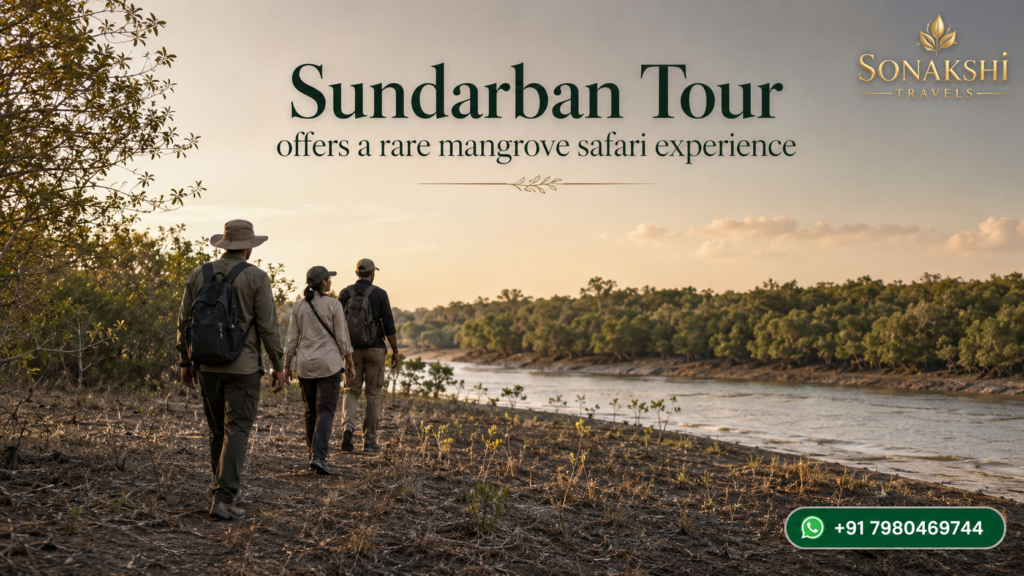
A Sundarban tour offers a rare mangrove safari experience because it does not follow the usual idea of wildlife travel. In many forest journeys, the traveller moves through land, roads, grasslands, or fixed forest trails. In the Sundarban, the experience is shaped by water, tide, mud, silence, breathing roots, narrow creeks, and the slow movement of a boat through a living mangrove landscape. This makes the safari deeply different. It is not only a search for animals. It is an observation of an entire ecosystem where land and water keep changing their roles throughout the day.
The rare quality of the Sundarban safari comes from its landscape behaviour. The forest does not remain visually fixed. A creek that looks open at one moment may appear narrower later. A mudflat may slowly emerge, hold birdlife, and then disappear again under water. Mangrove roots stand like natural breathing structures, showing how the forest has adapted to salt, silt, tide, and soft ground. This constant transformation gives the journey a quiet scientific depth. The traveller does not simply pass through the forest; the traveller watches the forest perform its natural rhythm.
The Mangrove Safari Is Rare Because the Forest Moves With Water
The Sundarban is one of the few landscapes where the safari experience is controlled so strongly by the relationship between river channels and mangrove vegetation. A Sundarban tour through this region feels different because the boat becomes the viewing point, the river becomes the pathway, and the mangrove edge becomes the main field of observation. This changes the psychology of travel. Instead of walking into the forest, the visitor moves beside the forest. Instead of entering through a gate of trees, the visitor studies forest walls rising from mud and water.
This creates a slow and careful form of attention. The eyes begin to follow small signs: a ripple near the bank, a sudden movement among leaves, fresh marks on mud, a bird sitting still on a branch, or the exposed pattern of roots holding the soil. The safari becomes less about speed and more about reading details. In this sense, the Sundarban teaches a different travel discipline. It asks the visitor to observe patiently, to accept silence, and to understand that the forest reveals itself in fragments.
The mangrove environment also creates a strong feeling of distance from ordinary life. The water channels, the soft sound of the boat, the wide sky above the river, and the dense green boundary of the forest make the traveller feel that human noise has been reduced. This reduced noise is one of the most powerful parts of the experience. It allows the mind to settle into the rhythm of the place. A Sundarban tour becomes meaningful when the traveller begins to feel this rhythm rather than only looking for a quick sighting.
The Safari Experience Depends on Silence, Patience, and Slow Observation
The rare mangrove safari experience is closely connected with silence. In the Sundarban, silence is not empty. It contains water sounds, distant bird calls, soft wind through leaves, and the gentle contact of tide against the riverbank. This type of silence is active. It makes the traveller more alert. Every small sound may carry meaning. A splash may come from fish, a bird, a crab, or another movement near the bank. A dry leaf sound may draw attention to an unseen part of the forest.
This is why the Sundarban safari cannot be understood only as a visual journey. It is also an acoustic and psychological journey. The ears become as important as the eyes. The mind learns to wait. This waiting is not dull; it is part of the natural method of experiencing the mangrove. The forest does not offer itself loudly. It opens slowly, often through small changes in light, movement, and sound.
For many travellers, this is the main reason why a Sundarban tour package connected with mangrove safari feels more memorable than a simple sightseeing trip. The value lies in the depth of the environment. The river journey gives time to observe. The mangrove banks give natural drama without artificial display. The changing waterline gives movement to the entire landscape. Together, these elements create a safari that feels both quiet and intense.
Mangrove Roots Create the Visual Identity of the Safari
The first thing many travellers remember from the Sundarban is the structure of the mangrove roots. These roots are not decorative; they are survival systems. They help the trees live in soft, saline, oxygen-poor soil. Some roots rise from the ground like small spikes. Some support the trees from the side. Some hold the muddy surface in place. For the traveller, these roots create a strong visual language. They make the forest look ancient, intelligent, and adapted to difficult conditions.
During a mangrove safari, the roots are constantly visible along the riverbanks. They show the meeting point of biology and geography. They also explain why the Sundarban feels different from ordinary forests. The land is not firm in the usual sense. It is tidal, soft, and always under the influence of water. The forest survives here through adjustment. This gives the safari an educational character. A careful traveller can see how every part of the forest has a function.
A well-planned Sundarban tour package should therefore not be viewed only as a travel arrangement. At its best, it becomes a guided experience through a rare ecological system. The visitor sees how mangroves protect banks, support wildlife, filter the landscape, and create shelter for many forms of life. These observations make the journey richer and more respectful.
The River Is Not Just a Route; It Is the Main Safari Corridor
In many destinations, rivers are only scenic additions. In the Sundarban, the river is the central corridor of the safari. It is the path, the viewpoint, the soundscape, and the moving platform of the entire experience. The traveller watches the forest from the river, studies the mudflats from the river, follows the light on the water, and understands the scale of the mangrove from the river. This gives the journey a natural fluidity.
The river also creates emotional depth. The slow movement of the boat gives the traveller enough time to feel the landscape. There is no need for constant action. The movement itself becomes meditative. The boat passes curves, opens into wider water, enters calmer channels, and reveals new forest edges. Each bend can change the mood of the safari. Sometimes the water feels wide and open. Sometimes the creek feels narrow and secretive. This variation keeps the mind engaged.
This is why a Sundarban tour package connected to mangrove safari must be understood through experience, not only through service details. The central attraction is the way the river allows the traveller to witness a living forest from a respectful distance. The river does not separate the visitor from the forest; it creates the correct distance for observation.
Wildlife Observation Feels Different in a Mangrove Landscape
Wildlife observation in the Sundarban carries a special character because the forest is dense, tidal, and visually complex. The visitor cannot expect every form of wildlife to appear openly. The mangrove creates layers of concealment. Leaves, roots, mudbanks, shadows, and waterlines all become part of the viewing field. This makes wildlife observation more thoughtful. The traveller learns to notice signs rather than only direct appearances.
Birds, reptiles, fish movement, crabs, tracks on mud, and sudden sounds all become important parts of the safari experience. The forest teaches the visitor that wildlife is not only about large animals. It is about relationships within the ecosystem. A bird sitting near a creek, a crab moving over wet mud, or a mark near the bank can reveal the activity of the landscape. This broader understanding makes the journey more research-driven and meaningful.
A Sundarban private tour can make this observation feel more personal because the pace of attention can remain quiet and focused. In a mangrove safari, the ability to pause mentally is important. The traveller benefits when the experience allows careful looking, slow interpretation, and respect for the forest mood.
The Psychological Power of the Sundarban Safari
The Sundarban safari has a strong psychological effect because it places the traveller inside a landscape that feels larger than human planning. The tide, river, mud, forest, and silence all work together. The visitor understands that this environment cannot be controlled or hurried. That feeling creates humility. It also creates calmness. The mind begins to slow down because the landscape itself moves slowly.
Many city-based travellers experience a clear mental shift during the journey. At first, they may look for quick attractions. Gradually, they begin to notice the rhythm of the river, the shape of the mangrove edge, the distance between sounds, and the quiet confidence of the forest. This transformation is one of the rare values of a mangrove safari. It changes the traveller from a viewer into an observer.
A Sundarban private tour can support this deeper feeling when the focus remains on the environment rather than hurried movement. The rare experience is not only outside the traveller; it also happens inside the traveller. The stillness of the river, the patience of the forest, and the hidden life of the mangrove create a more thoughtful state of mind.
Why the Mangrove Edge Is the Heart of the Experience
The mangrove edge is where much of the safari’s visual and ecological interest appears. It is the meeting line of water, mud, roots, leaves, and wildlife movement. This edge is never plain. It may show exposed roots, fresh silt, bird activity, small holes made by crabs, or marks left by animals. It is a natural record of the forest’s daily life.
Watching the mangrove edge requires patience. The traveller may first see only green vegetation. After some time, details begin to appear. The texture of the mud changes. The root pattern becomes clearer. A bird may be noticed only after it moves. A shadow may reveal the depth of the forest wall. This gradual discovery makes the safari rare. It rewards careful attention instead of quick consumption.
In this context, a Sundarban private tour is best understood as a chance to stay mentally close to the landscape. The mangrove edge becomes a living page. The traveller reads it through sight, sound, and silence. This is one of the strongest reasons why the Sundarban stands apart from ordinary forest travel.
The Role of Atmosphere in a Rare Mangrove Safari
Atmosphere is one of the most important parts of the Sundarban experience. The safari is shaped not only by what is seen but also by how the place feels. The wide river surface, the quiet forest line, the soft movement of the boat, and the layered green of the mangrove create a strong emotional setting. This setting gives the journey a sense of depth.
The atmosphere of the Sundarban is not dramatic in a loud way. It is powerful because it is restrained. The forest does not need to announce itself. Its strength appears in stillness, in density, in hidden movement, and in the feeling that life is present even when it is not visible. This makes the journey memorable. The traveller carries back not only images but also a mood.
A Sundarban private tour linked with this kind of safari experience should respect the mood of the place. The real luxury of the Sundarban is not excess; it is the privilege of quiet observation inside a rare natural system.
Luxury in the Sundarban Means Depth, Comfort, and Environmental Sensitivity
In the context of a rare mangrove safari, the meaning of luxury should be understood carefully. It is not only about comfort. It is about experiencing the forest with calmness, privacy, proper attention, and sensitivity. A Sundarban luxury tour becomes meaningful when it allows the traveller to enjoy comfort without disturbing the natural rhythm of the mangrove.
The Sundarban does not need artificial glamour. Its beauty is already strong. The luxury lies in having enough space to observe the river, enough quietness to hear the forest, and enough guidance to understand the meaning of what appears along the banks. This form of travel respects the ecosystem. It does not try to dominate the place. It allows the place to speak through its own atmosphere.
A Sundarban luxury tour should therefore remain close to the central spirit of the mangrove safari. Comfort should support observation. Service should support calmness. Planning should support the natural pace of the landscape. When these elements stay balanced, the safari feels both refined and authentic.
The Rare Beauty of Tidal Uncertainty
One of the most special qualities of the Sundarban safari is tidal uncertainty. The traveller sees a landscape that is never completely still. Water rises and falls. Mudbanks appear and disappear. Roots become more visible and then partly hidden again. This creates a feeling that the forest is alive not only biologically but also physically. The land itself seems to breathe with the tide.
This tidal nature changes the way the visitor looks at the environment. A fixed viewpoint is not enough. The same riverbank may look different after some time. The same creek may hold a different mood depending on the water level. The same mangrove roots may appear sharp, half-covered, or deeply exposed. Such changes make the safari rare because the landscape cannot be repeated exactly in the same way.
A Sundarban luxury tour becomes more valuable when it helps the traveller appreciate this slow uncertainty. The best experience comes when the visitor stops expecting the forest to behave like a fixed attraction and begins to respect it as a living tidal system.
The Safari Is a Lesson in Adaptation
The Sundarban mangrove safari is also a lesson in adaptation. Every visible part of the forest suggests adjustment to difficult conditions. The roots adjust to soft ground. The trees adjust to saline influence. The mudflats adjust to water movement. Birds and other creatures adjust to the shifting availability of space and food. The entire ecosystem is built around survival in a changing environment.
For the traveller, this creates a deeper educational value. The safari becomes more than a scenic escape. It becomes a living study of how nature survives through flexibility. This lesson is simple but powerful. The Sundarban does not show strength through height or hardness. It shows strength through adjustment, balance, and endurance.
A Sundarban luxury tour that remains faithful to this meaning can help the visitor understand the place with greater respect. The rare mangrove safari experience is not only about entering a beautiful region. It is about learning how a forest lives where water, salt, silt, and life are always negotiating with one another.
Why the Experience Feels Editorial and Research-Driven
The Sundarban has the quality of an editorial travel subject because every part of the landscape carries meaning. The river is not only water. It is movement, access, and boundary. The mud is not only ground. It is a record of tide, life, and change. The roots are not only tree parts. They are survival tools. The silence is not absence. It is a field of hidden activity.
This is why writing about or experiencing the Sundarban requires more than general travel language. The place deserves careful interpretation. A rare mangrove safari is built from ecological details, sensory depth, and patient observation. The traveller who understands this gains a richer experience. The forest becomes readable. The journey becomes more thoughtful.
A responsible Sundarban travel approach should therefore highlight the living character of the mangrove. It should help travellers value the quiet signs of the landscape instead of expecting constant spectacle. This makes the experience more honest and more powerful.
The Core Value of a Sundarban Mangrove Safari
The core value of a Sundarban mangrove safari lies in its rarity. It is rare because the traveller moves through a tidal forest by water. It is rare because the landscape changes without announcement. It is rare because the forest remains partly hidden and yet deeply present. It is rare because the journey teaches patience, silence, ecological awareness, and respect for natural rhythm.
A Sundarban travel agency that understands this rare character can present the destination with greater accuracy and dignity. The Sundarban should not be reduced to a quick checklist of sights. Its strongest appeal is the slow experience of a mangrove world where every creek, root, mudbank, and silence carries meaning.
A Safari That Teaches the Traveller How to Observe
A Sundarban Tour offers a rare mangrove safari experience because it changes the way a traveller looks at nature. It does not depend on speed, noise, or constant display. It depends on patience, river movement, tidal change, root patterns, forest silence, and the careful reading of small signs. The traveller learns that a powerful safari does not always need open land or dramatic visibility. Sometimes, the deepest safari experience comes from moving slowly beside a hidden forest and allowing the landscape to reveal itself in its own time.
The Sundarban is rare because it is both quiet and alive, both open and concealed, both fragile and strong. Its mangrove safari experience stays in memory because it touches the senses and the mind together. The river carries the traveller forward, but the silence asks the traveller to slow down. The forest remains at a distance, but its presence feels close. This balance makes the journey deeply special. It is not only a tour through the Sundarban; it is a careful encounter with one of nature’s most unusual and meaningful mangrove worlds.