Why a Sundarban Journey Feels Like Song, Silence, Sunset, Wilderness, and Moonlit Forest Life Together
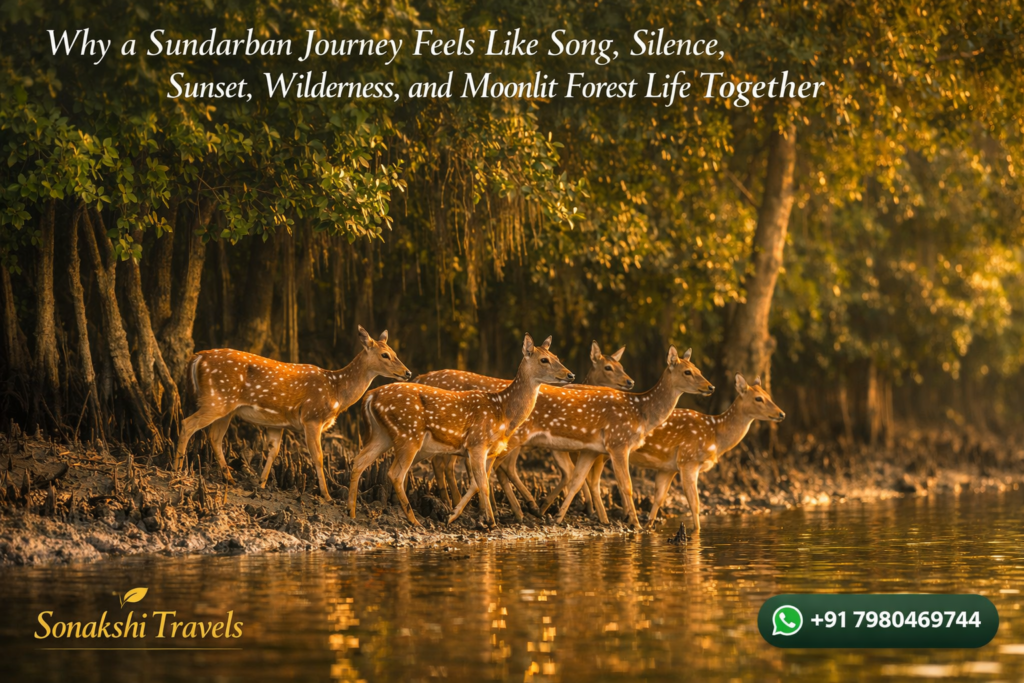
Some places are easy to describe. A traveller goes there, sees the main spots, takes a few pictures, and returns with a simple memory. But the Sundarban does not belong to that kind of travel. It is not only a destination on a map. It is a changing world of rivers, creeks, mudbanks, roots, birds, light, shadow, and deep quiet. It is a place that does not reveal itself in one quick moment. It opens slowly.
That is why a Sundarban tour often feels more meaningful than an ordinary holiday. The experience is not built by one single thing. It is built by many layers moving together. The forest has beauty, but also mystery. The rivers have movement, but also calm. The silence feels empty at first, but later it feels full of hidden life. A sunset here is not just a view. A boat ride is not just transport. Even the night does not feel like darkness alone. It feels alive with water, breeze, distant sounds, and the quiet breath of the mangrove world.
When people think about forest travel, they often imagine only wildlife. When they think about river travel, they imagine only scenery. But the Sundarban is different because it joins many feelings into one journey. It can feel musical, thoughtful, wild, peaceful, and deeply human at the same time. This is why the region leaves such a lasting impression on travellers who are ready to slow down and truly observe.
A journey through this region often moves between beauty and wonder. One moment there is bright sunlight on the water. Another moment there is a dark creek under hanging branches. In one stretch, the river feels open and golden. In another, the forest feels secret and almost sacred. That changing mood gives the Sundarban travel experience its special identity. It is not one flat story. It is a living rhythm.
The Deeper Spirit of a Landscape Made of Water, Silence, and Time
The first thing that makes the Sundarban different is its nature itself. This is not a forest that stands still on firm land. It is a tidal forest. Water enters and leaves. Mud appears and disappears. Channels change with the tide. Boats move where roads cannot go. Because of this, the traveller does not feel like an outside observer. Instead, the traveller becomes part of a moving landscape.
That is one reason the place feels so powerful. In many tourist spots, the visitor remains separate from the environment. In the Sundarban, that distance becomes smaller. A person sits on a boat, watches the changing banks, hears the engine slow down near narrow creeks, and begins to understand that this region has its own pace. It does not adjust to human speed. People must adjust to it.
This slow movement creates a deeper form of travel. It asks for patience. It rewards silence. It teaches observation. A traveller begins to notice small but meaningful details: the shape of mangrove roots rising from wet soil, the way birds move suddenly across open sky, the lines of light on river water, and the strange calm of a place where land and water never fully separate. That is why the Sundarban forest silence and living voice of nature can feel stronger than the noise of many famous destinations.
In such a place, time also feels different. The modern world teaches people to rush. But the Sundarban seems to resist that habit. It invites a person to sit longer, look deeper, and feel more. This is not wasted time. It is meaningful time. The stillness becomes part of the journey. The waiting becomes part of the beauty.
For this reason, the region is not only attractive to wildlife lovers. It also draws people who want space in the mind. The quiet rivers, open skies, and slow forest routes help tired thoughts settle down. Many travellers return with photographs, but they also return with a changed mood. They feel lighter, calmer, and more aware. That inner effect is one of the most important truths of a real Sundarban boat safari.
Why the Journey Feels Musical Even When No Song Is Being Played
There are places where music comes from instruments, speakers, or crowds. In the Sundarban, the feeling of music often comes from nature itself. It appears through rhythm. The boat moves steadily. Water touches the sides. Wind passes through leaves. Birds call from a distance. Oars, ropes, branches, and tide all seem to speak in their own quiet way. This is why the place can feel like a song even when no human voice is heard.
The rhythm of the region is one of its strongest emotional powers. Morning begins with pale light and soft activity. Afternoon grows warmer and wider. Evening turns gold and orange. Then night arrives slowly over the rivers. Each stage has its own mood, almost like different parts of a long musical piece. The experience is not loud, but it is deeply layered.
This is also why travellers often remember not just what they saw, but how they felt while moving through the place. A forest path may be forgotten. A hotel room may not stay long in memory. But the feeling of sitting on a boat while river wind moves across the face, and the mangroves pass in silence, remains for years. That feeling is emotional, but it is also physical. It enters through sound, sight, motion, and atmosphere together.
The Sundarban can also create contrast in a very powerful way. There are moments of bright laughter among travellers, followed by long stretches of observation. There may be simple conversation during meals, followed by a deep quiet as the boat enters a narrower creek. This movement between sound and stillness gives the journey a natural pattern. It makes the experience feel alive and balanced rather than dull.
That living rhythm is one reason why a journey described through shadows, songs, and the emotional flow of Sundarban travel feels so true to the region. The beauty here is not only visual. It is also emotional and atmospheric. A traveller may arrive expecting scenery, but often leaves carrying something much richer: a memory of rhythm, tone, and mood that is hard to explain in ordinary words.
Sunset, Shadow, and the Power of Changing Light on the River
Light changes every landscape, but in the Sundarban it changes almost everything. Because this is a land of water, sky, open stretches, and dark green forest, the effect of light is stronger than in many other places. Morning light can make the whole region feel fresh and soft. Midday light reveals the details of leaves, banks, and river lines. Evening light, however, often creates the most unforgettable moments.
At sunset, the rivers begin to glow. The water reflects gold, orange, and red shades. The edges of the mangrove forest turn darker. Boats appear like moving shapes between brightness and shadow. The scene becomes quiet in a deeper way. People on deck often stop talking for a while. Even without planning to do so, they simply watch.
This is one of the reasons why the Sundarban sunset experience carries such emotional power. It is not only beautiful in a visual sense. It also creates reflection in the mind. As daylight fades, the traveller feels the day settling into memory. What was once bright and detailed becomes soft and mysterious. The forest no longer looks only green. It begins to look ancient, distant, and full of hidden presence.
Such moments matter in travel because they create emotional connection. A person does not remember only the colour of the sky. One remembers the stillness, the temperature of the air, the soft movement of the boat, and the quiet feeling that comes when the day begins to close. That is why journeys built around Sundarban sunsets melting into wide tidal rivers feel larger than simple sightseeing.
Shadows also have an important role here. In many travel places, people search only for bright views. In the Sundarban, shadow is part of the beauty. It gives depth to the forest. It adds mystery to the creeks. It reminds travellers that not everything has to be clearly seen in order to be deeply felt. In fact, much of the region’s power comes from what remains partly hidden. This is true of the forest, the wildlife, and even the traveller’s own thoughts while moving through the landscape.
That changing play of light and shadow supports the deeper identity of the place. It makes the region feel both open and secret at the same time. It allows the journey to feel peaceful without becoming plain. It gives visual drama, but in a natural and gentle way.
Wilderness in the Sundarban Is Not Only About Fear but Also About Respect
When people hear the word wilderness, they often think of danger first. In the Sundarban, wildness is certainly real. The forest is not a garden. It is not a controlled park. It is a living ecosystem with its own rules, its own silence, and its own hidden movements. Yet to understand this region well, it is important not to reduce wilderness to fear alone. Its true meaning is much wider.
Wildness here means that nature still holds authority. Human beings can visit, but cannot dominate. Boats may enter certain routes, but only within rules. Watchtowers may offer views, but not control. Forest edges may seem near, but they still belong to the world of the mangroves. This creates a rare kind of travel experience. It reminds people that they are guests inside a larger system of life.
This feeling can be deeply humbling. The Sundarban teaches that beauty and caution can exist together. A narrow creek may look calm, but it also carries the presence of unseen life. A sunny bank may look peaceful, but it is still part of a wild environment. This does not make the journey unpleasant. It makes it meaningful. The traveller learns to watch with respect rather than with careless excitement.
That is why the experience described through sailing into Sundarban wilderness and wonder captures something very important. Wonder grows stronger when a person understands that the landscape is real, independent, and not arranged for comfort alone. In this way, wildness becomes a teacher. It teaches limits, patience, and attention.
Practical understanding also grows from this respect. Travellers who appreciate the true nature of the region usually have a better experience. They understand why guided routes matter, why quiet observation matters, and why the forest should not be treated like a picnic ground. They become more ready to enjoy the journey as it is, instead of forcing it to match city habits.
In that sense, the Sundarban is not simply a place to “visit.” It is a place to enter with care. The reward for that respectful approach is rich: stronger memory, deeper emotional impact, and a clearer understanding of what true mangrove wilderness travel means.
Night, Moonlight, and the Strange Beauty of a Forest That Never Feels Fully Asleep
Many travel articles focus only on daytime. But the Sundarban cannot be fully understood without thinking about evening and night. As daylight fades, the region does not lose its character. Instead, it changes into another form. The colours become softer. The water grows darker. The sky opens wider. Sounds become fewer, but each one feels sharper.
Moonlight has a special effect in such a place. Where there are wide rivers and open skies, moonlight does not stay only above. It spreads across the surface of the water. It touches the boat, the banks, and the edges of the mangrove world. The scene becomes quiet, but not empty. It feels almost like the forest is listening.
This is why the idea of the Sundarban forest singing to the moon feels so natural. The phrase is poetic, but it points to a real emotional truth. Night in this region often feels deeply expressive. It can make a traveller feel small, calm, and strangely connected to the living world around them.
There is also a spiritual quality to this part of the experience, even for people who are not religious in any strict sense. The open night sky, the dark forest line, the reflected light on water, and the quiet movement of air together create a feeling that is larger than normal tourism. It becomes a moment of attention. A person begins to feel that nature is not silent because it is empty. Nature is silent because it is full in a different way.
Such moments stay in memory because they are rare in modern life. Cities are filled with light, speed, and noise. The Sundarban night offers the opposite. It offers stillness without boredom and darkness without fear. It allows the senses to become sharper. It helps the mind become calmer. This is one of the strongest reasons why a Sundarban night stay or evening boat atmosphere feels so unforgettable to many travellers.
Why This Kind of Journey Stays in the Mind Long After the Trip Ends
Not every beautiful place becomes meaningful. Some are pleasant for a day and then slowly fade from memory. The Sundarban often leaves a deeper mark because it works on more than one level at once. It offers visual beauty, yes, but also emotional quiet, natural rhythm, changing light, respectful wildness, and a rare feeling of being inside a living environment rather than outside it.
This is why the journey often continues in the mind after it ends. A person may remember the rivers first. Later, one remembers the silence. Then the changing sky returns to memory. Then the feeling of the boat. Then the strange calm of the forest. The experience does not remain fixed in one image. It unfolds again, almost like a long song with many parts.
For travellers, this has an important lesson. The best journeys are not always the ones with the longest checklist. They are often the ones that allow real contact with place, mood, and time. The Sundarban gives exactly that kind of contact. It does not rush to impress. It grows slowly inside the visitor’s awareness.
That is also why this destination deserves careful, thoughtful writing and thoughtful travel planning. To understand it well, one must look beyond simple labels such as forest, safari, or weekend trip. It is all of these things, but it is also more. It is a place where nature tourism, emotional reflection, and lived atmosphere come together in a rare balance.
In the end, a Sundarban journey feels unforgettable because it brings together many truths that modern travel often separates. It joins movement with stillness, beauty with mystery, wilderness with respect, and silence with hidden music. It shows that a forest can feel alive not only through animals and trees, but through mood, rhythm, light, and memory. That is why this region does not simply give a trip. It gives an experience that continues to speak long after the boat has returned and the traveller has gone home.