Updated: March 29, 2026
The Wild Becomes Regal in Your Sundarban Tour
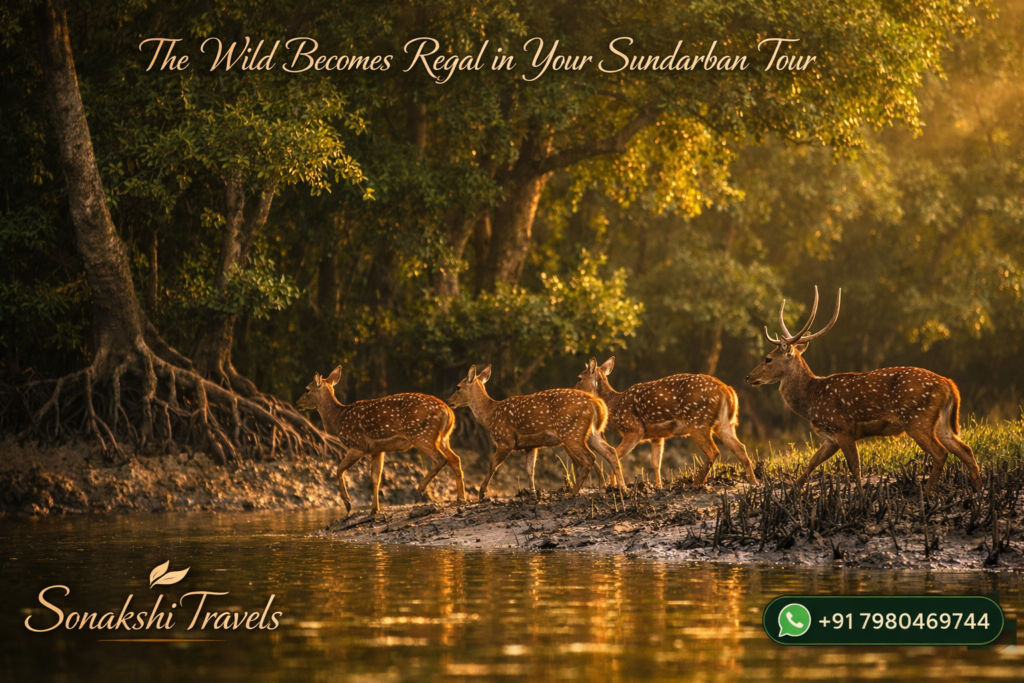
There are landscapes that look wild from a distance but feel broken when a person enters them. Then there are landscapes that become greater, deeper, and more ordered the closer a person comes. The Sundarban belongs to the second kind. In a Sundarban tour, the wild does not feel rough in a careless way. It feels regal. It feels measured, balanced, and full of silent authority. The rivers move with calm power. The mangroves stand with a strange dignity. Even the mudbanks, roots, tides, and shadows seem to carry a form of natural discipline.
This is what makes the experience different from the common idea of wilderness. Many people think the wild is only disorder, danger, noise, and force. The Sundarban changes that idea. Here, the wild appears dressed in restraint. It does not rush to impress. It does not shout. It holds itself back. That self-control is what gives it majesty. A person who enters this landscape slowly begins to feel that the forest is not only alive. It is also composed. It has presence. It has bearing. It has a quiet form of rank, like an old king who no longer needs display to prove power.
That is why the deepest Sundarban travel experience is not only about seeing a place. It is about feeling a change in the meaning of wildness itself. The forest remains untamed, yet it never feels cheap or chaotic. It stands before the eye with depth and seriousness. The more carefully a visitor watches the creeks, the shifting light, the breathing water, and the layered green silence, the more clearly one truth appears: in this delta, the wild becomes regal.
A Landscape Ruled by Silence
The first reason for this regal feeling is silence. In many places, silence feels empty. In the Sundarban, silence feels occupied. It feels filled with attention. One does not hear constant human movement, city noise, market sound, or machine pressure. Instead, the mind begins to notice slower sounds that are usually hidden beneath daily life. A ripple against the boat, the light brush of wind through leaves, the distant call of a bird, the soft pull of tide along the bank—these sounds do not break the silence. They shape it.
This matters because majesty often comes from control, not display. The Sundarban does not produce grandeur by excess. It produces grandeur by holding back. The forest seems to speak only when necessary. This restraint creates dignity. It is the opposite of clutter. It is the opposite of noise. A person sitting quietly on the water begins to understand that silence here is not the absence of life. It is the form through which life reveals its rank.
In that silence, the mind also changes. Speech becomes less urgent. Thought becomes slower. The eye stops hunting for quick reward and begins to observe relation, balance, and pattern. This is one of the reasons a Sundarban nature tour can feel so deep even when nothing dramatic happens for several minutes. The place trains attention. It teaches the visitor to see value in posture, rhythm, and atmosphere. That slow seeing is part of the regal quality of the landscape.
The Authority of Water
Water is not a background element in the Sundarban. It is the governing force. Rivers, channels, bends, creeks, and tidal lines shape everything. The forest does not stand beside water. It lives through water. The movement of the tide changes the edge of the land, the mood of the light, the reach of reflection, and the feel of the entire scene. This constant motion could have made the region feel unstable. Instead, it makes it feel sovereign.
The reason is simple. The water does not move in panic. It moves with command. It rises and falls according to a deep order that does not depend on human timing. A visitor quickly senses that this is a realm directed by older laws. The river does not ask for attention, yet it receives it. Its wide surfaces, slow turns, and shifting shine create a feeling of command over space itself. That command is regal.
When the boat glides through these waters, the journey often feels less like a human crossing and more like an act of respectful passage. The river appears to permit movement rather than surrender to it. This changes the emotional tone of the journey. Even a well-arranged Sundarban private boat tour does not feel like a conquest of nature. It feels like entry into a living court where water sets the law and the forest keeps the order.
Mangroves and the Beauty of Discipline
The mangrove forest is central to this regal feeling. At first glance, mangroves can seem difficult to read. Their roots rise strangely. Their trunks twist. Their growth lines do not follow the simple neatness seen in city gardens or planted roadsides. But when one looks longer, another truth appears. The forest is not confused. It is highly adapted. Every root, leaf, and branch carries the mark of adjustment to tide, salt, mud, and survival.
This deep adjustment creates a form of beauty that feels earned. It is not soft beauty. It is not decorative beauty. It is disciplined beauty. The mangroves hold themselves against pressure every day. They endure shifting water, unstable banks, and saline force, yet they remain standing. That endurance gives them character. It gives them moral weight in the eye of the visitor.
Research on mangrove ecosystems often shows how these forests survive through highly specialized structures and responses to harsh coastal conditions. But in lived experience, this ecological fact becomes emotional truth. What science describes as adaptation, the eye experiences as bearing. The trees look steadfast. They do not seem fragile. Their rootedness carries a kind of natural nobility. In a true Sundarban exploration tour, this noble bearing becomes one of the most memorable parts of the landscape.
Why the Wild Feels Regal, Not Harsh
It is important to understand that regal does not mean gentle. The Sundarban is not soft in the easy sense. It contains risk, concealment, and power. But the feeling it gives is not of crude force. It is of force held within order. This is why the region feels regal rather than merely dangerous.
A harsh place usually feels careless. It seems to strike without shape. The Sundarban does not feel like that. Even its uncertainty has structure. Visibility changes slowly. Shadows gather along banks with depth. Mudflats appear and disappear through tidal rhythm. Open water can turn into narrow passage. The entire landscape seems to operate by measured transformation. That measure gives dignity even to what cannot be fully predicted.
This is also why people often return from a Sundarban private tour with a feeling that is difficult to explain in ordinary words. They may speak of peace, mystery, or beauty, but beneath those words lies something more exact. They have felt a kind of natural kingship. The forest did not entertain them. It stood before them with rank.
The Psychology of Regal Wilderness
The mind responds to ordered power in a special way. It becomes quiet, alert, and respectful. This response is different from the quick excitement produced by spectacle. Spectacle stimulates. Majesty steadies. The Sundarban works more through majesty than through spectacle.
Psychologically, this has a strong effect on the visitor. The ego becomes smaller. Personal noise begins to fade. One’s own plans, speed, and habits lose importance for a while. This does not create weakness. It creates release. A person no longer needs to dominate the scene. One can simply witness it. That is why the place often leaves a deeper mark than louder destinations.
In such moments, a Sundarban luxury tour is not meaningful because of comfort alone. Its true value lies in the quality of attention it allows. When movement is calm, space is open, and the setting is quiet, the visitor can observe more fully how dignity lives in the landscape. Luxury, in this deeper sense, is not excess. It is the chance to experience the regal character of the wild without mental interruption.
Light, Distance, and the Royal Mood of the Delta
Another reason the Sundarban feels regal is the way light behaves across the water and forest. Light here does not simply illuminate objects. It creates hierarchy, shadow, depth, and mood. A river edge in half light can appear like a guarded border. A line of trees reflected on quiet water can seem almost ceremonial. A distant bank under a pale sky may look less like scenery and more like presence waiting in silence.
This visual order matters greatly. Royal feeling often depends on space being arranged in a way that produces distance and dignity. The Sundarban does this naturally. Wide channels open the field of vision. Narrow creeks then tighten it. Sudden bands of brightness appear between masses of darker foliage. These changes are subtle, but they shape emotional response. The eye begins to feel that the forest is presenting itself in chambers, not in one flat view.
Because of this, a serious Sundarban wildlife safari is often powerful even before any animal appears. The setting itself is charged. It prepares the mind. It creates expectation without haste. The royal mood of the delta is already present in the arrangement of light and distance.
The Presence of Hidden Life
The regal feeling of the Sundarban is also connected to hidden life. A place becomes majestic when it suggests depth beyond what is immediately visible. The Sundarban is full of that suggestion. The banks do not reveal everything. The creeks do not tell all. The shadows among roots and leaves hold back more than they show. This reserve is important.
When everything is visible at once, mystery fades quickly. But when the landscape keeps part of itself unseen, dignity grows. Hidden life creates a sense of inner court, inner chamber, inner world. Birds move through upper branches, creatures leave marks on mud, ripples disturb still surfaces, and the mind understands that much is present beyond direct sight. This does not make the place empty. It makes it deep.
That depth is one reason the forest feels more regal than raw. The unseen is not random here. It is held within order. Each sign of life seems to belong to a larger system. A careful Sundarban eco tourism perspective helps one understand this. The region is not just a backdrop for sightings. It is an interdependent living structure where concealment itself has ecological meaning.
Human Smallness and Natural Grandeur
A regal landscape often reminds human beings of proportion. The Sundarban does this strongly. Boats move through wide water, but they never feel larger than the place. Human voices travel, but they do not dominate the air. Built structures appear small beside the tidal body of the land. This repeated experience of scale changes the visitor’s inner position.
Such change is valuable. Modern life often places the human self at the center of everything. The Sundarban gently corrects that habit. It does not insult the visitor. It simply reveals a larger order. In that larger order, human presence is real but limited. This limitation can feel deeply calming. When one stops trying to own the scene, one becomes able to receive it.
This is why an exclusive Sundarban private tour can become more than a travel memory. It can become a lesson in relation. The visitor does not stand above the forest. The visitor stands within its atmosphere, under its law of silence, tide, and restraint. That experience gives humility, and humility often opens the door to awe.
Regal Wildness and the Meaning of Beauty
Many people use the word beautiful too quickly. Beauty in the Sundarban is not always immediate prettiness. It is often a slower beauty made of tension, depth, patience, and unresolved mystery. A muddy bank with exposed roots may not look ornamental, yet in context it becomes striking. A broad grey-green channel under a quiet sky may appear plain at first, yet after several minutes it begins to feel immense and solemn. This is mature beauty, not easy decoration.
The regal quality of the wild is closely tied to this mature beauty. What is regal does not need to be sweet. It needs to possess form, authority, and inner completeness. The Sundarban has all three. Its forms arise from ecological necessity, its authority comes from water and adaptation, and its completeness comes from the way all elements belong together—tide, mud, root, birdcall, shadow, and silence.
That is why the finest Sundarban travel writing often fails when it tries too hard to make the region seem merely charming. Charm is too small a word. The real power of the place lies in the union of wildness and dignity. It is not only attractive. It is august.
When the Journey Becomes Inner
As the hours pass in this atmosphere, the experience often becomes inward. The eye continues to watch the outer landscape, but the mind begins to observe its own response. Restlessness falls. Speech becomes selective. One starts to feel that the place is not asking for interpretation but for presence. This inner shift is part of the article’s central truth: the wild becomes regal because it changes not only what we see, but also how we see.
In ordinary life, attention is broken into pieces. In the Sundarban, attention gathers. It becomes single, steady, and receptive. That gathered attention allows deeper emotional reading of the landscape. A line of mangroves becomes more than vegetation. A stretch of still water becomes more than route. A passing silence becomes more than pause. Everything gains weight.
That is the moment when the visitor understands the real distinction of the place. The Sundarban is not trying to perform wilderness. It is simply being what it is: composed, powerful, and self-possessed. In that self-possession, wildness rises into regality.
The Final Meaning of a Regal Wilderness
In the end, the title becomes true not by metaphor alone but by experience. The wild becomes regal in your Sundarban journey because this landscape joins power with restraint, mystery with order, and silence with presence. It is not a loud kingdom. It is a tidal kingdom. Its throne is not raised in stone but spread across water, root, shadow, and disciplined green life.
A thoughtful Sundarban tourism experience reveals that real grandeur does not always come through height, size, or human monument. Sometimes it comes through balance. Sometimes it comes through a forest that knows how to hold its force without waste. Sometimes it comes through a river that rules by rhythm rather than noise. Sometimes it comes through a place where the eye learns respect before it seeks excitement.
That is why the memory lasts. One may forget many separate details, but the feeling remains. The Sundarban does not remain in the mind only as a marsh, a forest, or a river system. It remains as a presence of regal wildness. It remains as a place where nature stands in its own authority, calm and complete. And once a person has felt that authority closely, the meaning of the wild is never quite the same again.